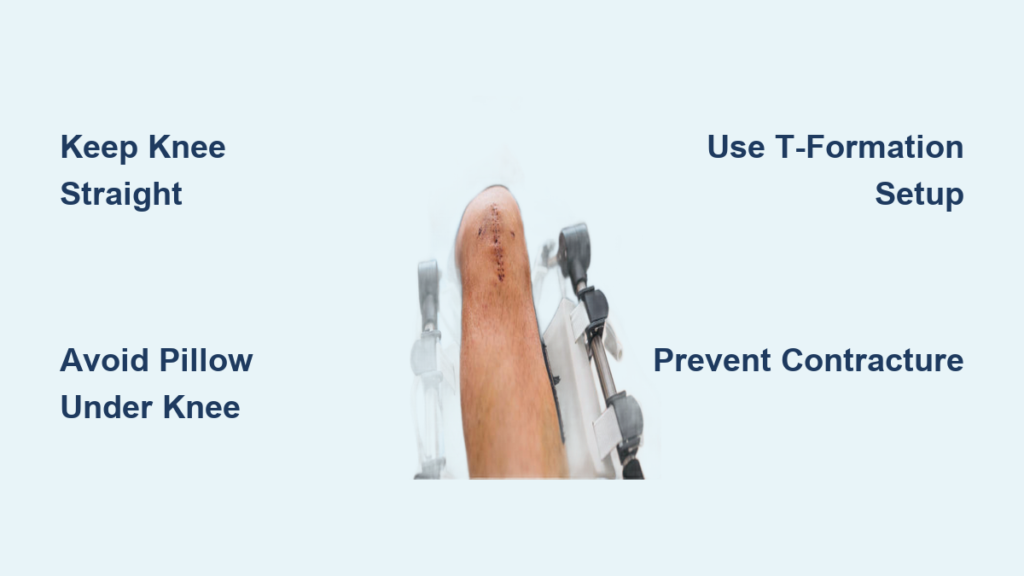
You’ve just had knee surgery and you’re trying to get comfortable in bed. Your instinct is to tuck a pillow under your knee for support, but your surgeon or physical therapist likely warned you against this. The rule seems frustrating, especially when you’re dealing with pain and trying to sleep. Understanding why medical professionals enforce this restriction can help you make better choices during your recovery.
Placing a pillow under your knee after surgery is strongly discouraged because it promotes joint stiffness, soft tissue tightening, and long-term mobility issues. Even a few days of resting with a bent knee can lead to flexion contracture, where your knee loses the ability to fully straighten. This one habit can delay your ability to walk, increase pain levels, and potentially require additional procedures to correct. In this guide, you’ll learn exactly what happens inside your knee when it stays bent, the serious risks involved, and how to rest comfortably while protecting your surgical outcome.
Why Keeping Your Knee Straight Matters After Surgery
After knee surgery, your body begins healing immediately, but the position you hold your leg in during rest directly influences how tissues adapt. Full knee extension (0 to 5 degrees of straightening) is not just a goal. It is a necessity for normal walking, balance, and joint function. When a pillow is placed under the knee, it forces the joint into flexion, which is a bent position.
Even slight bending, if maintained for hours especially overnight, triggers rapid changes in muscles and connective tissue. The hamstrings shorten, the posterior capsule tightens, and the quadriceps weaken, all working against your recovery. Surgeons emphasize that straight is stable. Your new knee alignment depends on maintaining that neutral, extended position. Deviating from it risks misalignment, increased implant wear, and poor patellar tracking, which are issues that may not appear until weeks later when correction becomes much harder.
How Flexion Contracture Develops Quickly
A flexion contracture means you cannot fully straighten your knee, even when trying. This condition develops quickly after surgery if the knee remains bent for prolonged periods. As little as 6 hours per day of sustained knee flexion can begin soft tissue shortening. A loss of just 5 to 10 degrees of extension causes limping, instability, and difficulty climbing stairs.
Once established, contractures often require intensive physical therapy or manipulation under anesthesia to correct. Patients who unknowingly use a pillow under the knee frequently report being stuck at 10 to 15 degrees of flexion after two weeks. At that point, regaining full extension takes significantly longer, and sometimes it does not happen at all without intervention.
What Happens to Your Hamstrings and Joint Capsule
The hamstrings and posterior joint capsule are especially sensitive to positioning. When the knee is bent, these structures remain in a shortened state. Over time, they adapt by losing elasticity, which is a process called adaptive shortening. This is not just tightness you can stretch out easily. The body treats this as the new normal, making it harder to activate the opposing muscles like the quadriceps needed for straightening.
Tight hamstrings pull the knee into flexion, fighting every effort you make to extend. Posterior capsule stiffness physically blocks full extension. Both contribute to arthrogenic muscle inhibition, where pain and swelling reflexively shut down muscle function. Even if you do your exercises religiously, resting with a bent knee sabotages your progress.
Serious Medical Risks of Pillow Use Under the Knee

Placing a pillow under the knee may feel supportive, but it introduces multiple medical risks that far outweigh any temporary comfort you might experience.
Increased Risk of Deep Vein Thrombosis
One of the most serious dangers is compression of the popliteal vein, located behind the knee. A pillow pressing into the popliteal fossa can restrict blood flow from the lower leg, increasing the risk of deep vein thrombosis, which is a life-threatening condition where a clot forms in the leg. Post-surgical patients are already at higher risk for deep vein thrombosis due to reduced mobility, inflammation, and surgical trauma. Adding mechanical compression from improper positioning compounds that danger.
Warning signs of deep vein thrombosis include swelling in one calf or thigh, warmth or redness behind the knee, pain that worsens when standing or walking, and tenderness along the vein path. Medical teams combat this with early ambulation, anticoagulants, and ankle pumps, not immobilization or bent-knee rest.
Why Swelling Actually Gets Worse
Contrary to what you might believe, elevating the knee with a pillow does not help reduce swelling, especially if the knee is bent. A bent knee causes venous pooling, which traps fluid in the lower leg and worsens postoperative edema. This impairs lymphatic drainage, which is the body’s natural fluid-clearing system that relies on muscle movement and proper limb alignment. Increased pressure on the surgical site raises pain levels and delays wound healing.
Instead, proper elevation with the leg straight and foot above heart level uses gravity to drain fluid safely and efficiently.
How Improper Positioning Affects Your Implant
In total knee replacement, the prosthesis is aligned with precision to match your natural biomechanics. This alignment depends on the knee functioning in full extension. Resting with a bent knee introduces abnormal shear forces across the implant, particularly on the polyethylene insert. Over time, this can accelerate wear and potentially shorten the lifespan of your artificial joint.
Additionally, patellar tracking suffers when the knee is flexed long-term, anterior knee pain becomes more likely due to malalignment, and gait abnormalities develop as the brain adapts to walking with a bent knee. These changes may not be obvious at first, but they show up weeks later as limping, fatigue, or difficulty with stairs.
The Correct Way to Elevate Your Leg After Surgery

Elevating your leg is encouraged after surgery, but only when done correctly. The goal is to reduce swelling without bending the knee.
Step-by-Step T-Formation Pillow Setup
This method supports the entire leg while keeping the knee fully extended. First, place a pillow horizontally under your thigh, from your hip to just above your knee. This prevents the leg from floating and maintains neutral femoral alignment. Next, place a second pillow vertically under your ankle and foot. This elevates your toes above heart level for optimal drainage. Finally, ensure your knee remains completely straight. There should be no bend at the joint.
This setup mimics clinical best practices and can be done with regular household pillows. Your leg should form a straight line from hip to ankle, with the foot slightly higher than your heart.
What Pillow Uses Are Actually Safe After Surgery
Not all pillow use is forbidden. The key is avoiding direct support under the knee crease. Pillows under the heel or calf are safe as long as the knee stays straight. Pillows between knees when side-sleeping are acceptable. A foam roller under the entire leg works if the knee remains extended. Pillows under the thigh only, not touching the knee, are also fine.
What you should avoid includes pillows placed directly under the knee, contoured knee pillows or wedges that cradle the back of the knee, rolled towels behind the knee, and sleeping with your leg bent over another pillow.
Best Sleeping Positions for Knee Surgery Recovery
Sleep habits play a major role in your recovery. The wrong position can undo your daily therapy gains.
Why Back Sleeping Is the Safest Option
Back sleeping, also called supine position, is the safest and most recommended position after knee surgery. Your leg should be fully extended, slightly rotated outward if that is comfortable. Use the T-formation pillow setup for support. This position promotes circulation, protects your surgical alignment, and reduces strain on your incision.
Place a pillow under your arms or lower back for added comfort, just keep your surgical leg straight. This position allows for uninterrupted healing and is ideal for nighttime sleep.
When Side Sleeping Becomes Safe
You may begin side sleeping after clearance from your surgeon, usually around 3 to 6 weeks post-op. Lie on your non-operative side. Place 1 to 2 pillows between your knees and ankles to prevent leg crossing. Keep your surgical leg straight or slightly bent within a pain-free range. Avoid this position too early because hip rotation may stress the healing joint.
Why Stomach Sleeping Is Not Recommended
Stomach sleeping is not recommended for at least 4 to 6 months after surgery. This position presses directly on the incision, forces the knee into hyperflexion, and increases risk of wound irritation or dehiscence. Even later in recovery, stomach sleeping should only be attempted under medical guidance.
Why Early Motion Beats Immobilization
Recovery is not about rest. It is about controlled movement. The earlier you start moving safely, the better your outcome.
What to Do in the First 48 Hours
Most protocols require out-of-bed activity within a day of surgery. Use a walker or crutches as directed. Perform ankle pumps every hour to prevent deep vein thrombosis. Begin quad sets and straight leg raises as tolerated. These small movements maintain muscle tone, improve circulation, and protect your extension.
Key Exercises to Prevent Stiffness
Focus on extension-promoting exercises in the first weeks. Heel slides improve both flexion and extension range. Quad sets activate your quadriceps without joint movement. Straight leg raises strengthen your hip and thigh muscles. Ankle pumps enhance venous return and reduce swelling. Perform these multiple times per day, even when sore. Consistency beats intensity when it comes to recovery.
Managing Pain Without Compromising Knee Position
Nighttime pain is common, but you should never sacrifice knee position for comfort.
Common Causes of Night Pain After Surgery
Nighttime pain often comes from pain medication wearing off during sleep, fluid accumulation from daytime activity, muscle spasms or nerve sensitivity, and inflammatory response during rest. These are all normal but manageable without compromising your recovery.
Safe Strategies for Pain and Sleep
Take pain medications one hour before bed to prevent breakthrough pain. Use ice therapy before sleep to reduce inflammation and numb pain for 30 to 60 minutes. Do pre-bed exercises including quad sets, ankle pumps, and straight leg raises to reduce stiffness. Try relaxation techniques like deep breathing or guided meditation to lower pain perception. Short-term sleep aids like melatonin may be used with doctor approval.
The critical rule is this: if you are choosing between comfort and correct positioning, choose correct positioning. Temporary discomfort is better than long-term complications.
What Happens If You Ignore This Rule
Ignoring the no pillow rule can lead to serious long-term consequences.
Chronic Gait Problems and Limping
Even a small loss of extension changes how you walk. The brain compensates by shifting weight, leading to antalgic gait, which is limping to avoid pain, increased energy expenditure when walking, and hip and back pain from altered mechanics. Patients with 5 to 10 degrees of lost extension often report fatigue after short walks and difficulty keeping up with daily activities.
When Additional Procedures Become Necessary
In severe cases, stiffness requires manipulation under anesthesia, which is a procedure where the surgeon manually breaks adhesions while you are sedated. This is performed in 5 to 10 percent of total knee replacement patients, typically needed 6 to 12 weeks post-op, and carries risks of fracture, ligament injury, or implant damage. This can largely be avoided with proper positioning and early motion.
Quick Reference: Do’s and Don’ts
Follow these guidelines for the best recovery results.
Follow These Recommendations
Elevate your leg 4 to 5 times daily with thigh and ankle support. Use pillows under your heel or calf while keeping your knee straight. Sleep on your back with your leg extended. Lie on your non-operative side with a pillow between your knees. Take pain medications before bedtime. Perform your physical therapy exercises daily.
Avoid These Common Mistakes
Do not place anything directly under your knee. Do not use contoured knee pillows or wedges. Do not sleep on your stomach. Do not apply heat to the surgical area. Do not skip your exercises. Do not nap excessively during the day.
Frequently Asked Questions About Pillow Use After Knee Surgery
Can I ever put a pillow under my knee after surgery?
No, you should never place a pillow directly under your knee at any point during your recovery. This applies from the first day after surgery through the entire rehabilitation period. The risk of developing flexion contracture and other complications applies regardless of how far along you are in your recovery.
What if I accidentally slept with a pillow under my knee?
If you accidentally slept with a pillow under your knee for a short period, do not panic. Remove the pillow immediately and resume proper positioning. Focus on straight leg exercises and extension work. Monitor your ability to fully straighten your knee. If you notice increased stiffness or difficulty extending, contact your physical therapist or surgeon.
Are there any exceptions for certain types of knee surgery?
While some patients with partial knee replacements report using a pillow without apparent harm, this is not generalizable advice. The standard medical recommendation applies to all types of knee surgery, including total knee replacement, partial knee replacement, ACL reconstruction, and meniscus repair. Always follow your surgeon’s specific instructions.
What is the T-formation pillow method?
The T-formation method involves placing one pillow horizontally under your thigh and another pillow vertically under your ankle and foot. This keeps your knee completely straight while still elevating your leg to reduce swelling. This is the recommended technique for safe elevation after knee surgery.
How long must I avoid putting anything under my knee?
You should avoid placing anything under your knee for the entire initial recovery period, which is typically 6 to 12 weeks. Your surgeon and physical therapist will tell you when it is safe to change your positioning. Even after this period, maintaining proper knee extension during sleep continues to be important for optimal long-term function.
What should I do if I cannot sleep without bending my knee?
If you cannot sleep comfortably with your knee straight, try the T-formation pillow setup, take pain medication one hour before bed, apply ice before sleeping, and use relaxation techniques. If pain continues to severely impact your sleep, discuss medication adjustments with your doctor. Never compromise your knee position for comfort.
Key Takeaways for Protecting Your Knee Recovery
There is no medical benefit to placing a pillow under your knee after surgery, only risks. The temporary comfort it provides is far outweighed by the potential for stiffness, contracture, and long-term mobility issues. Instead, use the T-formation pillow method to elevate safely, follow your physical therapy plan consistently, and prioritize full knee extension in every position you adopt.
Your recovery depends on the habits you form in the first few weeks. By choosing to keep your knee straight, even when it feels uncomfortable, you give yourself the best chance for a smooth and successful outcome. Remember that straight today means stronger and more stable movement tomorrow. Follow your care team’s guidance and trust the process. Your knee will thank you for years to come.