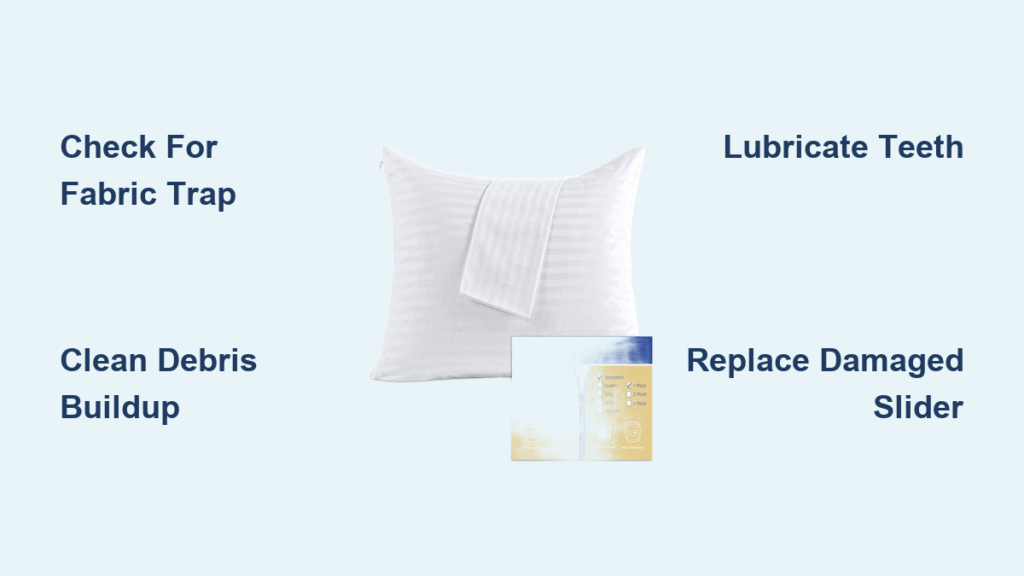
A stuck zipper on a pillow case is more than an annoyance. It can turn a simple bedding change into a frustrating struggle, especially when you need to wash or replace your pillow inserts. The good news? Most stuck zippers result from common issues like trapped fabric, debris buildup, or misaligned teeth. This guide walks you through every proven method to fix a stuck zipper on a pillow case, from quick at-home solutions to durable repairs using tools like FixnZip. You’ll learn how to diagnose the problem, apply the right fix, and prevent future jams.
Identify the Root Cause
Before attempting any repair, you need to understand what’s blocking your zipper. Rushing to force it open often makes the problem worse. Lay your pillow case flat under bright light and run your fingers along both sides of the zipper track. Feel for snags, gaps, or areas where the slider wobbles. Common culprits include fabric caught in the track, lint accumulation, or a worn slider that no longer grips the teeth properly.
Check for Fabric Entrapment
The most frequent cause of a stuck zipper is fabric pinched in the track. This often happens with the protective inner flap designed to conceal the zipper. Gently stretch the fabric around the slider to expose hidden folds. If your zipper stopped mid-way, the flap may have slipped into the teeth. Use your fingers or a needle to carefully lift the trapped material out. Never pull harder in this situation, as it can tear stitching or bend teeth.
Look for Debris or Buildup
Dust, lint, and thread fragments accumulate over time, especially if the pillow case wasn’t zipped during washing. Shine a flashlight along the teeth to spot any particles. Use a soft-bristled toothbrush to scrub both sides of the zipper track in short, back-and-forth motions. For stubborn debris, grip a fine needle with tweezers and gently pick out fibers. Clean the entire length, not just the stuck area, to prevent future friction.
Free a Jammed Zipper Slider

When the zipper won’t budge, start with gentle techniques. Forcing the slider can dislodge it completely or break teeth. Instead, use controlled backward motion and incremental realignment to restore function.
Pull Backward to Release Tension
If the zipper sticks while closing, pull the tab gently in the unzipping direction. This often loosens trapped fabric or realigns misfed teeth. Apply small, repeated tugs rather than one strong pull. Lay the pillow case on a table to stabilize it. If movement begins, alternate between zipping and unzipping slightly to help each tooth re-engage properly.
Wiggle and Re-Seat the Slider
Sometimes the slider jumps off track. Hold the zipper tape firmly on both sides and wiggle the slider side-to-side while applying light pressure. This can help it reattach to the teeth. If it feels loose, the internal clasp may have widened, which can be corrected with pliers.
Realign Misaligned Zipper Teeth
Misaligned teeth prevent the slider from moving smoothly. This often happens when the zipper starts off-center or fabric pulls one side forward.
Manually Re-Feed the Teeth
Unzip as much as possible. Lay the pillow case flat and straighten both zipper tapes. At the bottom, manually align the first few teeth on each side. Hold them steady and slowly guide them into the slider. Use one hand to maintain alignment while the other gently pulls the tab upward. Proceed slowly. If resistance returns, stop and recheck alignment.
Use Pliers to Straighten Bent Teeth
For stubborn misalignment, use flat-head pliers to gently straighten bent or overlapped teeth. Open the pliers slightly and slide them between the teeth at the jam point. Apply light outward pressure to widen the track. Work one tooth at a time, then test the slider. Avoid squeezing too hard, as this can break plastic teeth or deform metal ones.
Lubricate for Smooth Operation
Dry zippers create friction that leads to sticking. Lubrication is a fast, effective fix, especially when combined with cleaning.
Choose the Right Lubricant
Pencil graphite works well for light fabrics. Rub a #2 pencil along the teeth for stain-free lubrication. Bar soap (unscented) also reduces friction. Glide a dry bar over the teeth, then wipe excess with a cloth. Beeswax or candle wax provides long-lasting, non-greasy glide. Use white wax to avoid discoloration. Commercial sprays like Zipper-Ease are designed for zippers. Apply sparingly. Mineral oil or sewing machine oil works too, but use only a drop, as too much attracts lint and may stain.
Apply and Test
Coat both sides of the teeth from base to top. Move the slider back and forth to work in the lubricant. Repeat if needed. Wipe away residue to keep the fabric clean. For best results, lubricate every two to three months as part of routine maintenance.
Warning: Avoid oily lubricants on silk, satin, or light-colored pillow cases. Opt for dry solutions like graphite or wax.
Adjust a Loose or Damaged Slider
If the slider feels wobbly or slips off the track, it may not be gripping the teeth tightly enough.
Tighten with Needle-Nose Pliers
Hold the slider vertically and use needle-nose pliers to gently squeeze the body. Apply light pressure on the sides to reduce internal width. Test after each squeeze. Over-tightening can jam or crush the slider. The goal is firm, smooth movement without wobble.
Replace a Broken or Missing Slider
If the slider is damaged beyond repair, remove remnants with pliers. Get a replacement slider matching the size (like #5 nylon). Slide it onto the zipper from the bottom, open side down. Feed both tooth rows into the slider. Reattach or reinforce the bottom stop with thread or glue.
Install a Universal Zipper Slider (FixnZip)
When the original slider is missing or broken, FixnZip offers a no-sew, durable fix.
Select the Right Size
Use the small FixnZip slider for pillow cases. It fits plastic, metal, and nylon zippers. Confirm compatibility using the sizing guide at FixnZip.com.
Attach Without Tools
Loosen the thumbscrew with a small flat-head screwdriver. Position FixnZip over the teeth, guiding each row into the side channels. Tighten the thumbscrew to lock the teeth in place. Align slightly past the start, then back up to engage fully. Operate with thumb on top, finger underneath for maximum control.
Pro Tip: If the slider loosens after washing, simply retighten the thumbscrew.
Repair or Replace the Bottom Stop
The bottom stop keeps the slider from sliding off. If it’s missing, the zipper won’t stay on track.
Temporary Fix: Hand Stitch
Fold the end of the zipper tape and sew a few strong stitches across with heavy-duty thread. Knot securely. This holds the slider in place until a permanent fix is possible.
Permanent Fix: Crimp or Glue
Use pliers to crimp a new stop from a zipper repair kit. Apply a tiny dab of fabric glue or super glue to the tape end. Let dry completely before use. Avoid excess glue, as it can stiffen the zipper or seep into the teeth.
When to Replace the Entire Zipper
Some damage can’t be repaired at home. Consider full replacement if multiple teeth are missing or broken. Also consider replacement if the fabric around the zipper is torn or separated. Replacement is also wise if the slider repeatedly jams despite repairs. Finally, consider replacement if the zipper tape is frayed or detached.
DIY Replacement
Unpick the old stitching with a seam ripper. Align a new zipper of the same length and type. Pin in place and sew using a zipper foot on your machine. Use backstitching at both ends for durability.
Professional Repair
Take the pillow case to a tailor or upholstery shop. They can replace the zipper cleanly and reinforce the surrounding fabric, especially for thick or decorative covers.
Prevent Future Zipper Jams
Most zipper problems are preventable with simple habits.
Zip Slowly and Carefully
Rushing causes misalignment. Use two hands. One hand guides the fabric, the other operates the tab. Ensure the protective flap lies flat before zipping.
Close Before Washing
Always zip the pillow case before laundering. An open zipper can snag on other items, causing teeth to bend or fabric to tear.
Clean and Lubricate Regularly
Clean monthly with a toothbrush. Lubricate every two to three months with wax or graphite. Inspect for loose threads or slider wobble during routine checks.
Avoid Force at All Costs
If the zipper resists, stop. Forcing it leads to broken teeth and torn seams. Instead, inspect, realign, and lubricate.
Tools and Materials You’ll Need
Gather these items before starting your repair. Having everything ready makes the process smoother.
Tweezers remove trapped fabric or lint. Needle-nose pliers adjust or remove sliders. Flat-head pliers straighten bent teeth. A soft toothbrush cleans the zipper track. Pencil graphite provides dry, non-staining lubrication. Bar soap or beeswax reduces friction. Commercial zipper lubricant spray offers commercial-grade glide. A FixnZip slider replaces broken sliders without sewing. Thread and needle repair the bottom stop. A small screwdriver adjusts the FixnZip thumbscrew.
Key Takeaways for Fixing Your Pillow Case Zipper
Fixing a stuck zipper on a pillow case doesn’t require special skills. It requires the right approach and basic tools. Start by identifying the root cause. Trapped fabric, debris, and misalignment are the most common issues. Apply gentle techniques first, like pulling backward or wiggling the slider, before attempting more involved repairs. Lubrication with pencil graphite, soap, or wax resolves most sticking issues. For broken sliders, the FixnZip system offers a durable, no-sew solution that works on plastic, metal, and nylon zippers. Regular maintenance prevents most problems. Clean your zipper monthly and lubricate every few months. Always zip pillow cases before washing. With these methods, you can restore smooth function and extend the life of your bedding without professional help.
Frequently Asked Questions About Fixing a Stuck Zipper on a Pillow Case
Why does my pillow case zipper keep getting stuck?
Pillow case zippers commonly stick due to fabric entrapment, debris buildup in the teeth, misaligned zipper teeth, or a worn slider. The protective inner flap can fold into the track during zipping, trapping fabric. Regular cleaning and lubrication prevent most sticking issues.
Can I use WD-40 on my pillow case zipper?
WD-40 can work as a lubricant, but it may attract lint and potentially stain fabric. Use it sparingly and wipe excess immediately. Dry lubricants like pencil graphite or beeswax are safer for light-colored or delicate fabrics.
How do I fix a zipper that won’t close at all?
Fully unzip the pillow case first. Lay it flat and inspect for trapped fabric or debris. Realign the teeth manually at the bottom, then slowly guide them into the slider. If the slider is damaged, consider replacing it with a FixnZip or matching replacement slider.
Is FixnZip suitable for all types of zippers?
FixnZip works with plastic, metal, and nylon zippers. The small size is recommended for pillow cases and cushion covers. Check the sizing guide at FixnZip.com to confirm compatibility with your specific zipper.
How often should I lubricate my pillow case zippers?
Lubricate every two to three months for frequently used pillow cases. Monthly cleaning with a toothbrush removes debris. Regular maintenance prevents buildup that leads to sticking and extends zipper life significantly.