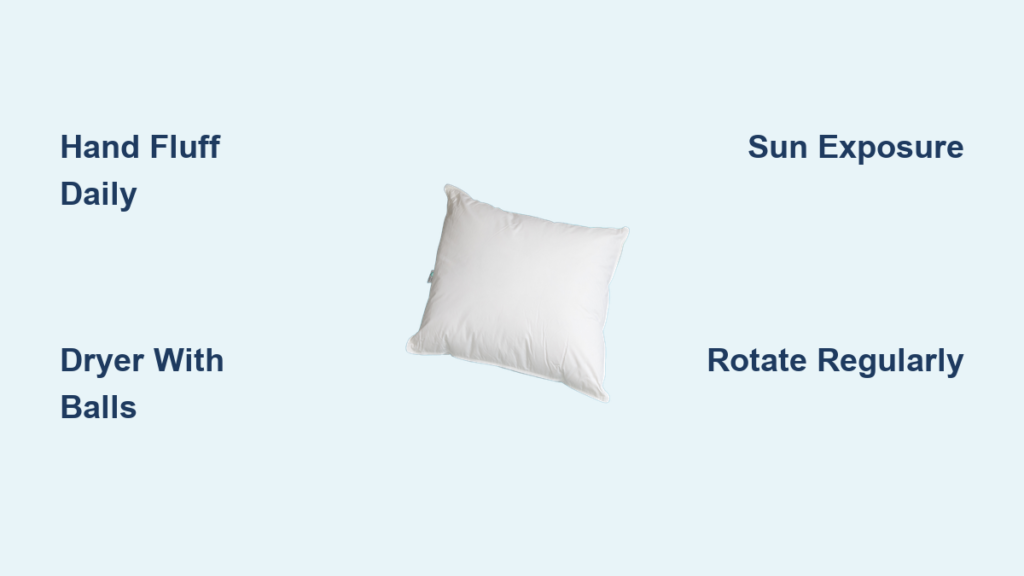
You wake up, make the bed, and notice your once-plush down pillow now lies flat and lifeless. It’s lost its bounce, feels lumpy, and no longer supports your neck properly. This is a common issue but easily fixed. Fluffing a down pillow isn’t just about looks. It restores essential loft, redistributes fill, and extends the pillow’s life. Whether your pillow arrived vacuum-packed, has gone flat from nightly use, or just needs a refresh, regular fluffing keeps it performing like new.
In this guide, you’ll learn proven methods by hand, in the dryer, and with sunlight to revive your pillow’s volume, eliminate odors, and maintain long-term comfort. No guesswork, just science-backed techniques that work.
Restore Loft with Daily Hand Fluffing
Manual fluffing is the fastest, most effective daily maintenance step to keep your down pillow full and supportive. Unlike synthetic fill, down clusters trap air in three-dimensional structures that rebound when agitated, making hand fluffing highly efficient.
Diagonal Clapping for Instant Volume
Hold opposite corners of the pillow and clap them together in a quick, snapping motion. This forces air into the core, breaking up compressed layers and reinflating flattened down.
• Repeat for 15 to 30 seconds
• You’ll see immediate improvement in thickness
• This method mimics the accordion technique for new pillows
Rotate and Reshape Evenly
After clapping diagonally, rotate the pillow 90 degrees and repeat. Continue until all four sides have been fluffed.
• Use a consistent clockwise pattern so you don’t miss a side
• This prevents one-sided wear
• Ensures even fill distribution
Punch and Shake to Break Clumps
For lumpy or heavily compressed areas, deliver firm but controlled punches with your fist or a flat hand. Focus on the center and edges where feathers tend to settle.
• Then shake vigorously to redistribute the fill
• Avoid excessive force that could tear the fabric
• This step is crucial for pillows feeling dense or unresponsive
Finish with a Flat-Handed Chop
End with a light, open-handed chop across the top surface. This helps settle the filling evenly and creates a smooth, symmetrical shape ideal for beds or sofas.
Pro Tip: Spend at least 30 seconds fluffing each morning. It takes less time than making the bed and significantly prolongs pillow life.
Revive Flat Pillows in the Dryer
When hand fluffing isn’t enough, the dryer offers deep restoration. Heat and mechanical agitation work together to re-loft compressed down and eliminate moisture.
Use Tennis or Wool Balls for Better Results
Place 1 to 2 clean tennis balls or wool dryer balls in the dryer with your pillow. These act as paddles, kneading the fill during tumbling and breaking up stubborn clumps.
• For lint control, slip balls into clean cotton socks first
• Wool balls are eco-friendly and reduce drying time
• They also soften fibers naturally
Set Low Heat or Air-Only Mode
Use low to medium heat never high. Excessive heat can scorch delicate down clusters, melt synthetic blends, or weaken stitching.
• If your dryer has an air fluff setting, use it for routine refreshes
• This method safely restores loft without thermal risk
Dry for 10 to 20 Minutes Max
Run the cycle for 10 to 20 minutes. Pause every 10 minutes to remove and shake the pillow by hand.
• This ensures even agitation
• Prevents fill from shifting to one side
• Let the pillow rest for 5 to 10 minutes to fully expand
Ideal for Post-Wash Recovery
After washing, dry thoroughly. This may take 3 to 4 cycles of 30 to 60 minutes each. Down retains moisture deep in the core.
• Continue drying well beyond when outer fabric feels dry
• Shake between cycles to speed drying and prevent clumping
• Always skip bleach and fabric softener
User Result: After using tennis balls in the dryer, my 5-year-old down pillow looked brand new.
Refresh with Sun and Air Exposure
:max_bytes(150000):strip_icc()/bhg-pillows-outside-8630258-d3e4f91967df4eec9e8274949b85585b.jpg)
Sunlight and fresh air naturally rejuvenate down pillows. UV rays sanitize while airflow re-inflates compressed clusters and removes trapped moisture.
Air Outdoors for 1 to 4 Hours
Place the pillow in direct sunlight on a clean clothesline, drying rack, or patio. Flip halfway through for even exposure.
• Ideal conditions are dry, sunny days with low humidity
• Avoid dew-prone mornings or damp evenings
• Moisture can lead to mildew
Eliminate Odors and Kill Allergens
UV radiation kills bacteria, dust mites, and allergens. Air circulation neutralizes musty smells from sweat, oils, or humidity.
• Users report up to 70% reduction in odor after outdoor airing
• This method is perfect for monthly maintenance
Shake Before and After
Gently shake the pillow before placing it outside and again after retrieval. This loosens compacted fill and maximizes air penetration.
Warning: Never leave outside overnight. Dew accumulation increases mold risk.
Fluff New Down Pillows After Unpacking
New down pillows often arrive flat due to vacuum packing. Don’t panic. This is normal. Compression during shipping doesn’t damage the fill. It just needs time and agitation to rebound.
Expect a Break-In Period
Full expansion can take several days to two weeks. High-fill-power down (600+) regains loft faster, but even premium pillows require repeated fluffing.
Fluff 2 to 3 Times Daily for First Week
For days 1 through 7, fluff vigorously using diagonal clapping and rotational techniques.
• The more you fluff, the quicker it expands
• Combine with occasional outdoor airing to accelerate recovery
• Don’t judge the pillow’s quality on day one
Transition to Daily Maintenance
From day 8 onward, reduce to once-daily fluffing. By day 14, the pillow should reach its intended thickness and softness.
Expert Note: Fill density matters. Higher-density pillows (e.g., 700+ fill power) achieve greater, longer-lasting loft.
Adapt Techniques for Bolster Pillows
Cylindrical or bolster-style down pillows need modified fluffing due to shape and frequent use as support or decorative items.
Use Accordion Pulling Motion
Hold one end in each hand and pull apart, then push together like stretching and compressing an accordion.
• This forces air through the core
• Disrupts nested feathers
• Rotate the bolster 90 degrees and repeat
Add Light Punching Along Length
Gently punch along the body of the pillow to break up dense zones.
• Finish with a shake and a flat-hand tap for shape
• These pillows endure more compression from leaning on sofas
• Fluff multiple times daily for best results
Know When to Wash vs. Fluff
Fluffing maintains shape. Washing cleans. Confusing the two leads to overwashing, which degrades down over time.
Fluff for Daily Shape and Support
Use fluffing to restore loft after sleep, prevent clumping, remove minor moisture, and revive slightly flat pillows.
• Do this every morning
• It takes seconds and prevents long-term flattening
Wash for Deep Cleaning Only
Wash when stains or oils are visible, persistent odors remain after airing, allergen reduction is needed, or after illness.
• Limit washing to 1 to 2 times per year
• Overwashing strips natural oils from down
Machine Wash Safely
• Use an aggregator-free, oversized machine
• Wash in warm water with mild, bleach-free detergent
• Run an extra rinse cycle to remove all soap residue
• Never use fabric softener
Never iron. High heat damages both down and stitching.
Use the Right Tools for Better Fluffing
Simple tools enhance fluffing effectiveness, especially for deep restoration or frequent use.
Tennis Balls for Dryer Agitation
Bounce inside the dryer, they break up clumps more effectively than tumbling alone.
• Place dirty balls in socks to avoid lint transfer
Wool Dryer Balls: Eco-Friendly Alternative
Reusable and chemical-free, wool balls reduce drying time by up to 25%, soften fill, and prevent static.
Pillow Mallet (Optional)
A soft mallet or padded hammer gently whacks large decorative pillows to release deep compression.
Zippered Pillow Shams
Allow access to the insert for manual manipulation. You can squeeze, reshape, or even remove clumps through the opening.
Maintain Long-Term Loft with Smart Care
Fluffing isn’t a one-time fix. It’s part of a maintenance routine that doubles your pillow’s lifespan.
Fluff and Rotate Daily
In addition to morning fluffing, rotate and flip the pillow regularly to prevent one-sided compression.
• Side sleepers, who apply uneven pressure, benefit most
Use a Pillow Protector
Wear a zippered, hypoallergenic protector under your pillowcase.
• It blocks sweat, oils, and allergens
• Reduces need for washing
• Preserves down quality
• Wash the protector monthly
Store Properly Between Seasons
• Short-term: Keep in a cool, dry place, loosely covered with breathable cotton
• Long-term: Use a cotton storage sack never plastic, which traps moisture
• Add silica gel packets to absorb humidity
• Fluff thoroughly before reuse
Avoid compression. Don’t store under heavy items or in tight spaces.
Recognize When to Replace Your Pillow
Even with perfect care, down pillows wear out. Fluffing cannot fix structural damage.
Signs It’s Time to Replace
• Persistent flatness that doesn’t rebound after aggressive fluffing
• Hard, immovable lumps where fill is matted beyond recovery
• Loss of resilience that feels dense and doesn’t spring back
• Stains or odors that won’t wash out
• Visible damage like tears, poking feathers, or frayed seams
• Neck pain or poor sleep from inadequate support
Replacement Timeline
| Pillow Type | Replace Every |
|---|---|
| Down & Feather | 2 to 5 years |
| Synthetic | 1 to 2 years |
| High-Use (e.g., couch) | Sooner than sleep pillows |
Some experts recommend replacing every 2 years, regardless of condition, for hygiene and support.
Follow the Complete Fluffing Protocol
Maximize pillow performance with a structured routine combining all methods.
| Step | Frequency | Method |
|---|---|---|
| Corner shaking | Daily | By hand, 15 to 30 sec |
| Rotational fluffing | Daily | After corner shake |
| Punching/slapping | Daily | 5 to 10 firm hits |
| Outdoor airing | Monthly | 1 to 4 hours in sun |
| Dryer fluffing | Every 2 to 4 weeks | Low heat plus balls |
| Post-wash drying | As needed | Until fully dry |
| Pre-use fluff (stored) | As needed | Hand shake |
| Replacement check | Every 6 months | Visual plus feel test |
Frequently Asked Questions About Fluffing a Down Pillow
How long does it take to fluff a new down pillow fully?
Full expansion typically takes several days to two weeks. High-fill-power down (600+) regains loft faster, but even premium pillows need repeated fluffing. Fluff vigorously 2 to 3 times daily for the first week, then transition to daily maintenance.
Can I put a down pillow in the dryer to fluff it?
Yes. Use low to medium heat or the air fluff setting. Add 1 to 2 tennis balls or wool dryer balls to break up clumps. Dry for 10 to 20 minutes, pausing every 10 minutes to shake. Never use high heat, which can scorch delicate down clusters.
How often should I fluff my down pillow?
Fluff daily, ideally every morning. This takes about 30 seconds and maintains shape and support. Supplement with monthly outdoor airing and dryer refreshes every 2 to 4 weeks.
Why does my down pillow go flat so quickly?
Down pillows lose fluffiness due to repeated compression from head and neck pressure during sleep. Over time, feathers nest together, reducing air pockets. Daily fluffing redistributes fill and prevents permanent flattening.
Can I wash my down pillow too often?
Yes. Limit washing to 1 to 2 times per year. Overwashing strips natural oils from down, reducing resilience and causing premature flattening. Use fluffing for daily maintenance and washing only for deep cleaning.
What’s the best way to store a down pillow long-term?
Store in a breathable cotton sack in a cool, dry place. Never use plastic bags, which trap moisture and promote mildew. Add silica gel packets to absorb humidity. Fluff thoroughly before reuse.
Key Takeaways for Fluffing Your Down Pillow
Fluffing a down pillow is simple, fast, and essential for maintaining comfort and extending pillow life. By combining daily hand techniques with monthly sun exposure and periodic dryer refreshes, you preserve loft, hygiene, and support. The core principle is simple: agitation disrupts compressed clusters and restores trapped air.
Protect your investment with a pillow cover, store wisely in breathable cotton, and replace when support fades. Daily attention prevents long-term flattening and saves money on early replacement. With proper care, your down pillow stays plush, supportive, and fresh for years.