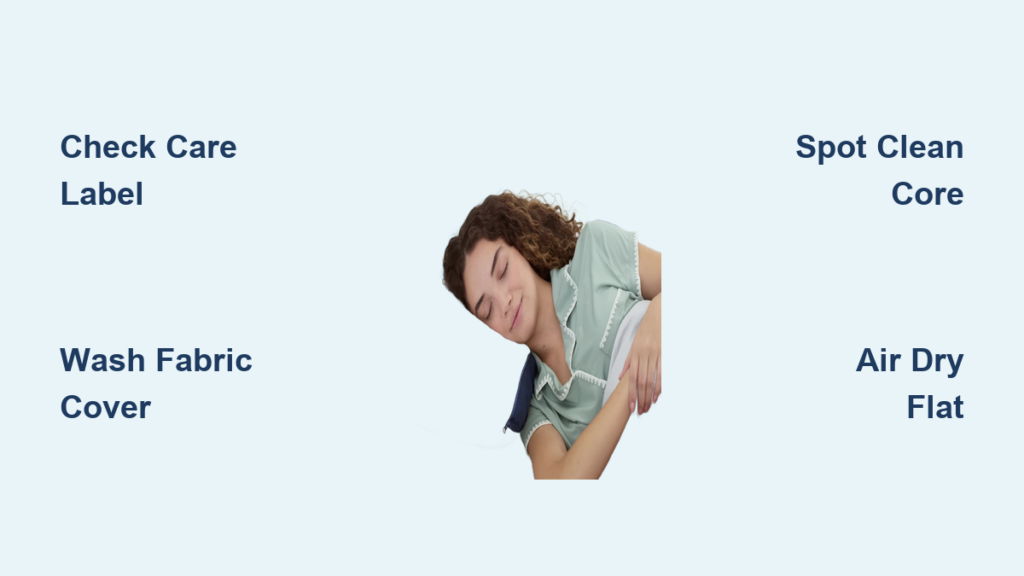
If your cooling pillow has lost its freshness or picked up stains, you are not alone. Sweat, oils, and dust can degrade both comfort and performance over time. Knowing how to wash a cooling pillow the right way is essential to preserve its temperature-regulating properties, structural support, and longevity. This guide walks you through every step, whether your pillow has a removable core or integrated design, so you can clean it safely and keep it performing like new. You will learn how to identify your pillow technology, choose the correct washing method, dry it properly, and avoid common mistakes that lead to odor, mold, or permanent damage.
Check the Care Label First
Before doing anything, verify your pillow material type and cleaning instructions. Cooling pillows vary widely in construction, and using the wrong method can ruin them.
Identify Your Cooling Technology
Not all cooling pillows are created equal. The cleaning approach depends on what is inside your pillow. Silicone sponge cores are fully washable and heat-tolerant. Gel-infused foam requires spot clean only because water can cause gel leakage. Phase-change materials are heat-sensitive and require air drying only. Cooling fabric covers are machine washable but need cold water. Memory foam with cooling gel has a washable outer cover, but the core is not.
If no label exists or details are unclear, default to spot cleaning only.
Look for These Symbols
Care labels often use icons to guide you. A swirl symbol means machine wash on gentle cycle. A sun symbol means tumble dry safe. A cloud symbol means air dry flat. A crossed-out flame means no high heat. A crossed-out circle means do not bleach or dry clean. When in doubt, contact the manufacturer or search your model online for verified care guidelines.
Remove and Wash the Pillowcase
Most cooling pillows come with a removable, washable cover designed to enhance breathability and wick moisture away from your skin.
Machine Wash Cold, Gentle Cycle
For fabric covers, unzip and remove the cover completely. Wash separately or with similar colors. Use cold water at 85°F or lower and a gentle cycle. Add mild, pH-neutral detergent while avoiding bleach, chlorine, and fabric softeners.
Fabric softeners coat fibers and reduce moisture-wicking, undermining the cooling effect.
Hand Wash Option
If preferred or recommended, fill a basin with cool water and mild soap. Submerge the cover and gently agitate. Rinse thoroughly to remove all detergent residue. Press out water without wringing.
Clean the Core: Silicone vs. Non-Washable
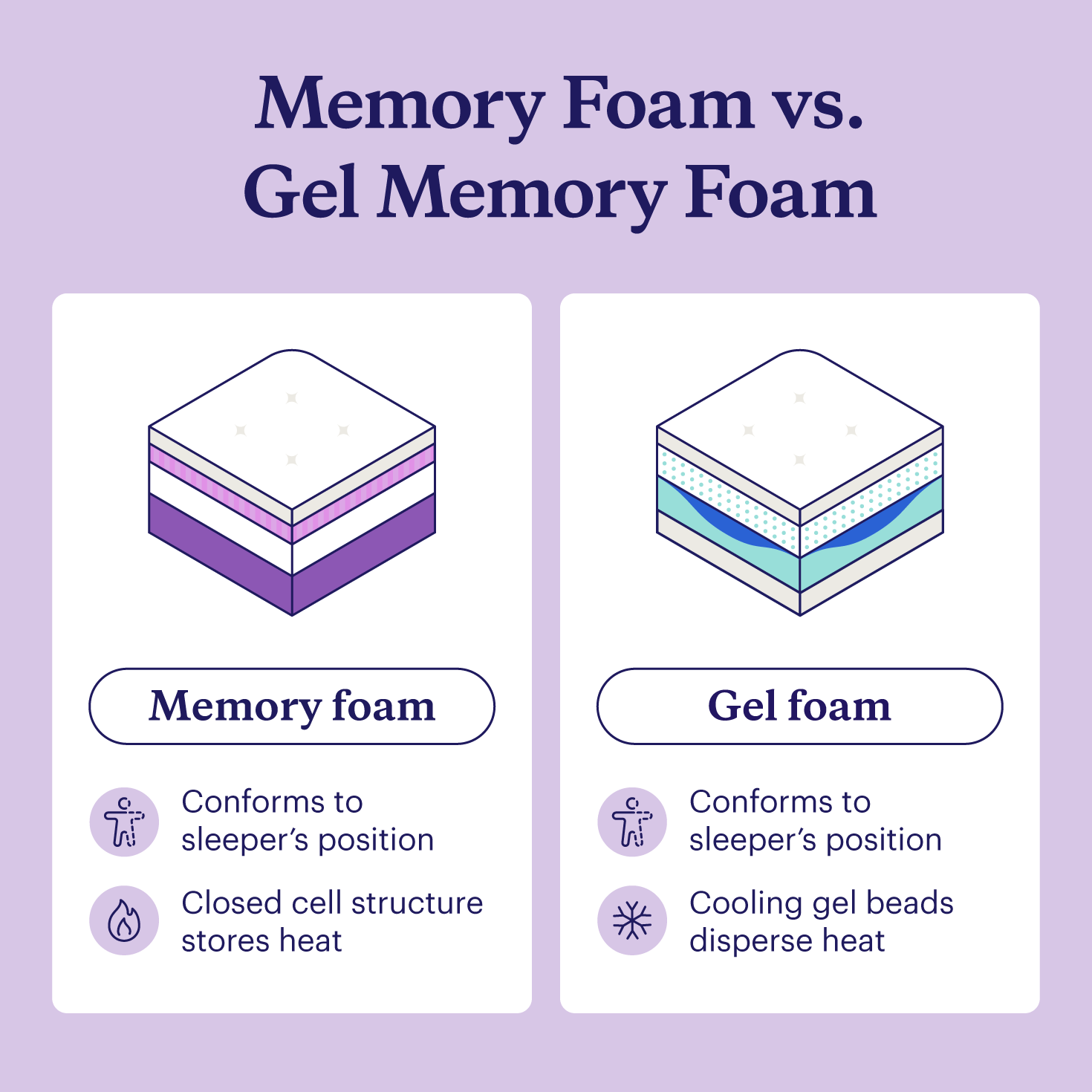
This is where most people make mistakes. Some cores can be washed safely while others must never get wet.
Wash Silicone Sponge Cores Safely
Pillows with silicone sponge cores are fully washable and tolerate heat and agitation well. For machine washing, wash separately or in a mesh laundry bag. Use hot water up to 140°F. Select delicate or gentle cycle. Use minimal, bleach-free detergent.
This high-temperature tolerance is rare and only safe for verified silicone cores.
Hand Wash Alternative
Soak in warm, soapy water. Gently press without twisting or squeezing. Rinse thoroughly until water runs clear. Press out excess water gently.
Spot Clean Gel or Memory Foam Cores
If your pillow contains gel, PCMs, or memory foam, the core must not be submerged in water. Mix a few drops of mild detergent with cool water. Dampen a white cloth to avoid dye transfer. Blot the soiled area without rubbing. Use a second clean, damp cloth to wipe away soap. Pat dry with a towel. Let air-dry completely before use.
Never soak or machine wash non-removable gel cores. Water exposure can cause gel separation or foam breakdown.
Dry Thoroughly to Prevent Odor
Improper drying leads to musty smells, mold, and material decay, even if washing was done correctly.
Tumble Dry: High Heat for Silicone Only
Silicone cores are safe to tumble dry on high heat. Run for 60 to 90 minutes to ensure full dryness. Check periodically because multiple cycles may be needed. Fabric covers should use low or no heat. Remove promptly to prevent wrinkles.
Never use dryer sheets or fabric softeners. They leave a residue that traps heat.
Air Dry Flat in Shade
Air drying is best for all non-silicone types and when avoiding heat. Lay on a clean, dry surface such as a towel or drying rack. Place in a well-ventilated room away from sunlight. Flip every 6 to 8 hours for even drying. Allow 24 to 48 hours for complete dryness.
Avoid hanging. The weight of moisture can stretch or distort the pillow.
Never Do These
Do not dry near radiators or heaters because they can melt gel. Do not use a clothesline because it causes sagging. Do not store while damp because it invites mildew. Do not compress before dry because it traps moisture inside.
Store Properly After Washing
How you store your cooling pillow affects its lifespan and performance.
Store Flat in a Dry Place
Choose a cool, dry area with good airflow. Keep away from direct sunlight and humidity sources like bathrooms. Place on a shelf or under breathable fabric.
Use a Breathable Storage Bag
Opt for a cotton or mesh bag rather than plastic. This allows air circulation and prevents condensation. It protects from dust without trapping moisture.
Never Fold or Vacuum-Seal
Folding creates permanent creases and weakens internal structure. Vacuum sealing crushes the cellular matrix, reducing loft and resilience. Both actions shorten pillow life and degrade cooling efficiency.
Maintain Long-Term Performance
Regular upkeep keeps your cooling pillow fresh and effective for years.
Use a Cooling-Compatible Protector
Slip on a breathable waterproof pillow protector. It blocks sweat, spills, and allergens while reducing deep cleaning frequency. Choose one with moisture-wicking fabric, not plastic backing.
Replace protectors every 1 to 2 years or when worn.
Clean on a Schedule
Wash pillowcase every 7 to 10 days. Deep clean the core or entire pillow every 3 to 6 months. Spot clean immediately after spills or heavy sweating.
Fluff and Rotate Weekly
Fluff daily to restore shape and airflow. Rotate 180 degrees weekly to prevent uneven compression. This helps maintain ergonomic support and even cooling.
Avoid These Damage Risks
Even small mistakes can permanently ruin your pillow.
| Action to Avoid | Why It Is Harmful |
|---|---|
| Bleach or chlorine | Breaks down polymers and cooling agents |
| Fabric softeners | Coats fibers, reduces wicking and breathability |
| High heat from iron or dryer | Melts gel, warps foam, shrinks fabric |
| Wringing or twisting | Destroys internal structure and support |
| Soaking too long | Causes water retention, mold, and odor |
| Vacuum sealing | Crushes cellular structure, reduces resilience |
| Dry cleaning | Harsh solvents degrade cooling materials |
When in doubt, clean less aggressively. It is better to under-wash than over-damage.
Restore Cooling Performance
Cleaning helps, but habits determine long-term effectiveness.
Protect from Sunlight
UV rays degrade cooling fibers and fade fabrics. Keep the pillow away from windows during use and storage.
Prevent Residue Buildup
Use minimal detergent because excess leaves a film. Rinse thoroughly to avoid chemical buildup. Residue blocks airflow and reduces thermal response.
Replace When Worn
Even with perfect care, cooling pillows last 3 to 5 years. Signs it is time to replace include loss of firmness or slow rebound, persistent odor despite cleaning, visible tears, lumps, or sagging, and reduced cooling sensation.
Frequently Asked Questions About Washing Cooling Pillows
Can I machine wash my cooling pillow?
It depends on the material. Silicone sponge cores are machine washable in hot water on gentle cycle. Gel-infused foam or memory foam cores are not machine washable and require spot cleaning only. Always check the care label first.
What temperature should I use when washing the pillowcase?
Use cold water at 85°F or lower. Hot water can damage cooling fabrics and cause shrinkage. A gentle cycle with mild, pH-neutral detergent is ideal.
How do I dry a cooling pillow without damaging it?
Silicone cores can tumble dry on high heat. Fabric covers should air dry or tumble dry on low heat. Never use a clothesline, radiator, or direct sunlight. Ensure complete dryness before storage to prevent mold.
Why does my cooling pillow smell after washing?
Odor usually indicates incomplete drying. Moisture trapped inside creates musty smells and promotes mold growth. Allow 24 to 48 hours for air drying, flipping every 6 to 8 hours. Using fabric softeners can also cause residual odor.
How often should I clean my cooling pillow?
Wash pillowcase every 7 to 10 days. Deep clean the core or entire pillow every 3 to 6 months. Spot clean immediately after spills or heavy sweating.
Can I use fabric softener on my cooling pillow?
No. Fabric softeners coat fibers and reduce moisture-wicking ability, undermining the cooling effect. They also leave residue that blocks airflow and reduces thermal response.
Key Takeaways for Washing Your Cooling Pillow
Properly washing a cooling pillow is not just about cleanliness. It is about preserving the advanced technology designed to keep you comfortable all night. Start by identifying your pillow type and checking the care label. Wash silicone cores separately in hot water on gentle cycle. Clean fabric covers in cold water with mild detergent. Spot clean gel or memory foam cores without submerging them. Dry thoroughly, either tumble drying on appropriate heat settings or air drying flat in shade. Store flat in a cool, dry place using a breathable cotton bag. Never fold, vacuum-seal, or use harsh chemicals. By following material-specific steps and avoiding common pitfalls, you can extend your cooling pillow life and performance for years.