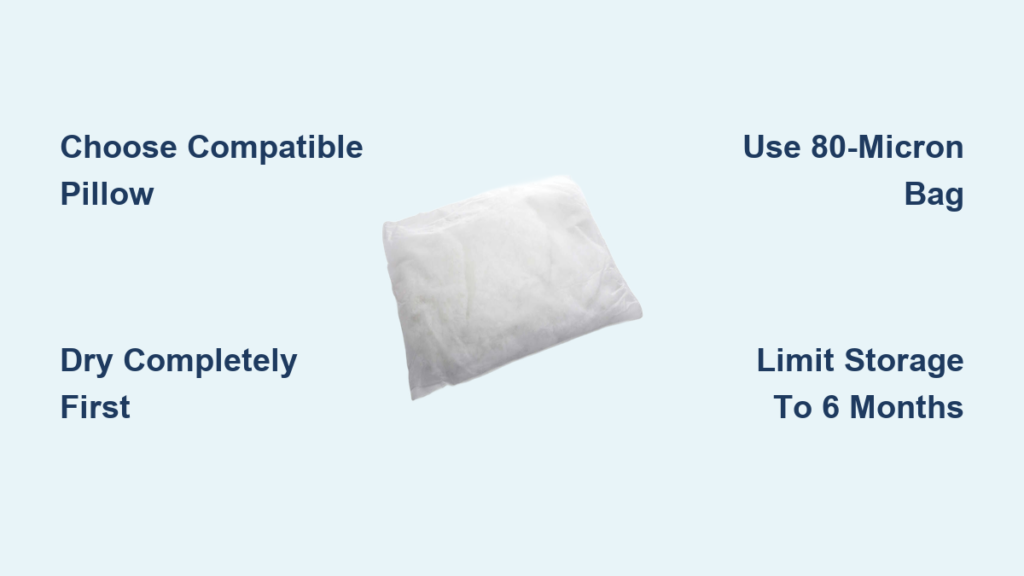
Vacuum packing a pillow is one of the most effective ways to save space when storing or transporting bedding. Whether you’re preparing for a move, traveling with limited luggage space, or simply decluttering your home, vacuum compression can shrink a bulky pillow down to less than one-sixth of its original size, freeing up valuable closet, suitcase, or under-bed storage. The process uses only a household vacuum cleaner and a durable plastic bag, making it an affordable solution for most users.
However, not all pillows respond well to vacuum packing. While synthetic and down-filled pillows typically rebound after decompression, memory foam and latex are prone to permanent damage due to their sensitive cellular structure. This guide walks you through every step, from preparation to restoration, with expert-backed tips to avoid common mistakes.
Choose the Right Pillow Type for Vacuum Packing
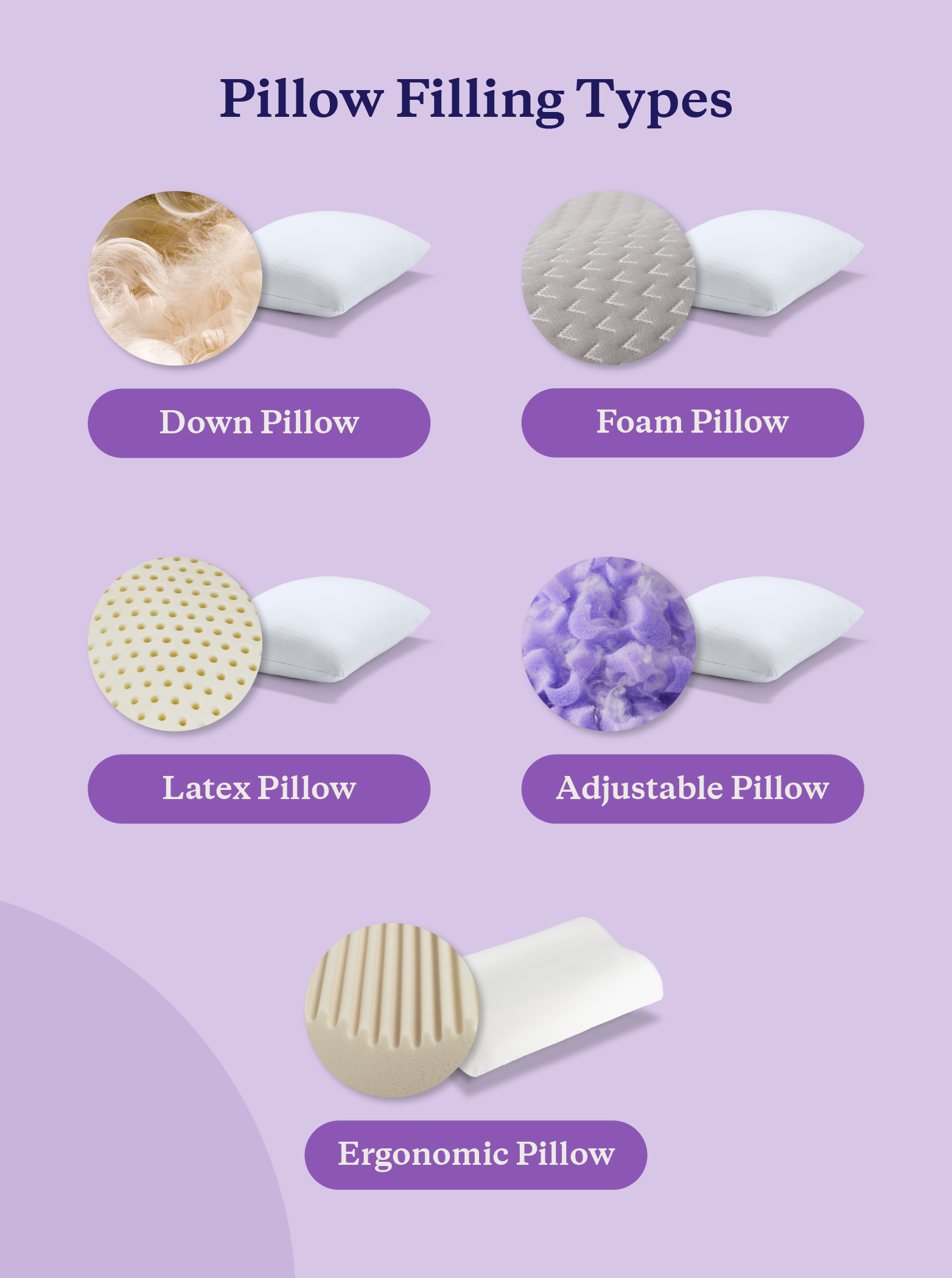
Not all pillows can withstand vacuum compression. The filling material determines whether your pillow will survive the process and bounce back when unpacked.
Avoid Vacuum Packing These Materials
Memory foam and latex pillows rely on trapped air within open or closed cells for support and resilience. Removing that air under high suction pressure can collapse the internal structure, leading to slow rebound or permanent deformation. Even short-term compression may reduce loft and comfort over time.
Buckwheat and kapok fillings cannot be compressed. Attempting vacuum packing may damage the bag or zipper but will not reduce volume.
Ideal Pillows for Compression
Polyester fiberfill and down or down-alternative pillows compress well and recover quickly. Their flexible fibers easily collapse and re-expand once released.
For best results with down pillows, limit compression to 50 to 85 percent and avoid storing longer than six months without airing out. Synthetic pillows tolerate more aggressive compression but still benefit from careful handling.
Suitable Wedge Pillows
Orthopedic wedge pillows like the Lunix models are designed for vacuum storage. Use manufacturer-recommended 80 by 100 centimeter PA plus PE bags to maintain shape during compression. Do not fold sharply; align the pillow gently inside the bag instead.
Prepare Your Pillow Before Compression

Skipping cleaning or drying leads to mold, odors, and irreversible damage, even in sealed bags. Proper preparation is essential for successful vacuum packing.
Clean According to Care Instructions
Check the manufacturer tag for washing instructions. Machine-washable pillows can be cleaned with mild detergent on a gentle cycle. Spot clean only pillows require treatment with a damp cloth and mild soap. Hand wash delicate down or feather pillows gently.
Never submerge memory foam in water, as this damages its structure permanently.
Dry Completely Before Packing
Moisture trapped in a vacuum-sealed environment breeds mold and mildew within days. Tumble dry on low heat with two to three clean tennis balls to restore fluff. Air dry for 24 to 48 hours if needed, ensuring no dampness remains.
Test by pressing the pillow. If any coolness or moisture is felt, continue drying. A single damp fiber can generate condensation inside the sealed bag.
Add a Protective Layer
Slip the pillow into a clean pillowcase or protector before bagging. This prevents abrasion from zipper teeth, direct contact with plastic which reduces odor absorption, and dust contamination.
Select the Best Storage Bag for Compression

Using weak or undersized bags leads to leaks, bursts, and failed compression. Choosing the right bag is critical to success.
Use 80-Micron PA Plus PE Vacuum Bags
Commercial storage bags made from polyamide-nylon and polyethylene offer puncture resistance, odor barrier protection, reinforced seams, and double-seal zippers with air valves. The recommended size is 80 by 100 centimeters, which fits standard and wedge pillows.
DIY Alternative: Heavy-Duty Garbage Bags
If commercial bags are not available, choose contractor-grade black trash bags with three to four mil thickness. Ensure the bag is large enough to avoid overstuffing. Seal with the twist-and-rubber-band method after vacuuming.
DIY bags lack valves and may leak air within weeks. They work for short-term storage but are not ideal for long-term use.
Avoid Thin Plastic Bags
Standard kitchen or grocery bags tear easily under pressure, allow moisture buildup, and leak air quickly. These are not suitable for vacuum packing pillows.
Seal and Load the Pillow Into the Bag
Proper sealing ensures maximum compression and long-term air retention. Follow these steps carefully.
Load the Bag Correctly
Lay the bag flat on a clean surface. Place the pillow inside smoothly without forcing or folding sharply. For multiple pillows, add them all at once. Keep fabric away from the zipper to prevent snags.
Insert a silica gel packet to absorb residual moisture and prevent mildew.
Close the Zipper Completely
For commercial bags, seal the double-lock zipper completely. Run your finger along the track to remove wrinkles or debris. Leave the air valve open for vacuum attachment.
For the DIY method, insert the vacuum hose into the open end. Pull the plastic tightly around the nozzle. Use a funnel taped to the hose if the fit is loose.
Remove Air Using Your Household Vacuum
This step compresses the pillow efficiently without special equipment. A standard vacuum cleaner provides sufficient suction power.
Attach the Hose Properly
Fit the vacuum nozzle securely into the air valve for commercial bags. For garbage bags, insert directly into the open neck. Ensure an airtight connection, as air leaks reduce compression effectiveness.
Run the Vacuum for 30 to 60 Seconds
Turn on the vacuum and let it run. Apply light pressure with a book or your hand to help flatten the pillow evenly. Stop when the pillow is fully compacted and no more air escapes.
The bag should feel firm and rigid, with the pillow reduced to approximately one-sixth of its original size.
Seal Immediately After Air Extraction
For commercial bags, remove the hose and close the valve cap instantly to lock in the vacuum. Double-check the zipper. If the bag re-inflates, re-seal and retry.
For the DIY method, turn off the vacuum and pull the hose out slowly. Twist the neck tightly and secure with a rubber band or zip tie. Knot the end if the plastic is thick enough.
A simple knot alone will not hold. Use the twist-and-band technique for better results.
Store the Compressed Pillow Properly
Even a perfectly sealed bag can fail if stored in improper conditions. Environment matters for long-term success.
Choose Cool, Dry, Dark Locations
Ideal storage spots include under-bed storage bins, closet shelves, and inside suitcases. Avoid attics where heat degrades plastic and damages fibers. Avoid basements where humidity promotes mold. Avoid areas near windows where UV light weakens plastic.
Stack Smartly
Place compressed bundles flat or upright. Avoid placing heavy items on top. Label each bag with contents and date using a marker.
Six vacuum-packed pillows can fit inside a single pillow sham, which is great for organization.
Inspect Regularly
Check every one to three months for air leakage when the bag feels soft, moisture buildup showing as fogging or dampness, and tears or punctures. If air has re-entered, re-vacuum or replace the bag.
Limit How Long You Keep Pillows Compressed
Long-term compression weakens fibers and reduces pillow lifespan. Duration matters for maintaining pillow quality.
Maximum Storage Time: Six Months
Beyond six months, even synthetic fibers may lose resilience. Down clusters can clump and fail to re-loft properly.
Rotate Every Three to Six Months
Best practice involves unsealing the bag, letting the pillow breathe for two to four hours, fluffing by hand or tumbling on low heat, and re-packing if needed.
Most warranties do not cover damage from prolonged compression.
Restore Your Pillow After Unpacking
Proper restoration brings back loft, comfort, and hygiene. Take time to fluff properly before use.
Unpack Gently
Open the zipper slowly. Allow the pillow to expand naturally, which takes seconds to minutes.
Air It Out
Place in a well-ventilated area or indirect sunlight for two to four hours. This eliminates any plastic odor absorbed during storage.
Fluff for Full Recovery
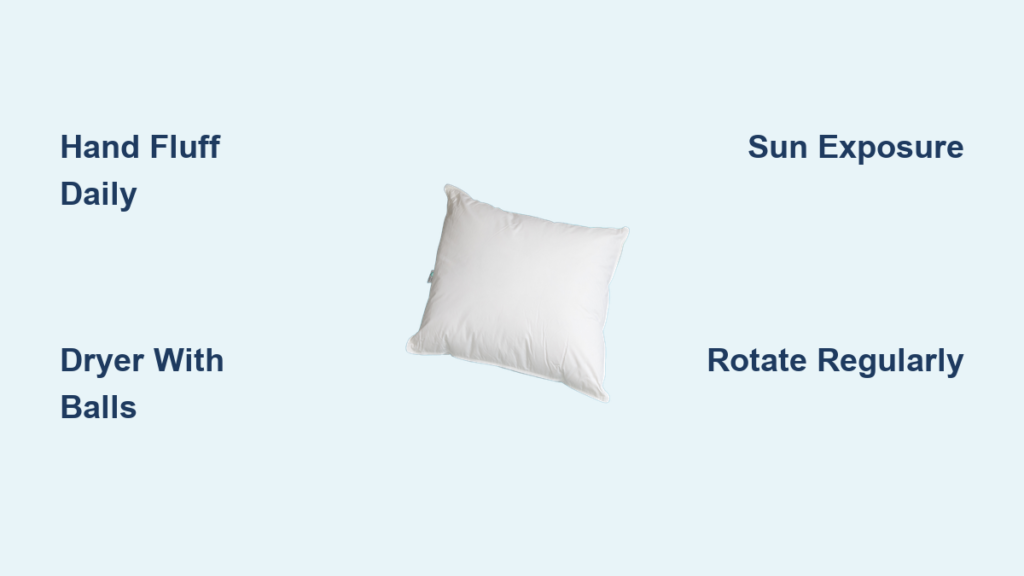
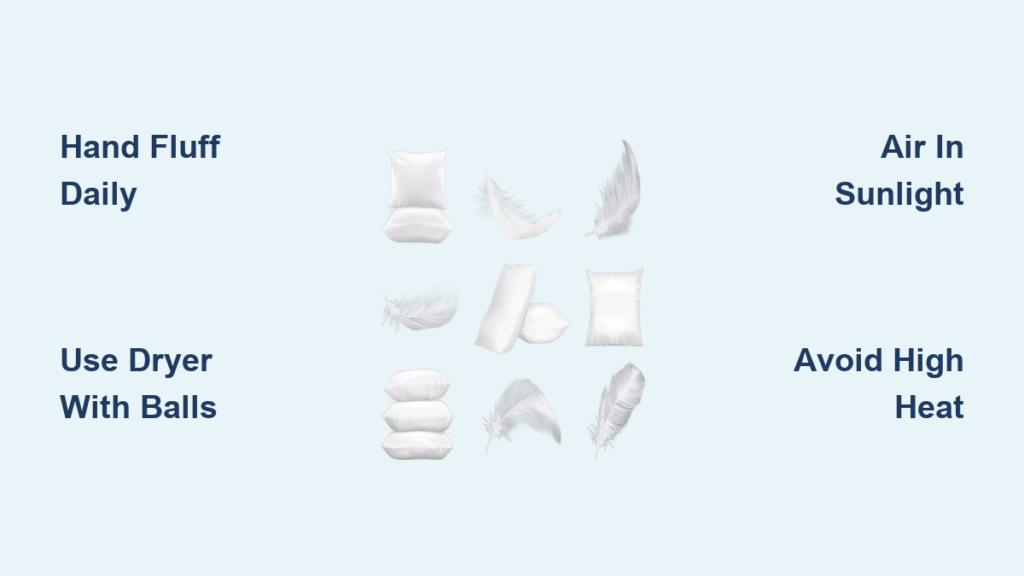
Hand fluffing involves shaking vigorously and squeezing to redistribute filling. Tumble drying on low heat with tennis balls or dryer balls for 20 to 30 minutes works well. Air drying by laying flat or hanging in a breezy spot and rotating every hour promotes even recovery.
Combine hand fluffing and tumble drying for down and synthetic fills for best results.
Replace If Damaged
Discard the pillow if it remains flat, lumpy, or misshapen after fluffing. Also replace if there are stains, tears, or musty smells, or if the pillow has exceeded its lifespan of one to two years.
Alternative Storage Methods for Sensitive Pillows
For sensitive materials, breathable options are safer than vacuum sealing.
Cotton Storage Bags
Cotton storage bags allow airflow, reducing moisture risk. They protect against dust and pests and are ideal for down, feather, and decorative pillows.
Plastic Tubs with Desiccants
Use sealed bins with silica gel packets. Line with a cotton bag for extra protection and label clearly for quick access.
Shelving Units
Store pillows flat or upright to avoid crushing. Cover with a breathable sheet and fluff monthly to maintain shape.
Ventilated Plastic Bags for Short-Term Storage
Standard plastic bags with poked holes for airflow are only suitable for temporary storage under one month.
Key Takeaways for Vacuum Packing Pillows
Vacuum packing is a powerful, low-cost way to reclaim storage space, but it is not one-size-fits-all. Match the method to your pillow type, prioritize dryness and bag quality, and never sacrifice long-term comfort for short-term convenience.
Only pack synthetic, down with partial compression, or orthopedic pillows. Avoid memory foam, latex, and buckwheat. Clean and dry the pillow thoroughly before sealing. Use quality 80-micron PA plus PE bags or heavy-duty garbage bags. Do not overfill the bag beyond 80 percent capacity. Vacuum correctly and seal immediately. Limit storage to six months maximum without airing out.
With the right approach, your pillow will stay fresh, fluffy, and ready for use whenever you need it.
Frequently Asked Questions About Vacuum Packing Pillows
Can you vacuum pack a memory foam pillow?
No. Memory foam pillows should never be vacuum packed. The process collapses their internal cellular structure, leading to permanent deformation and loss of support. Store memory foam pillows flat or upright in breathable cotton bags instead.
How long can you keep a pillow vacuum sealed?
The maximum recommended storage time is six months. Beyond this period, even synthetic fibers lose resilience and down clusters may clump and fail to re-loft. Rotate and air out pillows every three to six months for best results.
Will vacuum packing damage my down pillow?
Down pillows can be vacuum packed but require careful handling. Limit compression to 50 to 85 percent and avoid long-term storage without airing out. Fluff thoroughly after unpacking to restore loft. With proper care, down pillows recover well.
How do I know if my pillow is dry enough to vacuum pack?
Press firmly on the pillow and feel for any coolness or dampness. If detected, continue drying. The pillow should feel completely room temperature and dry to the touch. Any residual moisture leads to mold growth inside the sealed bag.
What size vacuum storage bag do I need for a standard pillow?
The recommended size is 80 by 100 centimeters or approximately 31.5 by 39.4 inches. This fits standard pillows and allows room for proper sealing without overfilling. Always choose a bag large enough to hold the pillow without forcing the zipper.