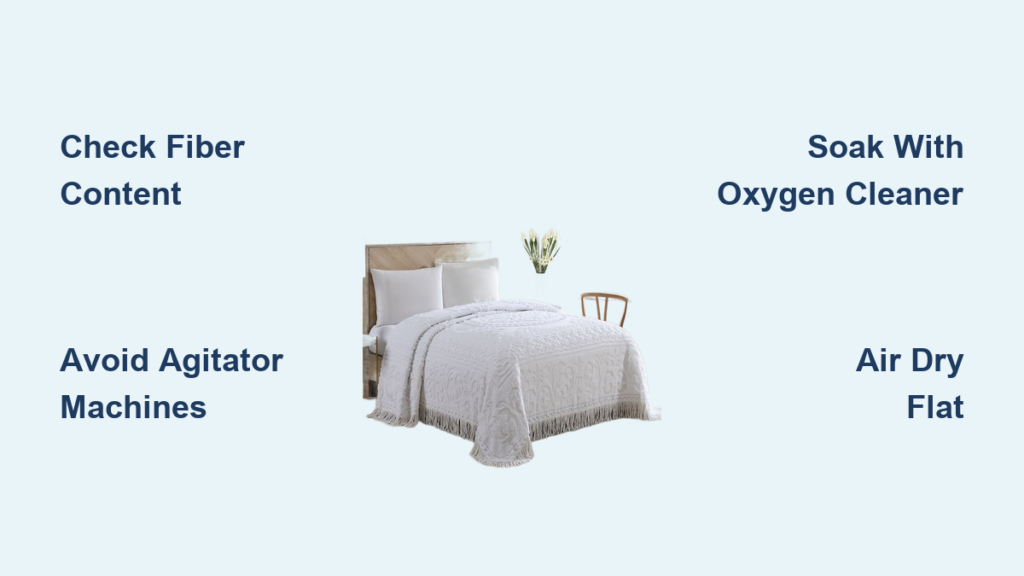
Washing a chenille bedspread feels like navigating a textile minefield where one wrong move with hot water or harsh agitation can shrink, fade, or tear your beloved vintage heirloom. Older cotton pieces often have thinned ground cloth that tears easily, while even modern blends risk losing their plush texture if cleaned incorrectly.
You can safely restore softness and remove musty odors by identifying your fabric type and choosing the correct washing method. This guide details every step from testing colorfastness to drying techniques that prevent fringe tangling so your bedspread stays beautiful for years.
Identify Your Chenille Fiber Content

Determining the material composition is the critical first step before introducing any water or cleaning agents. Vintage chenille is almost exclusively cotton and reacts poorly to heat, whereas modern versions often blend polyester for durability. Look for a care label, though many older spreads lack one, requiring you to treat them as delicate cotton to be safe.
Check for Metallic or Lurex Threads
Inspect the fabric under bright light to spot any silver, gold, or iridescent threads woven into the design. These metallic elements degrade rapidly when exposed to chlorine bleach or strong chemicals, causing them to dull or disintegrate completely. If you find these threads, you must avoid any chlorine-based products and skip hot water washes entirely.
Perform a Colorfastness Test
Color bleeding poses a massive risk to vintage chenille, especially in reds, bright pinks, and indigo blues. Dampen a white cloth and rub it firmly on a hidden area like an under-fold to see if dye transfers. If color appears on the cloth, the item is not colorfast and requires cold water washing with color-catcher sheets to prevent disaster.
Inspect for Structural Weaknesses
Holding the bedspread up to a light source reveals the true condition of the “ground cloth” holding the tufts. Decades of washing often leave this base fabric paper-thin or translucent, signaling that the material is weak and prone to tearing under the weight of water.
Locate Pinholes and Tears
Scan the entire surface for tiny holes that can expand into major rips during the agitation of a wash cycle. Mark these areas mentally or with a safety pin so you can avoid scrubbing or pulling near them. If holes are widespread, hand-washing or professional cleaning is safer than using a machine.
Identify Rust Spots Carefully
Orange-brown spots often indicate rust rather than dirt, and scrubbing them can burn through fibers instantly. Never rub these spots aggressively, as the chemical reaction can create new holes in the fabric. Treat rust spots post-wash with a textile-specific rust remover or leave them alone if cleaning risks further damage.
Soak to Remove Stains and Odors
Soaking is the most effective method for removing general dinginess and deep-set odors like cigarette smoke before the main wash. Use a large 50+ quart storage bin or bathtub to ensure the fabric submerges fully without cramming, which prevents uneven cleaning.
Choose Oxygen-Based Cleaners
Select oxygen-based cleaners like OxiClean or Biz to lift stains without damaging delicate fibers. Dissolve the powder completely in warm water before submerging the spread, as undissolved granules can bleach tiny white spots onto colored ground cloth.
Avoid Chlorine Bleach Entirely
Never use chlorine bleach on vintage or cotton chenille because it weakens fibers and causes yellowing over time. Even on polyester blends, bleach can dull the pile and destroy any metallic threads present in the design. Stick strictly to oxygen-based or enzyme cleaners for safe results.
Soak Overnight for Heavy Soil
Fill the tub halfway with hot water and dissolved cleaner, then gently push the spread down using flat hands. Rotate the item by rolling it over halfway through the process and let it soak until the water cools or overnight for heavy soil. If the water turns brown or smells musty, drain the tub and repeat the process with fresh solution.
Wash With Care Using Proper Machines
Selecting the right washing machine is vital because vintage chenille must never go into a top-loader with a central agitator. The fabric can catch underneath the agitator post and tear violently, ruining the piece instantly.
Select Cold Water for Vintage Items
Use cold water for cotton or non-colorfast chenille to prevent shrinking and dye migration. Polyester blends can handle warm or hot water up to 130°F if you need to kill dust mites, but cold water is the safest bet when in doubt.
Use Gentle Cycle Settings Only
Set your machine to “Delicate” or “Hand Wash” mode to reduce spin speed and agitation intensity. Even on safe machines without agitators, harsh cycles can pull threads loose and damage the ground cloth holding the tufts.
Protect Fringe During Washing
Fringe tangling is a common complaint that can take hours to fix, so preventing knots during the wash cycle is essential. Washing the bedspread with other soft, bulky items like towels helps keep the fringe dispersed and reduces knotting.
Avoid Mesh Bags If Possible
Putting chenille in a mesh bag or pillowcase can compress the fringe and cause tighter knots to form. If you must use one for protection, do not roll or tie it tightly, but instead loosely drape the spread inside with the top open.
Try Fringe Wrapping Techniques
For valuable spreads, wrap fringe sections in soft cloth like bamboo paper towels and secure them with loose rubber bands. This shields the ends while keeping the main fabric free, reducing the risk of tangles significantly.
Use the Right Detergent and Softener
Choosing the correct cleaning agents helps maintain the plush feel and vibrant colors of your chenille bedspread. Mild, pH-balanced detergents like Woolite or unscented “Free & Clear” formulas work best for delicate fabrics.
Add Liquid Fabric Softener
Chenille responds wonderfully to liquid fabric softener, which restores plushness and reduces static electricity. Add liquid Downy during the rinse cycle since dryer sheets do not penetrate the dense tufts effectively.
Skip Dryer Sheets Completely
Dryer sheets leave residue on the fabric and do not fluff the material effectively. Use wool dryer balls instead, as they soften naturally and help separate tangled fringe during the drying process.
Dry to Preserve Softness and Shape
Air drying is the preferred method for preserving the longevity and texture of your chenille bedspread. Lay the spread flat on a clean towel or hang it evenly on a clothesline away from direct sunlight to prevent fading.
Shake to Fluff the Pile
Shake the spread vigorously once or twice while it is air drying to lift the tufts and restore volume. Repeat this shaking process after drying to fully revive the textured feel of the fabric.
Use Low Heat Only in Dryer
If you must use a machine dryer, select the lowest heat setting to avoid flattening the pile. Dry only until the item is damp, then finish air drying to reduce wear and lint loss.
Manage Lint and Fringe After Drying
Expect heavy lint buildup in your dryer trap, as chenille naturally sheds fibers especially after the first few washes. Clean the filter before and after every cycle to prevent fire hazards and ensure efficient drying.
Untangle Fringe Gently
If knots form, work from the tips inward similar to detangling hair, using your fingers rather than scissors. For stubborn knots, apply a drop of fabric conditioner to ease separation, though be prepared for this to take several hours.
Cut Only as Last Resort
If knots will not come out and fringes are badly matted, cutting them evenly may be the only solution. Trim with sharp scissors to maintain a clean look, understanding this shortens the fringe but improves the overall appearance.
Store to Prevent Damage
Proper storage prevents mold, dry rot, and permanent creases that can ruin your clean bedspread. Never store chenille in plastic bags, as they trap moisture and encourage mildew growth.
Choose Breathable Storage Options
Use unbleached muslin bags or wrap the spread in cotton sheets to allow airflow. This breathability prevents dry rot and keeps the fabric fresh during long-term storage.
Rotate Folding Patterns
Fold the spread differently each time you store it to avoid creating permanent creases and weak spots. Alternate between folding in half, in thirds, or offsetting the folds to distribute wear evenly across the fabric.
Maintain Long-Term Beauty
Rotating multiple bedspreads seasonally reduces washing frequency and extends the life of each piece significantly. Vintage chenille can last for decades with minimal washing cycles if cared for properly.
Air Out Between Uses
If the spread is not visibly soiled, hang it outside or near an open window for a few hours to refresh. Fresh air removes odors and revitalizes the fabric without the stress of a full wash cycle.
Re-Soak for Lingering Smells
For stubborn scents like perfume or smoke, re-soak the item in cold water with baking soda or white vinegar. Let it soak for an hour during the rinse cycle to cut through residue before finishing the wash.
Frequently Asked Questions About Washing Chenille Bedspreads
Can I put a vintage chenille bedspread in the washing machine?
You can use a front-loading or impeller-style machine without a central agitator, but never use a top-loader with an agitator. Vintage cotton chenille is too fragile for aggressive agitation and may tear if caught on a central post.
Why does my chenille bedspread shed so much lint?
Chenille naturally sheds fibers, especially during the first few washes, which is a normal characteristic of the fabric construction. Frequent machine drying accelerates this process, so air drying is recommended to minimize fiber loss.
How do I remove cigarette smoke smell from chenille?
Soak the bedspread in cold water with distilled white vinegar or baking soda to neutralize deep-set odors. You may need to repeat the soaking process or air the item outside for several hours to fully eliminate strong scents.
Is it safe to use bleach on chenille fabric?
No, you should never use chlorine bleach on chenille as it weakens fibers and destroys metallic threads. Oxygen-based cleaners are the only safe alternative for whitening or stain removal on this delicate fabric.
How do I stop the fringe from tangling in the wash?
Wash the bedspread with a full load of soft towels to keep the fringe dispersed and prevent knotting. Avoid compressing the item into a mesh bag, as this forces the fringe ends together and creates tight tangles.
Key Takeaways for Washing Your Chenille Bedspread
Washing a chenille bedspread requires patience and specific techniques to avoid shrinking, tearing, or tangling the fringe. Always test for colorfastness, avoid agitator machines, and prioritize cold water with gentle cycles for vintage cotton pieces.
Air drying and proper storage in breathable materials go a long way in preserving the softness and structural integrity of your heirloom. Follow these steps carefully, and your chenille bedspread will remain lush, vibrant, and cozy for generations.