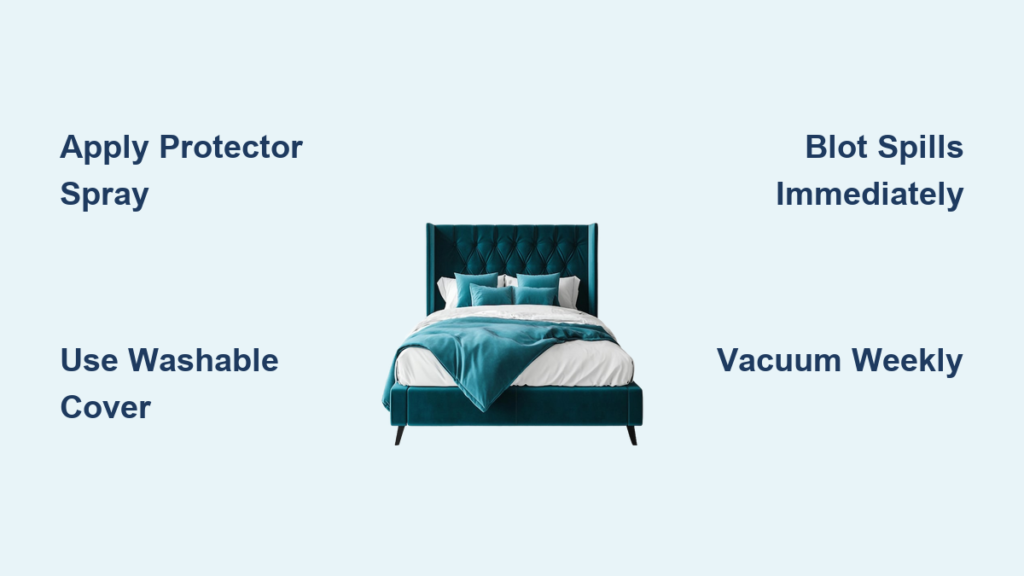
You bought a stunning fabric headboard to upgrade your bedroom, yet spills, dust, and daily use threaten its beauty quickly. Unlike wood or leather, porous fabric traps oils and allergens, making it vital to know how to protect fabric headboard surfaces effectively.
This guide reveals exact steps to shield your upholstery using sprays, covers, and smart cleaning habits. You will learn to prevent permanent stains and maintain a hygienic sleep space with minimal effort.
Apply Fabric Protector Spray for Invisible Defense

Selecting the correct chemical barrier is your first line of defense against liquid damage. A high-quality protector creates an invisible shield that repels spills before they soak into the fibers.
Choose the Right Protection Formula
Not every spray works safely on all materials, so select a product designed specifically for upholstery. Look for fluoropolymer-based formulas that repel liquids without changing the texture or color of your fabric. Trusted brands like Scotchgard or Guardsman are excellent choices for bedroom furniture.
Avoid silicone-based options as they often leave greasy residues that attract more dust over time. Always verify label compatibility, especially if your headboard uses delicate materials like silk or wool blends.
Spray Properly for Full Coverage
Testing a small hidden area ensures the product will not discolor or damage your specific fabric type. Wait at least 10 minutes to confirm there is no adverse reaction before proceeding with the full application.
- Remove all pillows and bedding to expose the entire surface area.
- Hold the can six to eight inches away from the fabric surface.
- Spray using slow, even strokes without soaking the material completely.
- Focus heavily on high-contact zones like the center and top edges.
- Allow the headboard to dry fully for one to two hours before use.
One application typically lasts three to six months depending on usage levels. Reapply the spray after any deep cleaning session or if you notice liquids stopping beading on the surface.
Use a Washable Headboard Cover

A physical barrier offers the most robust protection against oils, makeup, and pet dander. Removable covers act as a sacrificial layer that you can easily clean or replace.
Install a Custom-Fit Slipcover
Select a washable, stretchable slipcover made from breathable cotton blends or spandex materials. These covers hug your headboard tightly to prevent direct contact with hair oils and sweat while maintaining a tailored look.
Measure the height, width, and depth of your headboard before purchasing a cover. Many brands offer customizable sizes, or you can have a cover sewn to match your specific decor preferences perfectly.
Maintain with Regular Washing
Consistent washing prevents grime buildup and keeps your sleeping environment fresh and healthy. Follow these steps to maintain your cover effectively without damaging the fabric.
- Wash the cover every four to six weeks if used nightly.
- Use cold water and a mild detergent to preserve colors.
- Air dry or tumble dry on low heat to prevent shrinkage.
- Reinstall the cover immediately after it is completely dry.
Prevent Stains with Daily Habits
Small changes in your nightly routine can drastically reduce the risk of permanent staining. Preventing contact is always easier than trying to remove a set-in stain later.
Keep Hair and Skincare Products Away
Hair sprays, oils, and night creams transfer easily onto fabric when you lean back against the headboard. These substances not only stain but also attract dust and bacteria that degrade fabric quality.
Train yourself to avoid leaning directly on the headboard with product-treated hair or skin. If you apply heavy night creams, wait 15 minutes for them to absorb before lying down.
No Eating or Drinking in Bed
Spills from coffee, wine, or snacks are leading causes of irreversible fabric damage in bedrooms. Establish a strict no-food rule in bed to eliminate this risk entirely.
If you must drink water, use a covered tumbler with a straw to minimize spill potential. This rule is critical for households with children or pets where accidents happen frequently.
Clean Spots Immediately
Acting fast when a spill occurs is the difference between a minor blot and a permanent stain. Immediate action stops liquids from penetrating deep into the fabric fibers.
Blot, Don’t Rub Stains
Grab a clean, absorbent cloth and blot gently whenever a spill happens. Rubbing pushes liquid deeper into the material and spreads the stain over a larger area.
For water-based spills like juice or sweat:
1. Blot until no more moisture transfers to your cloth.
2. Dampen a corner of a white cloth with lukewarm water.
3. Lightly dab the area to dilute any remaining residue.
4. Blot dry again with a fresh section of the cloth.
For oil-based spills like makeup or lotions:
1. Blot away any excess liquid immediately.
2. Sprinkle cornstarch or baking soda over the spot to absorb oil.
3. Wait 15 to 30 minutes before vacuuming gently.
Deep Clean Every 6 Months
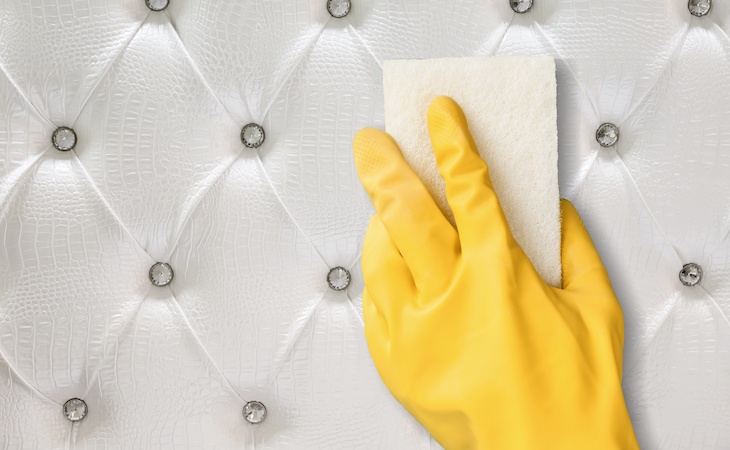
Regular deep cleaning removes hidden grime that weekly vacuuming might miss. This process refreshes the fibers and eliminates allergens that accumulate over time.
Use a Gentle Upholstery Cleaner
Schedule a deep clean twice a year to maintain the integrity of your fabric headboard. Choose a cleaner labeled specifically for your fabric type to avoid damage.
Foam-based formulas are ideal because they do not oversaturate the material and dry quickly. Follow these steps for a safe and effective deep clean:
- Vacuum the headboard first to remove all loose debris and dust.
- Shake the cleaner well and apply foam with a sponge or soft cloth.
- Work in small sections using gentle circular motions to lift dirt.
- Wipe with a clean damp cloth to remove any cleaning residue.
- Let the headboard air dry completely for six to eight hours.
Never soak the fabric as excess moisture can lead to mold growth or frame damage.
Vacuum Weekly
Dust, pet hair, and dead skin accumulate rapidly on vertical fabric surfaces. Weekly vacuuming prevents this debris from becoming deeply embedded in the fibers.
Remove Dust and Allergens Regularly
Use the upholstery attachment on your vacuum cleaner for best results. This tool provides gentle yet effective suction suitable for delicate fabrics.
- Glide the attachment slowly over the entire surface area.
- Focus on seams, tufts, and crevices where debris hides.
- Use the crevice tool to reach deep into tufted indentations.
This task takes less than five minutes but makes a massive difference in appearance and hygiene.
Rotate Pillows and Cushions
Consistent pressure in one spot causes uneven wear and fading over time. Rotating your pillows helps distribute this wear more evenly across the headboard surface.
Distribute Wear Evenly
If you always rest your head in the same spot, that area will show signs of aging faster than the rest. Rotate or flip bed pillows weekly to shift these pressure points regularly.
For built-in cushioned headboards, consider adding a thin, removable pillow insert in the center. This insert takes the brunt of contact and can be washed or replaced easily to maintain a fresh look.
Avoid Direct Sunlight
Prolonged exposure to sunlight fades fabric colors and weakens fibers significantly. Protecting your headboard from UV rays preserves its original vibrancy and structural integrity.
Block UV Damage
If your bed sits near a window, use curtains or blinds during peak sun hours. The hours between 10 a.m. and 4 p.m. produce the strongest UV rays that damage fabric.
- Apply UV-blocking film to your bedroom windows.
- Choose blackout curtains for maximum protection.
- Rearrange furniture if indirect sunlight still hits the headboard.
Even indirect sunlight contributes to fading over time, so do not overlook this silent threat to your decor.
Handle Pets with Care
Pets love to lean and nap on headboards, but their claws and dander accelerate wear. Managing pet access helps preserve the fabric condition for years.
Limit Pet Access or Use Barriers
If pets are allowed on the bed, trim nails regularly to prevent snags and tears. Brush them before bedtime to reduce the amount of shedding on the headboard.
Alternatively, use a removable fabric barrier like a thin washable blanket over the headboard. Remove this barrier when pets are not present to maintain proper airflow and aesthetics.
Inspect and Maintain Monthly
Regular inspections help you catch small issues before they become major problems. A monthly checkup ensures your headboard stays in top condition.
Check for Early Signs of Damage
Set a monthly reminder to inspect your headboard thoroughly. Look for specific signs of wear that need immediate attention.
- Check for loose threads or fraying edges.
- Look for discoloration or new stains.
- Smell for musty odors indicating moisture issues.
- Identify worn spots from repeated contact.
Repair loose fabric with fabric glue or discreet stitching immediately. Address odors with a light sprinkle of baking soda, left for 15 minutes and vacuumed off.
Frequently Asked Questions About Fabric Headboard Care
How often should I reapply fabric protector spray?
You should reapply fabric protector every three to six months depending on usage. Reapply immediately after any deep cleaning session or if water stops beading on the surface.
Can I use regular laundry detergent to clean my headboard?
No, regular detergent can leave residues that attract dirt or damage fibers. Use cleaners specifically labeled for upholstery or foam-based formulas designed for fabric furniture.
What is the best way to remove oil stains from fabric headboards?
Sprinkle cornstarch or baking soda on the stain to absorb the oil before vacuuming. Blot gently with a clean cloth and avoid rubbing to prevent spreading the oil deeper.
Is it safe to steam clean a fabric headboard?
Only if the manufacturer label explicitly states the fabric can handle moisture and heat. Excess moisture from steam can cause mold or damage the internal frame structure.
How do I prevent my fabric headboard from fading?
Block UV damage by using curtains, blinds, or UV-blocking window film. Rearrange furniture to avoid direct sunlight exposure during peak hours of the day.
Key Takeaways for Protecting Your Fabric Headboard
Protecting your investment requires a combination of preventive sprays, physical covers, and consistent cleaning habits. By applying a quality fabric protector and using washable covers, you create multiple layers of defense against daily wear.
Start your routine today by vacuuming weekly and addressing spills immediately to ensure longevity. With these simple steps, your fabric headboard will remain a beautiful and hygienic centerpiece in your bedroom for years.