A crisp white bedspread transforms your bedroom into a restorative sanctuary that mimics the calm of a luxury spa. This timeless choice acts as a versatile canvas, allowing you to layer textures and colors without overwhelming your personal space.
You will learn specific techniques to add depth through tactile materials, strategic lighting, and seasonal accent swaps. These expert tips ensure your white bedding remains the inviting focal point of your room year-round.
Select a Cohesive Design Aesthetic
:max_bytes(150000):strip_icc()/5E8A0600FINAL2-cbe5be023d044b34b2d1a6fe4f7e326b.jpeg)
Your white bedspread adapts to any theme, but visual harmony requires committing to one primary style. Jumping between clashing themes like industrial and coastal creates a disjointed feel that distracts from the room’s tranquility.
Define Your Primary Style Direction
Start by choosing a mood that reflects your personality and supports deep relaxation. Minimalist elegance uses clean lines and neutral walls to create an airy sensation. Boho luxe layers colorful patterned throws and macramé for an eclectic vibe.
- Minimalist: Focuses on crisp linens and simple silhouettes with very few accessories.
- Coastal: Pairs white with light blue accents and nautical details like rope or driftwood.
- Farmhouse: Mixes rustic wood nightstands with vintage mirrors and burlap textures.
- Monochromatic: Layers varying shades of white and ivory with metallic silver or gold accents.
Match Style to Room Dimensions
Small bedrooms benefit from minimalist or coastal styles that maximize the sense of space. Light colors and uncluttered layouts make tight rooms feel larger and brighter while reflecting natural light effectively.
Larger rooms can handle bolder choices like boho or farmhouse styles. These aesthetics thrive with deeper hues, statement decor, and heavy textures that fill the visual real estate without feeling cramped.
Layer Textures to Create Visual Depth

A plain white bedspread can appear flat without intentional textural contrast. You must mix materials that invite touch to prevent the space from looking sterile or clinical.
Add Tactile Interest with Materials
Introduce depth by combining different fabrics like linen, wool, and cotton on the same bed. A nubby wool throw or cable-knit blanket at the foot of the bed adds immediate warmth and character.
- Use linen pillowcases for a relaxed, slightly wrinkled look.
- Add an embroidered square pillow for subtle surface detail.
- Drape a quilt with a tonal weave to complement the white base.
Prevent a Sterile Appearance
Avoid over-smoothing your linens if you want a lived-in, comfortable feel. Slight wrinkling in linen adds character, whereas perfect smoothness can make the bed look like a hospital display.
Mix matte and sheen finishes to create dynamic visual interest. Pair a satin pillow with a rougher throw to highlight the differences in texture under your bedroom lighting.
Use Color Accents Strategically
The white bedspread should remain the star while color accents provide mood and personality. Limit your palette to two or three complementary tones to maintain balance and serenity.
Stick to a Focused Color Palette
Soft neutrals like warm gray, beige, or sage green enhance the calming effect of white bedding. These tones add depth without competing with the brightness of the main comforter.
Use bold hues sparingly to make a statement without overwhelming the space. A single emerald pillow or a rust-colored throw can anchor the room when paired with neutral walls.
Rotate Seasonal Hues
Refresh your bedroom atmosphere by swapping accent colors with the seasons. Spring calls for soft lavender or mint green pillow covers to evoke new growth and freshness.
- Summer: Introduce light blue, coral, or seafoam for a coastal vibe.
- Fall: Swap in terracotta, mustard, or deep plum tones for warmth.
- Winter: Use velvet throws or flannel shams in rich, dark colors.
Keep off-season items in labeled under-bed bins for easy rotation. This system keeps your bedroom feeling current without the cost of buying new foundational bedding.
Adapt Bedding Layers for Every Season
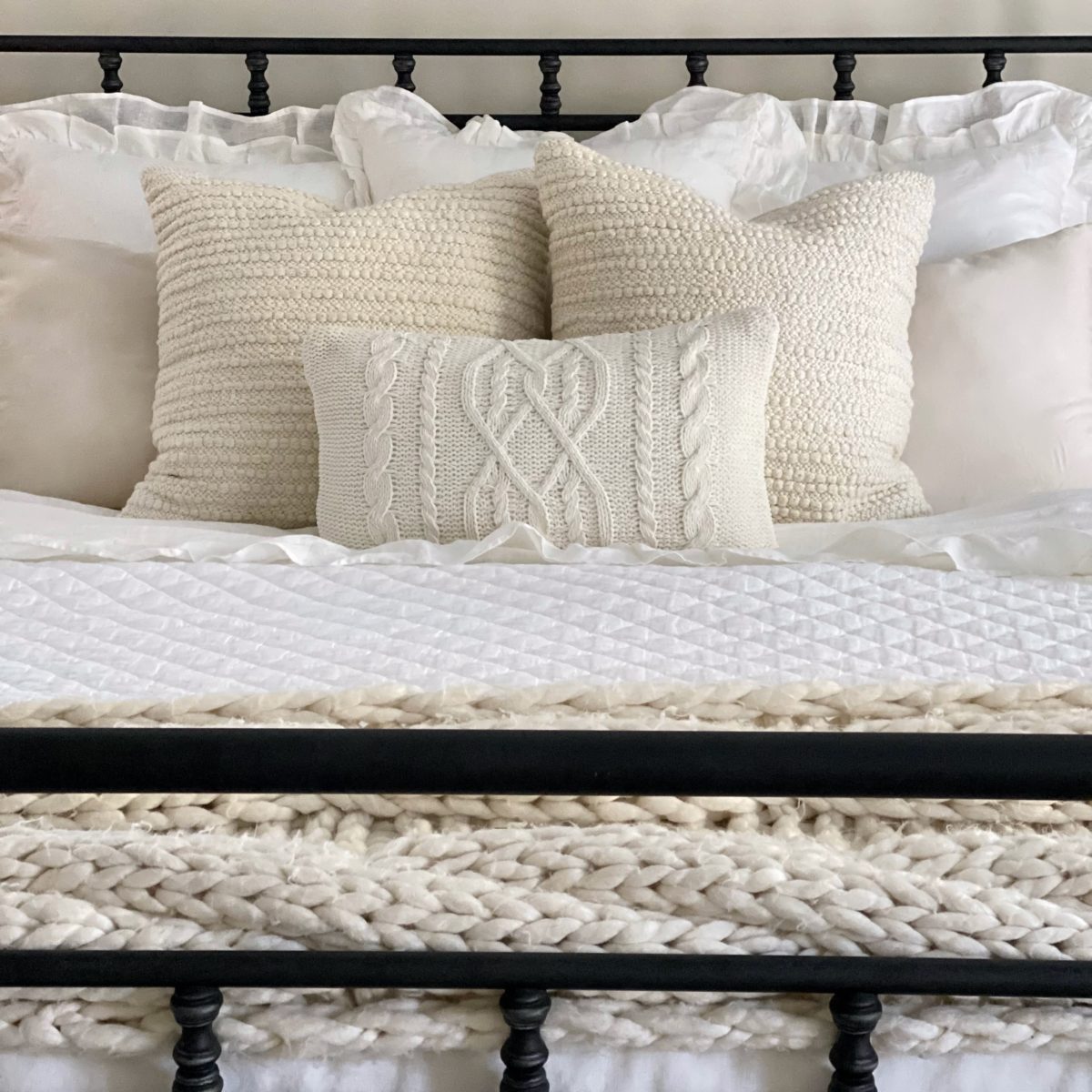
You do not need to replace your entire bedding setup when the weather changes. Strategic layering allows you to maintain the white aesthetic while adjusting for thermal comfort.
Lighten Up for Summer Months
Prioritize breathability in warmer months by replacing heavy duvets with lightweight cotton coverlets. Roll up thick throws and store them away to keep the bed looking airy and open.
Opt for cool-toned accents and sheer curtains to let in maximum natural light. Keep decor minimal to prevent the room from feeling hot or crowded during peak summer days.
Cozy Up for Winter Nights
Winter requires insulation without bulk, so layer a light wool blanket over your white comforter. This adds warmth while maintaining the bed’s shape and avoiding a flattened appearance.
- Add a faux fur or cable-knit throw for extra texture.
- Swap cool LED bulbs for warm-toned ones between 2700K and 3000K.
- Use dimmable bedside lamps to create a soft, inviting glow.
Introduce warmth through materials like wood nightstands or a sheepskin rug. These elements add tactile richness that complements the cozy winter layers on your bed.
Balance Lighting and Sensory Details

White bedding can appear cold under harsh lighting, so you must curate your light sources carefully. A layered lighting approach ensures the room feels warm and inviting at all times.
Implement Warm Layered Lighting
Overhead lights should be dimmable to allow brightness adjustments throughout the day. Use bedside lamps with white or ivory shades to cast a soft, flattering glow on the bed.
Add string lights along the headboard or a floor lamp in the corner to define the sleeping zone. Avoid cool blue or bright white bulbs as they disrupt the calming effect of your white sanctuary.
Enhance with Scent and Nature
A well-decorated bed appeals to senses beyond sight, so incorporate scent and greenery. Spritz the duvet lightly with water and a drop of lavender oil to relax wrinkles and add a soothing aroma.
Place a low-maintenance plant like a snake plant or pothos on the nightstand. These greens purify the air and bring life to the space, while a candle in a neutral holder adds flickering warmth.
Optimize Layouts for Small Bedrooms

Small bedrooms require smart placement to maintain the open feel that white bedding provides. Every inch counts, so you must prioritize functionality and visual flow.
Maximize Space with Smart Placement
Push the bed against a wall to free up floor space for other essential furniture. Keep pathways clear with at least 24 to 30 inches of walking room to maintain an open feel.
- Install floating shelves above the bed to utilize vertical space.
- Choose a slim nightstand or wall-mounted sconce instead of a bulky table.
- Position desks near windows to take advantage of natural light.
Define Zones with Rugs and Mirrors
Use a cozy area rug to define the sleeping zone and separate it from other functions. This adds warmth underfoot and visually anchors the bed within the room.
Hang a mirror opposite a window to reflect light and make the room feel larger. Keep decor minimal by choosing one large piece of art rather than several small items that create clutter.
Maintain a Fresh and Clean Look
White bedding shows soil on purpose, acting as a built-in reminder to keep your linens hygienic. Regular maintenance ensures your bed always looks crisp and inviting.
Wash and Refresh Regularly
Most white linens are machine washable, making upkeep simple and stress-free. Wash sheets weekly and comforters every two to four weeks using a gentle detergent.
- Add white vinegar or baking soda to the wash cycle for extra brightness.
- Air-dry when possible to prevent shrinkage and preserve fiber integrity.
- Mist the bed with plain water before styling to relax creases instantly.
Organize Your Linen Closet
A cluttered closet leads to wrinkled linens, so edit your collection ruthlessly. Remove outdated or ill-fitting sets and keep only the items you love and use regularly.
Fold items so they are visible and accessible without deep stacking. Rotate linens regularly to ensure even wear and store seasonal sets in labeled bins for easy access.
Frequently Asked Questions About Decorating White Bedspreads
How do I keep white bedding from looking sterile?
Mix matte and sheen finishes while adding textured throws like wool or linen. Slight wrinkling adds character, and warm lighting prevents the space from feeling clinical or cold.
What colors pair best with a white bedspread?
Soft neutrals like sage green, dusty blue, and warm gray create a calming effect. You can also use bold colors like emerald or rust sparingly for a striking contrast.
How often should I wash white bed linens?
Wash sheets weekly and comforters every two to four weeks to maintain hygiene. White fabric reveals soil intentionally, serving as a visual cue for when cleaning is needed.
Can I use white bedding in a small bedroom?
Yes, white bedding makes small rooms feel larger and brighter by reflecting natural light. Pair it with mirrors and minimal decor to maximize the sense of space.
How do I remove wrinkles from white duvets quickly?
Lightly mist the fabric with plain water or a water and lavender oil mixture. This relaxes creases instantly and gives the bed a crisp, just-made appearance.
Key Takeaways for Styling Your White Bedspread
Decorating a white bedspread requires intentional layering of textures, colors, and lighting to create a serene retreat. By choosing a cohesive style and rotating seasonal accents, you maintain a fresh look without replacing your entire bedding setup.
Remember that white bedding is designed to be practical, showing soil to prompt regular cleaning for a hygienic sleep environment. Start by selecting your primary design style today and add one textural throw to transform your bedroom instantly.