
Shopping for a queen size bedspread often leads to confusion due to conflicting size charts and vague labels. Unlike standard sheets, these covers require extra fabric to drape correctly over the sides and foot of your bed.
This guide explains exact dimensions, calculation methods, and styling tips to ensure a perfect fit. You will learn how to measure your bed accurately and avoid common sizing errors.
Standard Queen Size Bedspread Dimensions
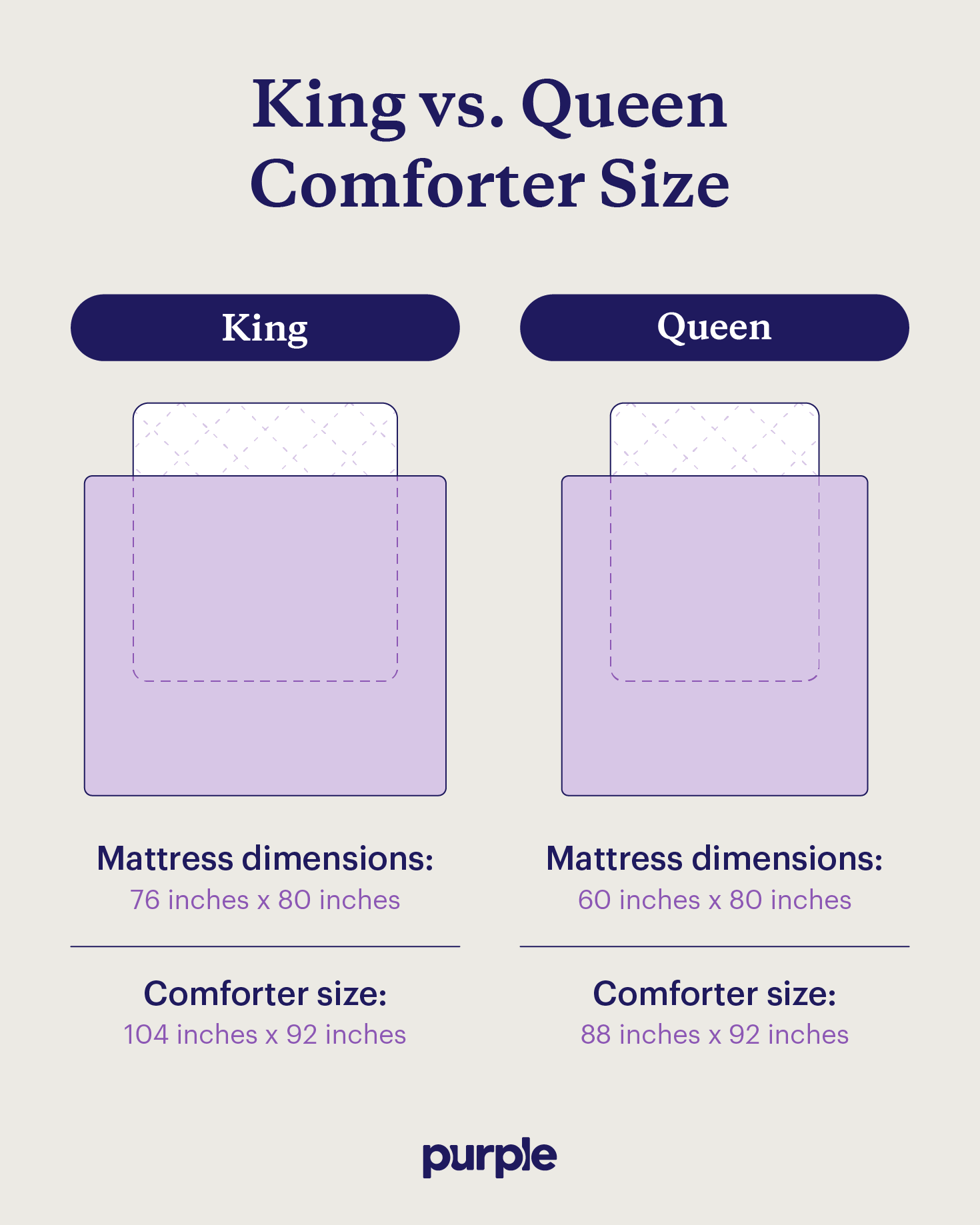
Queen bedspread dimensions vary significantly because they must accommodate different mattress heights and draping preferences. While the mattress itself has a fixed size, the cover must extend well beyond those edges.
Common Width and Length Ranges
Most queen bedspreads fall within specific imperial and metric ranges found across the market.
* Width: 86 inches to 108 inches (218 cm to 275 cm)
* Length: 90 inches to 112 inches (229 cm to 284 cm)
These extra inches create the signature overhang that defines a bedspread. A narrower spread offers a tailored look, while wider options provide full floor-length coverage.
Popular Market Sizes
You will frequently encounter these specific dimension combinations in stores.
* 92″ x 102″: A mid-range size offering generous drape on most beds.
* 88″ x 92″: Closer to comforter dimensions and best for tucking in.
* 90″ x 96″: Provides slight overhang for a modern, clean fit.
* 102″ x 112″: Designed for true floor-length drape on tall beds.
Always verify the exact listed measurements rather than relying solely on the “queen” label. One brand’s definition of queen may differ drastically from another.
How to Calculate Your Ideal Bedspread Drop

Getting the right fit requires simple math rather than guesswork. You must calculate the “drop,” which is the distance the fabric hangs from the top edge of your mattress.
The Fit Formula
Use this equation to determine your required dimensions based on your desired look.
* Width: Mattress Width + (Drop × 2)
* Length: Mattress Length + Drop
You multiply the drop by two for the width because the fabric hangs over both the left and right sides. The length calculation only adds the drop once to cover from the head to the foot.
Scenario A: Standard 14-Inch Overhang
This drop creates a classic look that balances the bed without touching the floor.
* Mattress: 60″ wide by 80″ long
* Calculation: 60 + (14 × 2) = 88″ wide
* Length: 80 + 14 = 94″ long
A bedspread measuring 88″ x 94″ or similar will deliver this balanced appearance.
Scenario B: Floor-Length 20-Inch Drop
Measure from the top of your mattress to the floor for a dramatic, hotel-style sweep.
* Drop: 20 inches
* Calculation: 60 + (20 × 2) = 100″ wide
* Length: 80 + 20 = 100″ long
You need at least a 100″ x 100″ spread for this look. Many standard queen sizes will fall short, so consider a king-size option for full coverage.
Avoid These Common Sizing Mistakes
Real-world variables often disrupt theoretical calculations. Ignoring these factors can leave your new bedspread looking too small or awkward.
Mattress Toppers Add Height
Adding a memory foam or down topper increases your bed height by 2 to 3 inches. This extra thickness reduces your effective drop length. If you planned for a 20-inch drop but added a 3-inch topper, you effectively need a 23-inch drop. Always measure your bed with the topper in place to ensure accuracy.
Bed Frame Height Changes Everything
Low-profile platform beds sit under 18 inches from the floor and may cause standard oversized spreads to pool excessively. High-rise beds with box springs often exceed 20 inches in height, requiring king-size dimensions to avoid a floating appearance. Measure your total bed height before buying any new bedding.
Bedspread vs Comforter vs Duvet Differences

Shoppers often confuse bedspreads with comforters or duvets, yet their sizes and functions differ completely. Understanding these distinctions prevents costly purchasing errors.
Key Feature Comparison
| Feature | Bedspread | Comforter | Duvet Cover |
|---|---|---|---|
| Purpose | Decorative drape hiding the frame | Warmth and sleeping layer | Protective cover for insert |
| Fit | Floor-length or full overhang | Sits on mattress with slight drop | Snug fit over insert |
| Queen Size | 86″–108″ x 90″–112″ | 86″–90″ x 86″–94″ | 88″ x 96″ |
| Bed Skirt | Not needed | Usually required | Usually required |
Why Size Matters
If you buy a queen comforter expecting it to drape to the floor, you will be disappointed. A 90-inch length rarely reaches the floor on a standard bed. Only a true bedspread or an oversized coverlet delivers that seamless, floor-skimming aesthetic.
Choose the Right Style for Your Space
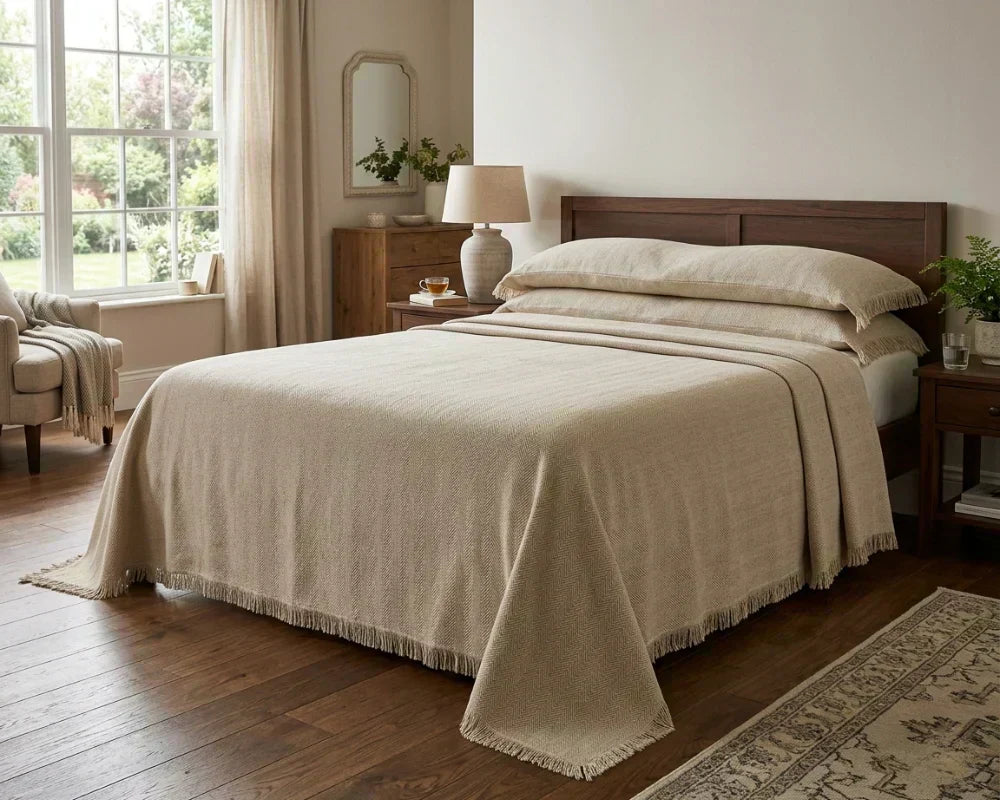
Your aesthetic goals should dictate your size choice. The same bed can look entirely different depending on the bedspread style you select.
Floor-Length Luxury Look
This style suits traditional, formal, or hotel-inspired bedrooms. You need dimensions like 102″ x 112″ or larger. This approach hides the bed frame and box spring while creating a unified, elegant line. It works best when the fabric gently kisses the floor without bunching excessively.
Modern Tucked-In Style
Minimalist and contemporary setups benefit from a crisp, tucked-in appearance. Aim for sizes around 90″ x 94″ or smaller. This method showcases a stylish bed frame and creates a neat, tailored look. You must tuck corners tightly under the mattress and re-tuck nightly to maintain sharp lines.
Oversized Hotel Drape
Plush bedrooms often feature an oversized, relaxed look. Target dimensions like 70″ x 90″ or larger to achieve 4 to 6 inches of side overhang. This prevents the cover from riding up during sleep and ensures the bed looks made even when slightly rumpled.
Material Matters for Fit and Drape
Fabric composition directly impacts how a bedspread hangs and how large it needs to appear. Heavy materials behave differently than light ones.
Heavyweight Fabrics
Cotton, linen, and microfiber offer smooth, structured drapes. These materials hold their shape well and do not flare out. They are ideal for floor-length styles where a straight, controlled hang is desired.
Lightweight or Sheer Fabrics
Softer fabrics may billow or pull away from the bed due to static or lightness. You may need to go up one size to compensate for this lack of weight. Avoid ultra-light materials if you want a crisp, tailored look that stays in place.
Climate and Care Considerations
Your local climate and lifestyle should influence your material choice and maintenance routine.
Seasonal Fabric Choices
- Summer: Choose breathable cotton or linen to prevent overheating.
- Winter: Opt for flannel, fleece, or heavy microfiber for added warmth.
- All-Season: Washed cotton or blends offer year-round comfort and versatility.
Washing Requirements
Large bedspreads often require commercial-sized washers due to their volume. Lightweight coverlets can usually be washed in standard home machines. Always check care labels, as many bedspreads require dry cleaning or gentle cycles to maintain their structure.
Can You Use a King Bedspread on a Queen Bed?
Using a king bedspread on a queen bed is a smart workaround if you cannot find a long enough queen option. King sizes typically measure 108″ x 102″, providing extra width and length.
Expected Results
This combination creates a “puddling” effect with soft fabric pools at the sides and foot. It works exceptionally well for tall beds where a standard queen spread falls short. The excess fabric creates a luxury aesthetic that looks intentional rather than ill-fitting.
Styling Tips
Fold or tuck excess fabric at the headboard to prevent bunching near your pillows. Use decorative pillows to weigh down corners and balance the volume. This technique mimics high-end hotel bedding with minimal effort.
Ignore the Label and Measure Your Bed

The term “queen” is not a reliable size indicator across different brands. Always measure your actual bed setup before making a purchase.
Step-by-Step Measurement Guide
- Clear the bed: Remove all pillows, duvets, and layers.
- Measure width: Measure edge to edge across the top of the mattress.
- Measure length: Measure from the head to the foot of the mattress.
- Measure drop: Measure from the top edge down to your desired endpoint (floor or box spring).
- Calculate: Apply the formula: Width = 60″ + (Drop × 2) and Length = 80″ + Drop.
Example Calculation
For a floor-length look on a bed with a 22-inch drop height:
* Width: 60 + (22 × 2) = 104 inches
* Length: 80 + 22 = 102 inches
* Recommendation: Buy a 108″ x 102″ king spread or a custom queen size.
Buying Tips to Avoid Returns
Sizing mistakes are the top reason for bedding returns. Follow these steps to ensure satisfaction with your first purchase.
Check Brand Size Charts
Every manufacturer uses different standards. Do not assume “queen” means the same thing across brands. Look for exact inch or centimeter measurements in the product specifications section.
Review Return Policies
Many stores do not accept opened bedding returns due to hygiene reasons. Some retailers also charge restocking fees. Always read the return policy thoroughly before unboxing your new bedspread.
Prioritize Fit Over Price
An ill-fitting bedspread ruins the look of the entire room. Spending extra for the correct size pays off in long-term satisfaction and aesthetic appeal.
Frequently Asked Questions About Queen Size Bedspreads
What are the exact dimensions of a standard queen bedspread?
Standard queen bedspreads typically range from 86 to 108 inches in width and 90 to 112 inches in length. Common specific sizes include 92″ x 102″ and 102″ x 112″ for floor-length styles.
How do I calculate the right bedspread size for my bed?
Add twice your desired drop height to the mattress width for total width. Add the drop height once to the mattress length for total length. This ensures proper coverage on all sides.
Can I use a king bedspread on a queen mattress?
Yes, using a king bedspread on a queen bed creates a luxurious, oversized look with extra fabric pooling on the floor. This is ideal for tall beds or those wanting a dramatic drape.
What is the difference between a queen bedspread and a comforter?
Bedspreads are larger and designed to drape to the floor, hiding the bed frame. Comforters are smaller, sitting mostly on top of the mattress with minimal overhang.
Do I need a bed skirt if I use a bedspread?
No, you generally do not need a bed skirt with a true bedspread. The defining feature of a bedspread is its ability to cover the box spring and frame completely.
Why does my queen bedspread look too small?
Your bed may have a tall mattress topper or high frame that increases the required drop. Measure your total bed height again and recalculate using the fit formula to find a larger size.
Final Thoughts on Queen Size Bedspread Dimensions
Selecting the right queen size bedspread requires more than just reading a label. You must measure your specific bed height, calculate the desired drop, and understand how fabric weight affects drape. Whether you prefer a floor-sweeping luxury look or a crisp modern tuck, accurate measurements are key.
Ignore generic sizing terms and focus on exact inch specifications to avoid returns. Use the fit formula provided to determine your ideal dimensions before shopping. With the correct size, your bedspread will transform your bedroom into a polished and cohesive retreat.