Your cat leaps onto the headboard every morning at 5 a.m., pacing like a tiny panther just inches from your head. You are not alone since many owners struggle with this common but disruptive behavior. The truth is that cats do not jump on headboards to annoy you but rather follow strong instincts. They seek height, warmth, and a clear view of their territory from this high perch.
The good news is that you can stop this behavior humanely and effectively using proven methods. Learning how to keep cat off headboard starts with understanding why they do it in the first place. This guide delivers a science-backed plan using safe deterrents, training, and better alternatives. You will soon enjoy peaceful mornings without claws on your furniture or sleep disruption.
Identify Why Your Cat Jumps on the Headboard
Before fixing the behavior, you must find out exactly what drives your cat to jump. A cat on a headboard is not being bad but is fulfilling a natural need for height or attention. Pinpointing the specific motivation ensures your solution actually works long term.
Watch for Specific Behavioral Triggers
Observe your cat for three to five days and log their actions carefully. You need to note the time of day, what you are doing, and what the cat does before jumping. Common triggers often include attention-seeking, territory monitoring, or a desire for warmth.
- Attention-seeking: The cat jumps when you are on your phone or lying in bed.
- Territory monitoring: They use the headboard to watch doors, windows, or other pets.
- Warmth or comfort: They seek heat from your body or sunlight hitting the bed.
- Play or prey drive: They chase bugs, shadows, or toys that end up near the headboard.
Match Your Solution to the Motivation
Your strategy changes completely based on the root cause you identified. Focus your energy on the specific need your cat is trying to meet.
- Attention-seeking? Focus on training and ignoring unwanted behavior completely.
- Need for height? Build better vertical spaces nearby with cat trees.
- Warmth-driven? Offer a heated alternative bed in a safe spot.
- Play-motivated? Redirect energy with scheduled play sessions before bed.
Use Immediate Deterrents to Stop Jumping

Make the headboard unappealing fast so your cat stops landing on it. These sensory barriers work without harming your cat or damaging your furniture. Use them during the retraining phase to break the habit effectively.
Apply Tactile Deterrents to Surfaces
Cats hate certain textures under their paws and will avoid them. You can use simple household items to create these unpleasant surfaces temporarily.
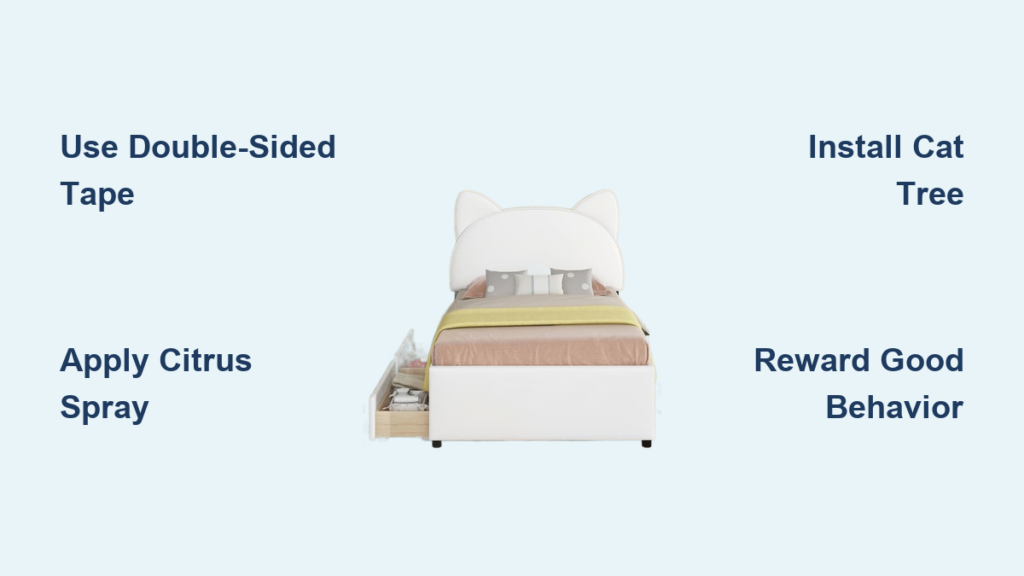
- Double-sided tape: Apply strips to the top and sides of the headboard. The sticky sensation discourages landing and walking immediately. Choose removable tape to avoid residue on wood or fabric.
- Aluminum foil: Cover the headboard surface temporarily with sheets. The crinkly sound and cold texture deter most cats instantly. This works best for short-term use or nighttime only.
Combine both methods for a stronger effect if your cat is persistent. Replace the tape every three to seven days as fur and dust reduce stickiness.
Try Safe Scent-Based Repellents
Cats generally avoid strong citrus scents, so you can use this to your advantage. Use these sprays wisely to create an olfactory barrier around your bed.
- Pet-safe citrus spray: Spray lightly on the headboard but never on bedding. Reapply daily because the scent fades quickly over time.
- Safety warning: Never use essential oils unless labeled cat-safe since many are toxic to felines.
Test any spray on a small area first to avoid damaging your fabric or wood finish.
Install Motion-Activated Devices
Automate the correction for persistent jumpers who ignore other methods. These devices create a negative association with the location rather than with you.
- Motion-activated air sprayer: Devices like Ssscat emit a harmless puff of air when motion is detected. Your cat learns the headboard punishes itself without human involvement. Set it near the headboard and aim it at the landing zone.
Let the cat trigger it while you are present but not reacting. This helps them associate the air burst with the location specifically.
Build Better Alternatives for Your Cat

Deterrents alone will not work long term if you do not offer a superior option. You must provide a space that satisfies the same instincts as the headboard.
Install a Cat Tree or Shelf Nearby
The alternative must be taller or level with the headboard to compete effectively. It also needs to be stable with no wobbling and close to the bed or window.
- Wall-mounted shelves: These save floor space and create a cat highway.
- Cat tree with perch: Choose one with a scratching post base for dual function.
- Window perch: This is ideal if your cat watches birds or street activity.
Ensure the weight rating matches your cat’s size for safety. A 15-pound cat needs a structure rated for at least 20 pounds.
Make the New Spot Irresistible
A bare shelf will not compete with your headboard, so you must upgrade it. Add elements that make the new spot more appealing than the old one.
- Add comfort: Place a soft blanket, heated pad, or self-warming bed on the perch. Rotate bedding weekly to keep it fresh and appealing.
- Use catnip or silvervine: Sprinkle on the perch or rub on fabric to trigger natural attraction. About 70 percent of cats respond to these scents.
- Place toys and treats: Use treat-dispensing toys to encourage visits. Rotate toys weekly to maintain interest.
Dangle a feather toy from the new perch during playtime to build a positive association quickly.
Train With Positive Reinforcement Techniques
This is the most effective long-term method for changing behavior. Reward what you want and ignore what you do not want to see.
Reward Desired Behavior Immediately
Give a high-value treat within two seconds every time your cat makes a good choice. Use small pieces of chicken, tuna, or commercial cat treats for best results.
- Jumps on the cat tree instead of the headboard
- Stays on the floor near the bed
- Lies on their new perch voluntarily
Pair the treat with praise like “Good job on your tower” to reinforce the action. Timing matters greatly since delayed rewards do not teach the connection.
Guide and Redirect Gently
Do not wait for mistakes but set your cat up for success instead. Actively guide them toward the correct behavior using simple tools.
- Use a treat trail: Place small treats from the floor up to the cat tree. Lead the cat up step-by-step to the top.
- Use a wand toy: Gently lure the cat from the headboard to the alternative. End the session with a catch on the new perch.
Never Punish the Cat
Avoid yelling, staring angrily, or spraying water directly at your cat. Do not push or grab them off the headboard as this creates fear.
Punishment damages trust and may shift the behavior to worse issues like hiding. Instead, ignore the cat on the headboard completely. Reward them heavily when they get down voluntarily or stay on their perch.
Manage the Sleep Environment Effectively
Your bedroom should signal rest rather than a play zone for your pet. Make small changes to support the training process.
Remove Headboard Lures
Never leave toys, food, treats, or cozy blankets on or near the headboard. These items act as magnets that draw your cat to the forbidden area.
Set a Calm Evening Routine
Cats often jump on headboards when they are overstimulated or bored. Prevent this by scheduling play before bedtime for ten to fifteen minutes.
- Use a wand toy to tire them out completely.
- Follow with a small meal or treat to trigger rest mode.
- This reduces nighttime energy bursts significantly.
Use Covers for Protection
Protect your headboard during the training phase with a washable fabric throw. This prevents scratches and makes cleaning easier if accidents happen. Remove the cover when not in bed to avoid creating a new target.
Follow a Realistic Training Timeline
Change takes time, and most cats improve within two to four weeks with consistent effort. Patience is key to success.
- Week 1: Log behavior patterns, install deterrents, and begin treat trails.
- Week 2–3: Reward every correct choice, reapply sprays, and ignore all headboard visits.
- Week 4+: Fade out deterrents slowly while keeping occasional rewards.
Older cats or those with strong habits may take six weeks or more to adjust. Consistency pays off in the long run.
Choose the Best Method for Your Home
| Method | Effectiveness | Effort Level | Best For |
|---|---|---|---|
| Double-sided tape | High (short-term) | Low | Quick fix, budget option |
| Citrus spray | Moderate | Medium | Mild offenders, daily upkeep |
| Motion sprayer | High | Low after setup | Persistent jumpers |
| Cat tree + training | Highest (long-term) | High | Lasting results, bond-building |
Combining methods works best for difficult cases. For example, use a sprayer while training and offering a cat tree simultaneously.
Frequently Asked Questions About Keeping Cats Off Headboards
How long does it take to stop a cat from jumping on the headboard?
Most cats show improvement within two to four weeks of consistent training. Older cats or those with deep-seated habits may take six weeks or longer to fully adjust.
Is it safe to use citrus spray on my headboard?
Yes, provided the spray is explicitly labeled as pet-safe and non-toxic. Always test on a small hidden area first to ensure it does not damage the fabric or wood finish.
Why does my cat ignore the cat tree and jump on the headboard?
The headboard may be more stable, warmer, or better positioned for viewing territory. Ensure your cat tree is tall enough, stable, and placed near a window or your bed.
Can I use double-sided tape on fabric headboards?
You can, but you must use removable tape designed for fabrics to avoid residue. Check the manufacturer guidelines for your specific headboard material before applying.
Will punishing my cat stop them from jumping on the headboard?
No, punishment often creates fear and damages your bond with your cat. It is better to use positive reinforcement and environmental deterrents for lasting results.
Key Takeaways for Learning How to Keep Cat Off Headboard
Stopping your cat from jumping on the headboard requires understanding their instincts and offering better options. By combining immediate deterrents like tape or sprays with attractive alternatives like cat trees, you can redirect their behavior effectively. Consistent positive reinforcement and patience are the most critical factors for long-term success.
Start by identifying why your cat jumps and implement a plan that addresses that specific need today. With the right setup and a little time, you can enjoy a claw-free headboard and a happy cat.