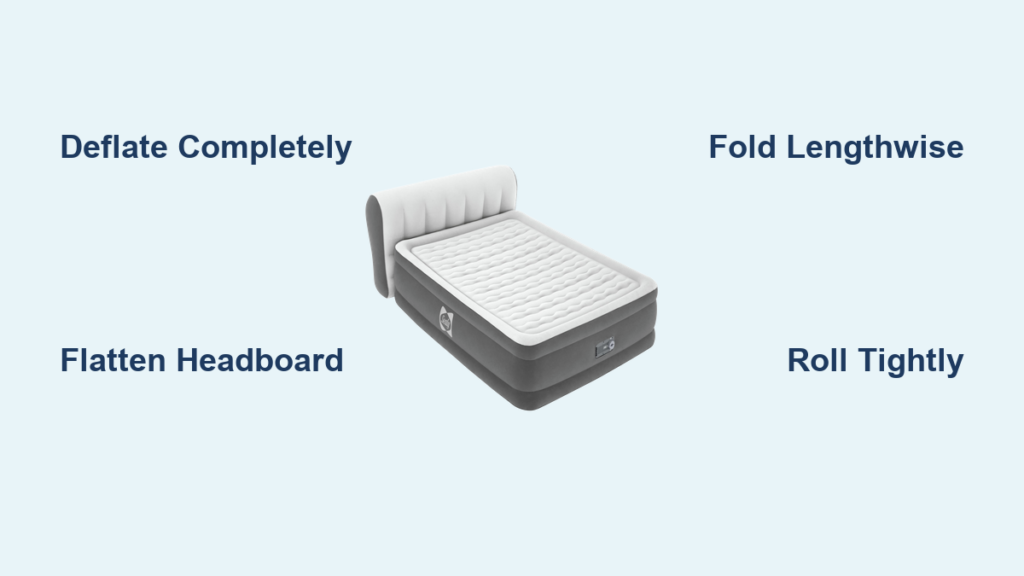
Your Sealy air mattress provided a comfortable night’s sleep, but now the built-in headboard makes packing it away a struggle. Forcing the fold can damage hinges or leave you with a bulky bundle that refuses to fit in its bag. Learning how to fold Sealy air mattress with headboard units correctly prevents creases and ensures easy storage.
This guide details the exact steps to deflate, align, and fold your mattress using two proven methods. You will discover how to flatten the headboard safely and choose between a rectangular fold or a tight roll. Follow these instructions to protect your investment and save space.
Prepare Your Workspace and Clean the Surface
A clean, flat surface is essential before you begin folding your mattress. Working on carpet or grass increases the risk of punctures from hidden debris. Choose a hard indoor floor like tile or hardwood to ensure smooth manipulation of the material.
Clear the Area of Debris
Sweep or wipe your chosen surface to remove dust, pet hair, or sharp particles. If you used the mattress outdoors, inspect the bottom carefully for twigs or stones. A single sharp object can puncture the vinyl during the compression process.
Wipe Down the Mattress
Use a damp cloth with mild soap to clean the top, sides, and headboard area. Avoid harsh chemicals that might degrade the vinyl material. Rinse with a clean cloth and let the unit air dry completely before proceeding.
Remove All Bedding and Accessories
Strip off sheets, blankets, and any inflatable pillows immediately. Check around the headboard base for personal items you may have tucked away. Ensure the built-in pump is unplugged and the cord is coiled separately.
Fully Deflate the Air Chambers Completely
Partial deflation leads to bloating and makes folding impossible without stressing the seams. You must remove every bit of air to achieve a compact shape. This step is critical for both folding methods.
Locate and Open the Air Valve
Find the air valve, typically located at the foot end or along the side. Turn the cap counterclockwise to open it fully. If your model has dual chambers, you must deflate each section independently to ensure even pressure release.
Activate Deflate Mode or Apply Pressure
If your Sealy mattress has a built-in pump, switch it to “deflate” mode. Let it run for two to five minutes until no more air escapes. Without a pump, start from the headboard end and push air toward the valve using your hands or body weight.
Verify Total Air Removal
Press down on corners, edges, and the headboard base where air often hides. The mattress is ready only when it lies completely flat and feels soft. Listen closely to ensure no hissing sounds occur when you apply pressure.
Flatten and Align the Built-in Headboard
The headboard is the most complex part of this process. Improper handling can break the hinge or create a permanent bulge in your folded package. You must align it perfectly with the sleeping surface.
Check for Release Mechanisms
Inspect the base of the headboard for a release button, clip, or lever. Some models require you to engage a specific mechanism before the board will fold down. Never force the headboard if you meet resistance, as this can snap the internal hinge.
Lower the Headboard Flush
Gently push the headboard forward until it rests flat against the mattress surface. Smooth out any wrinkles in the material underneath to create a continuous plane. The goal is to make the headboard indistinguishable from the rest of the mattress profile.
Pro Tip: On reinforced models, fold the headboard section slightly inward like a taco before the main fold. This reduces internal stress and prevents bulky protrusions.
Select the Rectangular Fold for Stackable Storage

Choose this method if you plan to store your mattress on a shelf or in an under-bed container. The rectangular fold creates a neat, box-like shape that stacks easily with other items. It is ideal for long-term storage in closets.
Fold the Mattress Lengthwise
Bring one long edge over to meet the opposite side. Align the seams carefully so the headboard edge sits flush with the fold line. Press down firmly along the entire length to create a sharp crease and remove trapped air.
Execute the Fold-in-Thirds Technique
Take one end of the folded mattress and fold it toward the center. Then, fold the opposite end over the first layer, similar to folding a letter. Tuck the headboard section neatly inside these layers to maintain a uniform rectangle.
Compress and Lock the Shape
Press down hard after each fold to expel remaining air pockets. This action locks the shape and reduces overall bulk. The result is a compact block ready for a storage bin or shelf.
Use the Rolling Method for Bag Storage
The rolling method is best for fitting your mattress back into its original carry bag. It creates a cylindrical shape that maximizes space efficiency. This technique is perfect for travel or tight storage spots.
Narrow the Mattress Strip
Fold one long side toward the center, then fold the other side over it. Aim for a narrow strip approximately 12 to 16 inches wide. Keep the edges aligned to ensure a tight, even roll without air pockets.
Roll from Foot End Toward Valve
Start rolling from the end opposite the air valve. Use your body weight to compress the mattress as you roll toward the valve. This direction pushes trapped air out through the open valve, preventing ballooning.
Maintain Tight Tension While Rolling
Roll as tightly as possible to minimize the final diameter. A loose roll will not fit in the storage bag and takes up unnecessary space. Continue rolling until the entire unit is a compact cylinder.
Secure the Folded or Rolled Unit
Your mattress will spring open if not restrained properly. Securing it maintains the shape and prevents damage to the material during storage. Use the right tools to keep it compact.
Utilize Built-in Straps or Alternatives
Most Sealy models include integrated straps. Cinch them tightly across the fold or roll to hold it in place. If straps are missing, use bungee cords, luggage straps, or heavy-duty fabric ties.
Warning: Avoid thin ropes, wires, or zip ties. These can cut into the vinyl or weaken the material over time.
Tuck in Protruding Edges
Smooth out any loose corners or uneven edges before tightening your straps. A clean shape ensures easier bagging and prevents strain on the seams. Ensure the headboard remains tucked inside the layers.
Store in a Breathable Bag and Safe Location
Proper storage protects your investment from environmental damage. The right bag and location prevent mold, mildew, and material degradation.
Insert Gently Into Storage Bag
Open your storage bag fully and place the secured unit inside. Do not force the zipper if it resists. Adjust the roll or fold alignment instead of pulling hard on the fabric.
Choose a Breathable Cover
If the original bag is lost, use a breathable fabric storage sack. Avoid plastic bags entirely, as they trap moisture and promote mold growth. Keep the valve cap attached to the mattress to prevent loss.
Select a Cool and Dry Environment
Store the mattress in a closet, under-bed container, or climate-controlled garage. Keep it away from direct sunlight, which degrades vinyl, and avoid areas with extreme temperature swings.
Troubleshoot Common Folding Problems
Even with care, you might encounter issues like bulging headboards or bags that won’t zip. These problems usually stem from incomplete deflation or misalignment.
Fix a Mattress That Won’t Fit
If the bag is too tight, re-deflate the unit focusing on corners. Re-roll tightly from the foot end using your body weight. Ensure your starting width is narrow enough before rolling.
Eliminate Headboard Bulges
A bulge often means the headboard was not fully flattened. Re-lower the board and check for release mechanisms. On reinforced models, try folding the board slightly inward before the main fold.
Address Remaining Air Pockets
If air remains, the valve may not be fully open or air is trapped in seams. Press firmly on edges and corners. For built-in pumps, run the deflate mode for an extra minute to pull a stronger vacuum.
Frequently Asked Questions About Folding Sealy Air Mattresses
Can I fold my Sealy air mattress while it is still damp?
No, never fold or store a damp mattress. Moisture trapped inside the folds leads to mold and mildew growth. Always air dry the unit completely after cleaning or use.
What should I do if the headboard hinge feels stuck?
Check for a release button or clip near the base of the headboard. Forcing it can break the hinge. Consult your model manual if you cannot find the release mechanism.
Is it better to roll or fold my air mattress for storage?
Rolling is best for fitting the mattress into its original bag. Folding into a rectangle is better for stacking on shelves or storing in under-bed containers.
How do I prevent air from getting trapped in the center of the roll?
Start rolling from the end opposite the air valve. This technique pushes residual air out through the open valve as you roll toward it.
Can I use plastic bags for long-term storage?
No, plastic bags trap moisture and cause mold. Use the original breathable storage bag or a fabric sack to allow air circulation while keeping dust away.
Key Takeaways for Folding Your Sealy Air Mattress with Headboard
Mastering how to fold Sealy air mattress with headboard units requires patience and the right technique. Always ensure complete deflation and flatten the headboard gently to avoid hinge damage. Choose the rectangular fold for stacking or the rolling method for bag storage based on your needs.
Store your mattress in a cool, dry place using breathable covers to extend its lifespan. Follow these steps every time you pack away your bed to ensure it remains ready for guests. With proper care, your Sealy mattress will provide comfortable sleep for years to come.