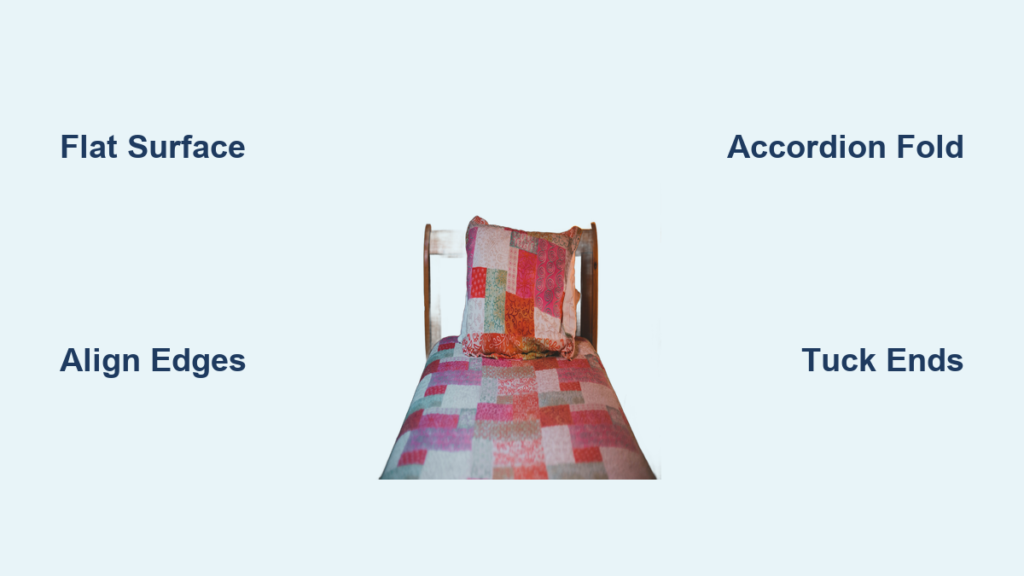
You just washed your bedding or are packing for a trip, and now you face a massive, bulky bedspread that refuses to fit in your closet. Knowing how to fold a bedspread correctly turns this frustrating chore into a quick task that saves significant space.
This guide walks you through a professional method to create a tight, neat rectangle in minutes. You will learn to prep your surface, align edges perfectly, and use the accordion technique for maximum compactness.
Prepare Your Workspace for Perfect Folds
A successful fold begins before you touch the fabric. The surface you choose dictates the quality of your final result.
Choose a Flat Spacious Surface
Work on a clean bed or clear floor where the bedspread can lie fully extended. Avoid small tables or cluttered areas that restrict your movement. A king-sized comforter needs ample room to breathe without crowding.
Smooth Out Wrinkles First
Shake the bedspread gently to loosen the fibers, then lay it flat with the top side facing down. Run your hands from the center to the edges to remove creases and air pockets. Pay special attention to corners since they often curl up.
Fold Lengthwise to Reduce Bulk
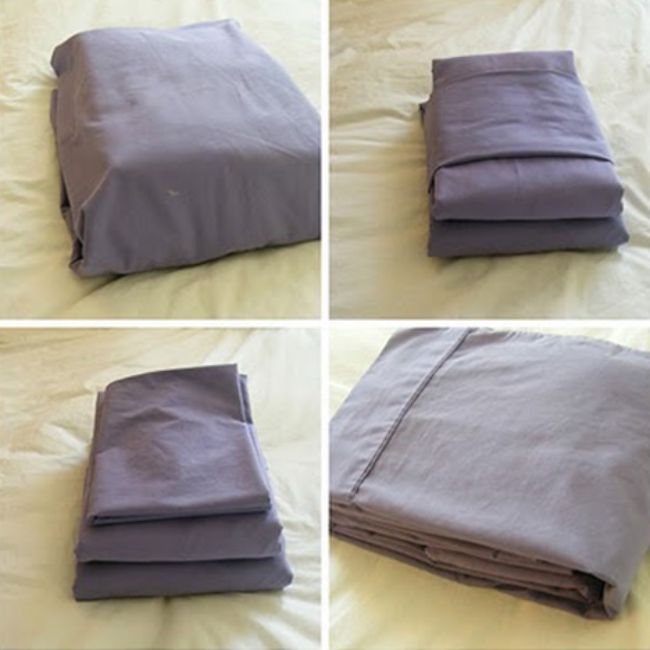
The first fold cuts the size in half and sets the foundation for a uniform result. Precision here prevents lopsided layers later in the process.
Align Long Edges Carefully
Grasp both long sides of the bedspread and lift slightly to remove tension. Bring one side over to meet the other, folding it lengthwise down the middle. Match the edges as closely as possible, especially the top and bottom corners.
Press Firmly After Folding
Once folded, use the heel of your hand or a flat palm to smooth the entire surface. This action removes new wrinkles and compresses the layers together. Think of it like ironing without heat since firm pressure creates sharper creases.
Repeat the Fold for Extra Compactness
Now that the bedspread is half its original width, repeat the process to build density. This step creates a manageable base for the final folding stages.
Fold Lengthwise Again
Take the folded edge and bring it over to meet the open edge, halving it a second time. This creates a narrower rectangle that is typically about a quarter of the original width. For oversized comforters, you may fold lengthwise a third time if needed.
Check for Even Layers
Inspect the sides after folding to ensure all edges line up cleanly. If one end is thicker or misaligned, unfold and reposition the fabric immediately. Uneven layers make the next steps harder and the final bundle unstable.
Create a Tight Accordion Fold
This is where your bedspread transforms from bulky to compact. The accordion method minimizes volume and keeps the shape neat for storage.
Start Folding in Thirds or Quarters
Begin at one short end and fold a section about one-third of the length toward the center. Then fold the opposite end over it, similar to closing a letter. This creates a thick, layered strip roughly 12 to 18 inches wide depending on the original size.
Alternate Sides for a Clean Stack
For a tighter roll effect, use the true accordion technique by folding a section toward the center. Fold the next section over it in the same direction and repeat until the entire piece is stacked. This method eliminates loose ends and makes tucking easier.
Tuck Loose Ends Securely
A well-folded bedspread should not unravel when moved. Securing the ends keeps the bundle self-contained and tidy.
Tuck Open Edges Inside
Look for any exposed fabric flaps, especially at the final fold. Gently tuck them inside the layered stack to create a clean, boxy shape. This prevents the bundle from springing open during storage.
Use an Elastic Band if Needed
Wrap a wide elastic band around the bundle if the fabric tends to puff or loosen. Avoid tight rubber bands that can damage fibers over time. A soft fabric-covered band holds the shape without causing deep creases.
Store or Pack Efficiently
Now that your bedspread is folded, protect it and save space with smart storage solutions. Proper storage extends the life of your linens.
Slide Into a Storage Bag
Place the bundle into a breathable linen bag or zippered storage sack. This shields it from dust and pests while keeping it organized in a closet. It also helps the item stay compressed under the bed.
Use Compression for Travel

Packing for a trip? Put the folded bedspread into a vacuum-seal compression bag. Roll out the air or use a vacuum to shrink its size by up to 80 percent. This is ideal for suitcases or seasonal storage in tight spaces.
Fix Common Folding Mistakes

Even small errors can ruin a neat fold. Avoid these pitfalls to achieve professional-looking results every time.
Don’t Fold on a Small Surface
Working on a too-small bed or table forces you to bunch the fabric. This traps air and creates uneven layers that are hard to fix. Always use the largest flat area available like the floor.
Never Skip the Smoothing Step
Rushing through folds without pressing down leaves air pockets inside. These make the bundle puffy and unstable on the shelf. Smooth after every fold to compress layers and eliminate wrinkles effectively.
Avoid Misaligned Corners
If corners do not match, the entire structure tilts and looks messy. Take an extra second to line up edges precisely during the first fold. It serves as the foundation for everything that follows.
Maintain a Crisp Fold Long-Term
Keep your bedspreads neat between uses with these professional habits. Consistency ensures your linens remain ready for use.
Rotate Stored Bedding Monthly
Fabrics can develop permanent creases if kept folded for months without attention. Unfold and refold every 4 to 6 weeks while rotating which items are on top. This preserves fabric integrity and prevents deep fold lines.
Label Storage Bags Clearly
Use tags or labels to identify contents such as “Winter Comforter – Queen.” This saves time and prevents unnecessary unfolding when searching for specific items. Clear labeling keeps your linen closet organized.
Fold Before Washing Not After
Wet bedding is harder to fold neatly and may develop mildew. Always dry completely on low heat with dryer balls to reduce clumping, then fold immediately. Damp fabric sticks together and wrinkles easily.
Frequently Asked Questions About Folding Bedspreads
What is the best surface for folding a large comforter?
You should use a clean, flat surface like a large bed or a clear section of the floor. These areas provide enough space to spread the item fully without obstruction, ensuring precise alignment.
How do I stop my folded bedspread from unraveling?
Tuck any loose edges inside the layered stack to create a self-contained bundle. You can also wrap a wide elastic band around the middle to hold the layers together securely.
Can I use vacuum bags for long-term storage?
Yes, vacuum-seal compression bags are excellent for long-term storage or travel. They remove air from the enclosure and significantly reduce the volume of bulky bedding beyond manual folding.
Why does my folded bedspread look lumpy?
Lumps usually occur because you skipped smoothing the fabric or misaligned the edges. Always press firmly after each fold and ensure corners match perfectly to create a flat, even stack.
How often should I refold stored bedding?
You should unfold and refold stored bedding every 4 to 6 weeks. This practice prevents permanent creases and maintains the integrity of the fabric while allowing you to rotate items.
Key Takeaways for Learning How to Fold a Bedspread
Mastering how to fold a bedspread requires a flat surface, precise alignment, and the right technique. By smoothing wrinkles early and using the accordion method, you create a compact bundle that stays neat.
Start with a large area, fold lengthwise twice, and tuck your ends securely. Try using compression bags for seasonal storage to maximize your closet space today.