Traveling long distances by air often means struggling to sleep upright, leading to sore necks, stiff shoulders, and groggy arrivals. A flight pillow can make all the difference if you wear it correctly. The right positioning prevents head drop, supports your cervical spine, and helps you rest more comfortably mid-flight. This guide shows you exactly how to wear a flight pillow for maximum comfort, avoid common mistakes, and pair it with other travel essentials for a truly restful journey.
Whether you have a memory foam, inflatable, or wrap-around model, the way you position it changes everything. From window-seat leans to forward-nodding sleepers, we will break down the best techniques based on your travel style, plus tips for using your pillow beyond the plane.
Choose the Right Flight Pillow Type
Before learning how to wear a flight pillow, pick one that matches your needs. Not all neck pillows offer the same support, portability, or comfort.
Inflatable Neck Pillow
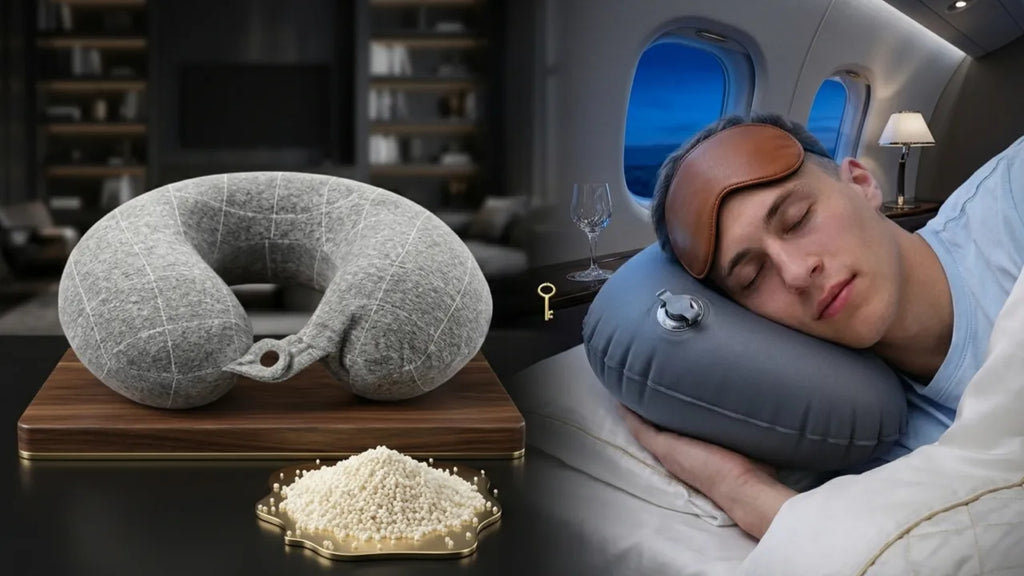
Lightweight and packable, inflatable pillows let you adjust firmness mid-flight. Just blow them up to your preferred tightness and deflate for storage.
Best for: Carry-on travelers and those who want customizable support.
Watch for: Crinkly noise and less cushioning than foam models.
Memory Foam Travel Pillow
These retain shape and mold to your neck, offering consistent support. They are softer and quieter than inflatable versions.
Best for: Long-haul flights where comfort trumps portability.
Watch for: Bulkiness makes them harder to pack and may not compress fully.
Wrap-Around Support Pillow
With 360-degree coverage, these often include hoods, eye masks, or pockets. Some even have straps to stay in place.
Best for: Side sleepers or anxious flyers needing full support.
Watch for: Takes up more space and may feel restrictive.
Correct Flight Pillow Positions

Wearing your neck pillow the right way keeps your head aligned and prevents waking up with neck pain.
Opening at the Front (Standard Position)
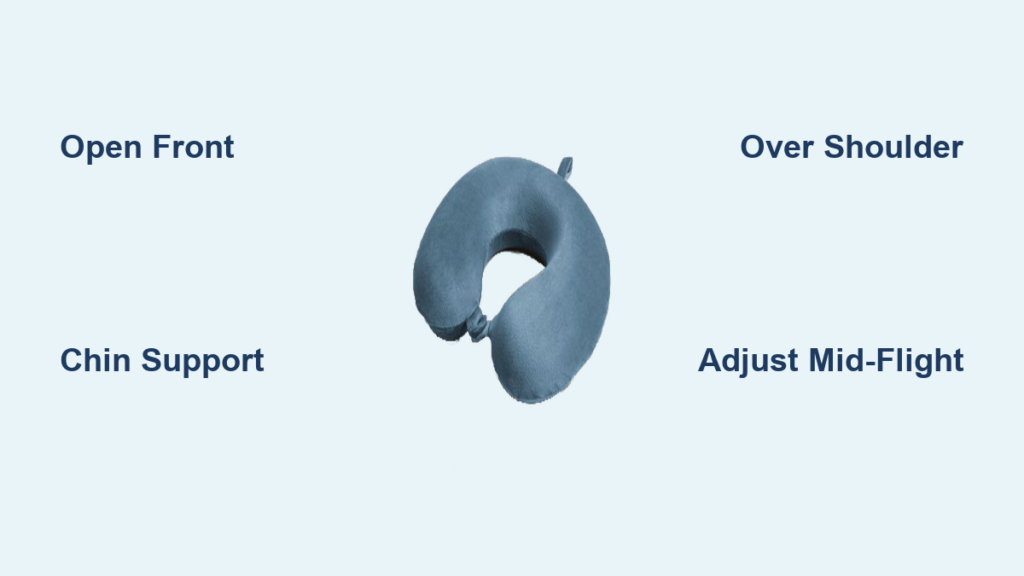
Place the U-shaped gap in front so the cushion wraps the back and sides of your neck.
The sides support your head to stop sideways tipping. The back portion prevents backward head drop. The front edge gently cradles your chin.
Pro tip: Adjust tightness so your head stays supported but can move slightly. Too loose causes slipping. Too tight creates pressure.
Best for: Most upright sleepers, especially in aisle or middle seats.
Opening at the Back (Chin Support Mode)
Flip the pillow so the U opens behind your neck. The ends now support your jaw and chin.
This prevents forward head nodding. It works well when leaning slightly forward. It offers even pressure around the neck.
Warning: Do not let it press too hard under the chin. This can restrict breathing or cause jaw fatigue.
Best for: Travelers who tend to slump forward or nap with head down.
Over the Shoulder (Side Leaning Support)
Drape the pillow over one shoulder, positioning the thick part where your head will rest.
This is ideal for window seats where you lean against the wall. It supports head weight when tilted sideways. It reduces strain on neck muscles.
Pro tip: Slide the pillow higher or lower to match your head angle when leaning.
Best for: Side sleepers or those using a headrest for added stability.
How to Use a Flight Pillow Based on Your Seat
Your seat location affects how you should wear your pillow.
Window Seat: Maximize Wall Support
Lean your head against the cabin wall. Wear the pillow over the shoulder on the window side. Combine with a slightly reclined seat for better alignment.
Bonus hack: Use a folded blanket behind your lower back for lumbar support.
Aisle Seat: Prevent Side-to-Side Head Drop
Use the opening-at-front position. Adjust headrest to limit lateral movement. Hold a book or tablet in your lap to keep posture upright.
Pro tip: Noise-canceling headphones help you stay asleep despite foot traffic.
Middle Seat: Stay Stable and Comfortable
Use a wrap-around or adjustable pillow with straps. Position opening at the front to block head wobble. Place armrests up to create personal space.
Survival tip: A sleep mask and earplugs increase comfort more than any pillow alone.
Using Your Neck Pillow Beyond the Plane
Do not pack it away after landing. Your flight pillow has other uses.
On the Couch or Chair
Wear it opening-at-front while reading or watching TV. It prevents couch neck from slumping. Great for post-flight recovery naps.
In Bed (Temporary Support)
While not a substitute for a proper pillow, it can help in these ways.
Back sleepers: Place U-shape upward under neck for added cervical support.
Side sleepers: Put between knees to align hips.
Sitting up in bed: Place behind lower back for lumbar support.
Under knees: Reduces lower back pressure when lying on your back.
Note: Use only short-term. Dedicated pillows are better for nightly use.
Weighted Travel Pillows: Calm and Support Combined
Some neck pillows add deep pressure for relaxation.
How They Work
Filled with microbeads or clay, they apply gentle weight (usually 2 to 4 pounds) to soothe the nervous system.
Benefits include: Reduces flight anxiety. Promotes calm through deep touch stimulation. Enhances sleep onset.
Best for: Nervous flyers, sensory-sensitive individuals, or meditation during layovers.
Common Flight Pillow Mistakes to Avoid
Even small errors can turn comfort into discomfort.
Wearing It Backward
Putting the U at the back without adjusting chin support causes head drop.
Fix: Only use opening-at-back if the ends firmly support your jaw.
Too Loose or Too Tight
A loose pillow slips. A tight one cuts circulation.
Fix: Snug is good. Squeezing is not. Adjust straps or inflation as needed.
Ignoring Your Sleep Style
Side sleepers need shoulder draping. Forward leaners need chin support.
Fix: Match pillow position to how you naturally sleep.
Not Adjusting Mid-Flight
Your body shifts. Your pillow should too.
Fix: Re-position every hour or after waking.
Relying on Pillow Alone
No neck pillow fixes poor posture without help.
Fix: Combine with lumbar roll, tray table support, seat headrest adjustment, or blanket for warmth.
Best Travel Accessories to Pair With Your Pillow
Maximize comfort with smart add-ons.
Contoured Eye Mask
Blocks light without pressing on eyelids. Helps you fall asleep faster.
Noise-Canceling Headphones
Cuts engine noise and chatter. Essential for light sleepers.
Travel Blanket
Keeps you warm. Airplane cabins average 65 to 68 degrees Fahrenheit. Fold it for extra lumbar support.
Compression Socks
Improves circulation. Reduces leg swelling and DVT risk on long flights.
Travel Slippers
Hygienic and cozy. Let your feet breathe during long sits.
Care and Maintenance Tips
Keep your pillow clean and functional.
Wash Removable Covers
Most covers are machine-washable. Use cold water and mild detergent. Air dry.
Spot Clean Memory Foam
Never soak foam. Dab stains with damp cloth and mild soap. Let dry completely.
Wipe Down Inflatable Pillows
Use disinfectant wipes. Deflate and store dry to prevent mold.
Store Properly
Keep in a cool, dry place. Use a dust bag or pouch. Avoid long-term compression except during travel.
Inspect Regularly
Check for tears or rips, air leaks (inflatable), or foam breakdown (flattening or crumbling). Replace when support diminishes.
Find Your Ideal Comfort Zone
Your perfect pillow setup is personal. Try these tips.
Test Before You Fly
Use your pillow at home while napping on the couch. Adjust position and tightness.
Experiment With Placement
Try opening-at-front, back, and over-the-shoulder. See what reduces stiffness.
Match Pillow to Sleep Style
Upright sleeper: Opening at front works best with memory foam or inflatable.
Forward leaner: Opening at back suits inflatable (adjustable) best.
Side sleeper: Over shoulder position pairs well with wrap-around or soft foam.
Anxious flyer: Weighted plus eye mask works with weighted neck pillow.
Combine Supports
Roll a jacket for armrest padding. Use a seatbelt cushion for waist comfort. Bring a hydration bottle. Dry air worsens fatigue.
Stretch During Flight
Every 2 to 3 hours, gently roll your shoulders. Tilt your head side to side. Stretch arms overhead. Movement prevents stiffness even with perfect pillow use.
Frequently Asked Questions About How to Wear a Flight Pillow
What is the correct way to wear a flight pillow?
The most common and recommended position is with the opening facing forward (toward your chest). This allows the pillow to cradle the back and sides of your neck while supporting your chin gently. The pillow should feel snug but not restrictive.
Should the opening of a neck pillow be in front or back?
It depends on your sleeping position. Opening at the front works best for upright sleepers and prevents backward head drop. Opening at the back works better for forward leaners who need chin support. Try both to see which reduces your neck strain.
Can you wear a flight pillow wrong?
Yes. Common mistakes include wearing it backward without adjusting for chin support, tightening it too much (restricting circulation), or wearing it too loose (allowing head to wobble). These errors can cause neck pain instead of preventing it.
How do I use a flight pillow for side sleeping?
For side sleeping, drape the pillow over your shoulder on the side you lean toward. This provides support when your head tilts against a window or wall. Pair this with a seat headrest or cabin wall for stability.
Can I use my flight pillow after the flight?
Absolutely. Use it while reading or watching TV on the couch to prevent neck strain. You can also use it temporarily in bed for back support, between your knees for hip alignment, or under your knees for lower back relief.
Key Takeaways for Wearing Your Flight Pillow Correctly
The best way to wear a flight pillow depends on your body type, seat location, and sleep habits. Whether you choose opening-at-front for upright support, opening-at-back for chin lift, or over-the-shoulder for window leans, proper fit and positioning are essential. Avoid common mistakes like wearing it backward, skipping adjustments mid-flight, or relying on the pillow alone without lumbar support.
Pair your pillow with smart accessories like noise-canceling headphones, a contoured eye mask, and compression socks for full-body comfort. Maintain your pillow properly by washing removable covers, storing it dry, and inspecting it regularly for wear.
With the right technique, your flight pillow is not just comfort. It is protection for your neck and your ticket to arriving at your destination feeling refreshed and ready to go.