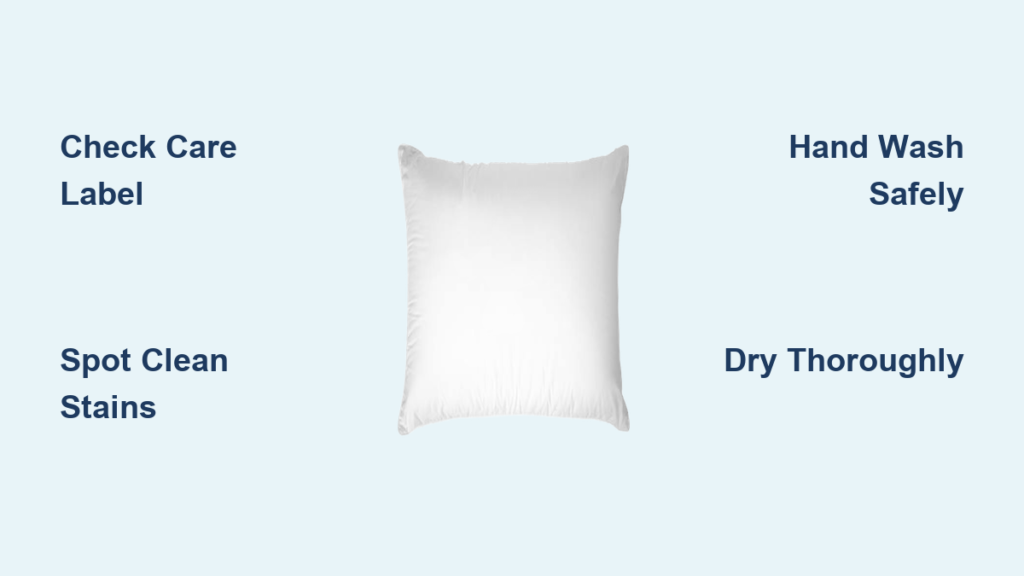
You’ve discovered a stubborn stain on your favorite decorative pillow, only to realize it has no zipper and no removable cover. This is a common frustration. Millions of pillows come with non-removable covers, making cleanup feel like navigating a minefield. One wrong move, like machine-washing memory foam or soaking silk, can permanently ruin your pillow.
This guide walks you through safe cleaning methods based on your pillow’s specific materials. You’ll learn when spot cleaning is your only option, how to hand wash water-safe pillows without damaging the filling, and why proper drying is the most critical step to prevent mold and odors.
Check the Care Label Before Cleaning
Your first step is finding and reading the care label sewn into the seam. This small tag contains essential information that determines what cleaning methods are safe.
What Care Symbols Mean
The label uses universal symbols to indicate acceptable cleaning methods. A bucket or water basin symbol means machine washable, while a hand in water indicates hand wash only. A circle symbol signals dry clean only, and a triangle with a line through it means spot clean only. Wavy lines show temperature settings, and a square with a crossed-out circle tells you to avoid tumble drying.
Never ignore the care label. Washing a dry-clean-only pillow can cause irreversible shrinkage, fabric disintegration, or filling damage.
Identify Your Pillow’s Fabric and Filling
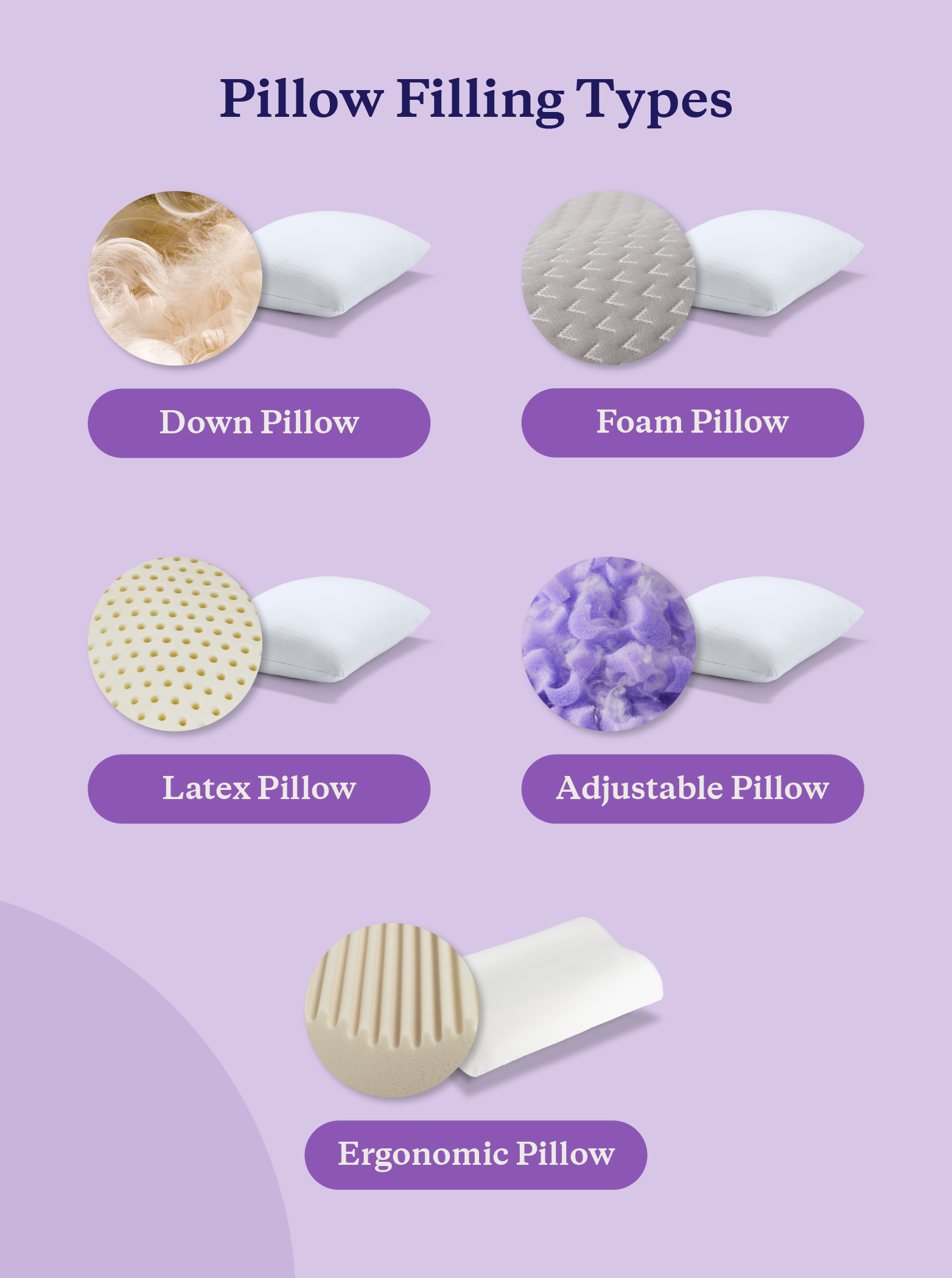
The outer fabric and inner filling work together to determine your cleaning approach. Even if the cover looks washable, a water-sensitive filling means you cannot submerge the pillow.
Common Fillings and Water Safety
| Filling | Water-Safe? | Best Cleaning Method |
|---|---|---|
| Polyester fiberfill | Yes | Machine or hand wash |
| Down/feather | Yes (gentle) | Hand wash or machine |
| Memory foam | No | Spot clean only |
| Cotton batting | Limited | Hand wash only |
| Foam rubber | No | Surface wipe only |
Common Fabrics and Their Rules
Cotton and polyester fabrics are generally washable and durable. Velvet requires spot cleaning only because water crushes the pile. Silk and satin are always dry-clean-only. Faux fur needs careful hand washing to prevent matting, while leather should only be wiped with a damp cloth.
Memory foam is the biggest trap. It absorbs water like a sponge, leading to mold, odor, and permanent breakdown. Never submerge it.
Perform a Spot Test Before Full Cleaning
:max_bytes(150000):strip_icc()/set-and-stop-fabric-dye-bleeding-2146657-FINAL-5baa7bd3c9e77c0025d1eeb3-6fce5f1237ed4fcfa1049a0c92146397.jpg)
Even when labels permit washing, colors can bleed and fabrics can warp. Testing first prevents disasters.
How to Conduct a Spot Test
Mix one teaspoon of mild detergent with one cup of warm water. Dip a clean white cloth, wring until damp, and apply to a hidden area like the bottom corner or seam. Wait ten minutes, then blot dry. Check for color transfer, fabric puckering, or texture changes. If any issues appear, downgrade your method to gentler cleaning.
Spot Clean Stains and Odors Effectively
For most non-zippered pillows, especially those with delicate fabrics or foam fillings, spot cleaning is the safest and most effective approach.
Tools You Will Need
Gather a microfiber cloth or sponge, mild detergent like Woolite or dish soap, white vinegar for odors, baking soda for deep deodorizing, a soft-bristled brush for textured fabrics, and a spray bottle.
Step-by-Step Spot Cleaning
Blot spills immediately using a dry cloth. Press down rather than rubbing to avoid spreading. Mix your cleaning solution using one teaspoon of detergent per cup of warm water, adding one tablespoon of white vinegar for odor control. Dampen your cloth until just moist, never dripping. Gently dab the stain using circular motions, brushing lightly in the direction of the pile for velvet or faux fur. Rinse the area with a second cloth dampened with plain water to remove soap residue. Blot with a dry towel, then place in a well-ventilated room and flip every few hours. Drying time is typically twelve to twenty-four hours. For optional deodorizing, sprinkle baking soda, wait thirty minutes or more, then vacuum with an upholstery attachment.
Hand Wash Water-Safe Pillows
If your pillow has a water-safe filling and durable fabric cover, hand washing provides thorough cleaning without machine agitation risks.
Supplies Needed
You will need a large basin, sink, or bathtub, mild detergent, clean towels, and a soft sponge.
Hand Washing Steps
Fill your basin with lukewarm water around eighty-five degrees Fahrenheit. Hot water shrinks cotton and melts synthetic fibers. Add one to two teaspoons of detergent and swirl to create suds. Submerge the pillow gently, pressing to let water soak in without forcing it. Clean the surface using your hands or sponge in circular motions, focusing on high-contact areas. Rinse thoroughly by draining soapy water, refilling with clean water, and pressing out soap. Repeat two to three times until water runs clear. Remove excess water by pressing gently, never twisting or wringing, which deforms filling. Air dry completely by laying flat on towels or a drying rack. Flip every two to three hours. Drying time ranges from twenty-four to seventy-two hours depending on thickness. Fluff and reshape regularly during drying.
Critical: If the pillow feels cool or damp inside, it is not dry. Mold grows in moist environments within twenty-four to forty-eight hours.
Machine Wash Only When Label Permits
:max_bytes(150000):strip_icc()/top-load-washer-vs-front-load-2145868-v5-6606d79a51e446be957069689296fc44.png)
Machine washing carries significant risks and should only proceed if the care label explicitly states machine washable.
Machine Washing Safety Checklist
Front-loading machines are gentler and safer. Avoid top-loading machines with agitators that can tear seams or imbalance the drum. Always use gentle or delicate cycles with cold or lukewarm water and low spin speeds under six hundred RPM.
Machine Washing Process
Pre-treat any visible stains first. Remove loose parts like tassels, buttons, or trims that could snag. Mend any frayed seams to prevent unraveling during the cycle. Balance the load by washing one to two pillows with two to three clean towels to reduce vibration. Select gentle cycle, cold water, and low spin. Use half the normal detergent amount since thick inserts trap soap. Run an extra rinse cycle to ensure all soap is removed. Remove immediately when finished and press out water gently. For drying, air drying flat is safest. If using a dryer, use low heat or air fluff, add two to three clean tennis balls to prevent clumping, and check every hour. Dry time is typically two to four hours. Finish by shaking vigorously and checking for damp spots.
Warning: Never put memory foam, silk, or velvet in the washing machine. Damage is irreversible.
Dry Thoroughly to Prevent Mold and Mildew
Drying is more important than washing. A damp pillow becomes a breeding ground for mold, mildew, and persistent odors.
Drying Best Practices
Air dry flat, never hang, as hanging stretches fabric and distorts shape. Flip every two to three hours for even drying throughout. Use fans or dehumidifiers to speed the process. Avoid direct sunlight which fades colors and weakens fibers. Never use high heat which melts foam, shrinks cotton, and damages elastic.
How to Check for Full Dryness
Press your hand deep into the center of the pillow. If it feels cool or damp, keep drying. If it feels warm and dry, the pillow is ready to use.
Use Professional Dry Cleaning When in Doubt
For silk, satin, velvet, antique, or high-value pillows, professional dry cleaning offers the safest solution.
When to Choose Dry Cleaning
Select professional cleaning when the fabric is dry-clean-only, the filling is unknown or mixed, the pillow is high-value or sentimental, or home cleaning attempts failed or caused damage. Dry cleaners use solvent-based systems that clean without water, preserving fabric and structure. Many offer odor removal and sanitization services ideal for long-stored or pet-used pillows.
Maintain Pillows to Reduce Cleaning Frequency
The less you wash your pillows, the longer they last. Simple habits cut cleaning frequency significantly.
Daily and Weekly Care
Fluff and rotate daily to maintain shape and airflow. Vacuum weekly using an upholstery attachment to remove dust and allergens. Use removable pillow covers even over decorative pillows to block oils and stains. Air out monthly near an open window, avoiding direct sun.
Proper Storage
Store in breathable cotton bags, never plastic which traps moisture. Keep in a cool, dry place away from pests. Add a cedar block to deter moths for down or wool-filled pillows.
Troubleshoot Common Cleaning Problems
Even careful cleaning can encounter issues. Here is how to fix the most frequent problems.
Musty Smell After Washing
This is caused by incomplete drying. Re-dry completely and add baking soda during drying to absorb residual odor.
Lumpy or Flat Pillow
Clumped filling, common in polyester or down, causes this issue. Tumble dry with tennis balls on low heat and fluff by hand to redistribute filling.
Color Fading
Harsh detergent or sun drying leads to fading. Use color-safe detergent and always dry in shade.
Fabric Pilling
Machine agitation or friction causes pilling. Use a fabric shaver and switch to hand washing for delicate items.
Mold or Mildew
Trapped moisture causes mold growth. Treat small spots with vinegar solution on washable types. Severe mold requires discarding the pillow.
Deformed Shape
Wringing or aggressive handling distorts shape. Reshape while damp and avoid twisting.
Frequently Asked Questions About Washing Pillows Without Zippers
Can I machine wash a pillow with no zipper?
Only if the care label explicitly says machine washable. Even then, machine washing risks damaging the filling, causing lumps, or deforming the shape. Spot cleaning or hand washing is safer for most non-zippered pillows.
How do I clean a memory foam pillow without a removable cover?
Memory foam absorbs water and breaks down when wet. Spot clean only using a damp cloth with mild detergent. Blot dry immediately and air dry completely. Never submerge or machine wash memory foam.
What is the fastest way to dry a pillow after washing?
Use a fan or dehumidifier in a well-ventilated room. Flip every two to three hours. For polyester or down, tumble dry on low heat with tennis balls in thirty-minute intervals until fully dry. Do not use high heat.
Can I use bleach on a non-zippered pillow?
Never use bleach unless the care label explicitly permits it. Bleach damages most fabrics and fillings, causes color loss, and can weaken fibers permanently. Stick to mild detergents.
How often should I clean a pillow without a zipper?
Clean high-use pillows every four to six weeks. Low-use or decorative pillows need cleaning every three to six months. Clean immediately after spills or stains.
Why does my pillow smell musty after drying?
The pillow is not completely dry inside. Mold and mildew develop in moist environments. Re-dry thoroughly, possibly using a dehumidifier, and add baking soda to absorb residual odor.
Key Takeaways for Washing Pillows Without Zippers
Washing a pillow with no zipper is entirely possible when you match your cleaning method to the materials. Always check the care label first and perform a spot test before any cleaning. Spot cleaning works for most situations, especially with delicate fabrics or foam fillings. Hand washing suits water-safe fillings like polyester and down when done gently. Machine washing should only occur with explicit label permission and using gentle settings. Most importantly, thorough drying prevents mold and extends pillow life. When in doubt between cleaning methods, choose the gentler option or consult a professional cleaner.