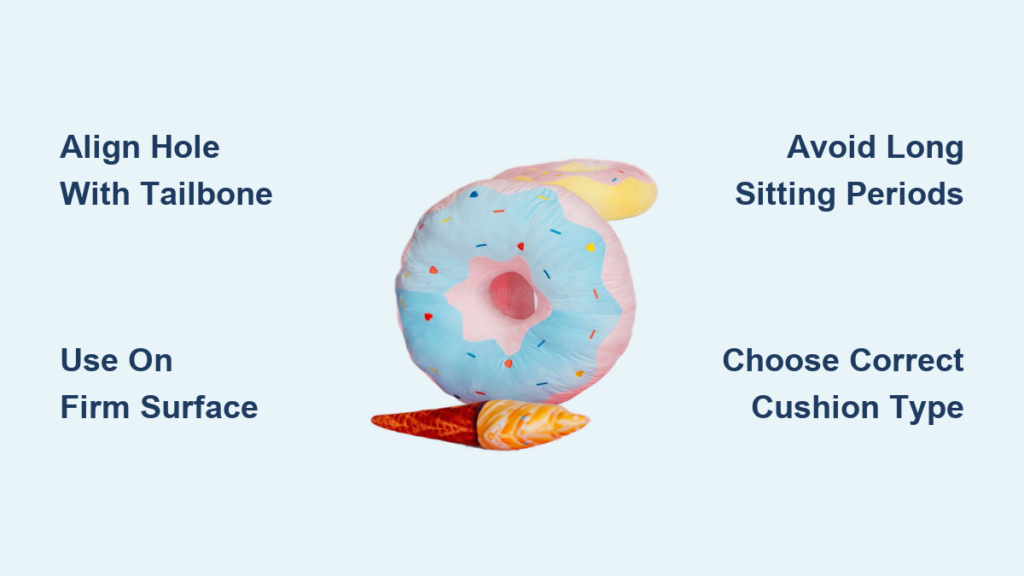
If you have ever experienced tailbone pain, post-surgical discomfort, or prolonged sitting fatigue, you may have considered using a doughnut pillow. Also known as a donut cushion or ring seat, this circular cushion features a hole in the center designed to relieve pressure on sensitive areas like the coccyx, perineum, or anal region. However, simply placing it under you is not enough. Learning how to sit on a doughnut pillow correctly is the key to getting real relief and avoiding further discomfort.
Used widely in medical settings and everyday life, doughnut pillows are especially helpful for people recovering from childbirth, hemorrhoid surgery, coccygectomy, or those managing pressure sores and sciatica. However, improper use can reduce effectiveness or even worsen symptoms. In this guide, you will learn the correct sitting technique, ideal positioning, best cushion types by condition, and common mistakes to avoid.
Choose the Right Pillow for Your Condition

Not all doughnut pillows are created equal. The best one for you depends on your specific health needs.
Match Cushion Type to Your Symptoms
For tailbone pain, also known as coccydynia, use a memory foam or high-density foam ring with a central 3 to 5 inch opening. These materials support the buttocks while leaving the coccyx suspended.
For postpartum recovery, opt for a women-specific model with wider support and soft fabric. Look for breathable covers to aid healing after episiotomy.
For office or car use, select a non-slip base model with silicone dots or rubber backing to prevent sliding on smooth seats.
For travel, choose an inflatable version that is lightweight, compact, and adjustable for firmness.
For pressure ulcers, use medical-grade gel or cold foam cushions commonly used in wheelchairs and hospital beds.
Pro Tip: Avoid standard ring cushions if you have hemorrhoids. Instead, choose a U-shaped or V-cut wedge cushion that unloads the entire perineal area without transferring weight forward.
Position the Pillow Correctly

Placing the pillow properly is the first step to effective relief.
Align the Hole with Your Tailbone
Place the cushion on a firm, flat surface like an office chair, car seat, or bench. Ensure the central opening sits directly under your coccyx, not your buttocks or perineum. Your weight should rest evenly on the left and right sides of the ring, not on the edges of the hole.
Adjust for Gender-Specific Designs
Men’s models often include a front groove. Align this with the perineum to relieve prostate pressure. Women’s models are wider and contoured for pelvic structure. Center the hole under the tailbone, adjusting for postpartum incisions if needed.
Visual Cue: If you feel pressure on your tailbone or notice the wound area touching the cushion edge, reposition the pillow slightly forward or backward until relief is felt.
Sit Down with Proper Form
How you sit down matters just as much as where you place the pillow.
Lower Yourself Slowly
Avoid plopping down, which can jar the tailbone and negate cushion benefits. Lower yourself gently, keeping your back straight and core engaged. Keep feet flat on the floor, knees bent at 90 degrees, and hips level.
Maintain Upright Posture
Sit tall with shoulders back, spine neutral, and chin parallel to the floor. Avoid slouching or leaning forward, which shifts pressure back onto the coccyx. Use lumbar support if lower back pain persists, as many donut pillows do not support the lumbar curve.
Warning: Slouching can cause your tailbone to press against the back edge of the hole, increasing pain instead of relieving it.
Avoid Common Sitting Mistakes
Even with the right pillow, poor habits can undermine your comfort.
Do Not Use It on Soft Furniture
Plush sofas or deeply padded chairs cause the cushion to sink unevenly, reducing effectiveness. The pillow needs a stable base to maintain its shape and pressure-relieving function.
Do Not Ignore Slippage
If the cushion slides forward or sideways when you sit, use one with an anti-slip bottom. Silicone dots or textured rubber bases grip fabric and leather seats effectively.
Do Not Sit Too Long
Limit sitting to 30 to 60 minutes at a time, even with cushion use. Stand, stretch, or walk briefly every hour to boost circulation and reduce stiffness.
Expert Note: A donut pillow is not a fix for prolonged sitting. It is a temporary aid, and movement is still essential.
When to Avoid a Traditional Doughnut Pillow
Despite popular marketing, not all conditions benefit from ring-shaped cushions.
Hemorrhoids: A Controversial Use
The central hole transfers body weight to the perineum and anal sphincter, increasing pressure on swollen veins. This can worsen pain, swelling, and healing time. No clinical studies support ring cushions for hemorrhoid treatment.
Better Alternatives for Hemorrhoids
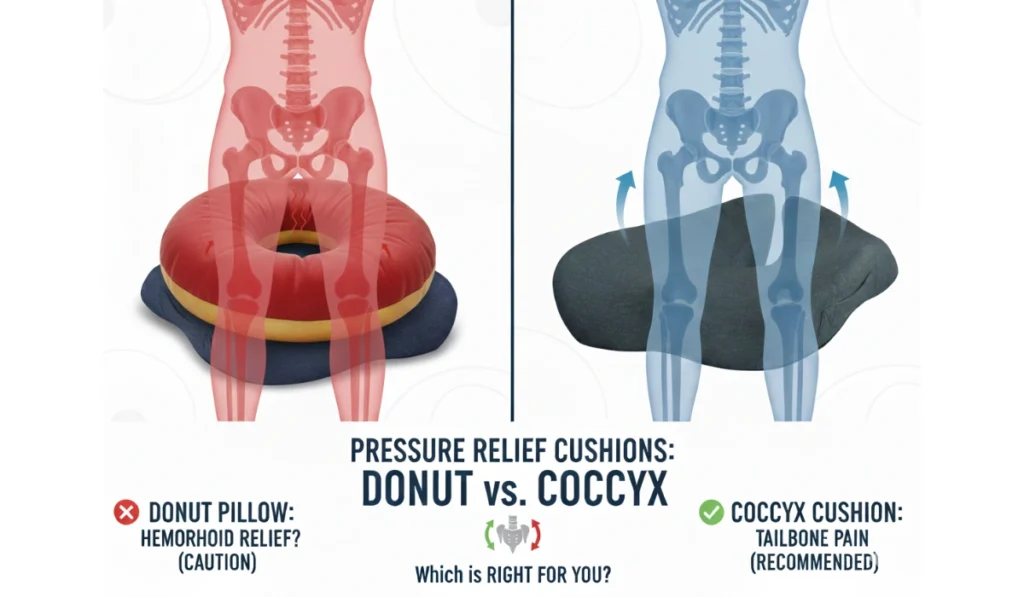
U-shaped or V-cut cushions lift pressure off the entire anal and perineal region. Doctor Butler’s Seat Cushion, designed by a proctologist, features a front cutout and gel pack pocket for targeted relief. Wedge cushions tilt the pelvis forward, reducing strain on the rectal area.
Medical Advice: A donut pillow is not a hemorrhoid pillow. It may help with general comfort, but its shape works against hemorrhoid recovery.
Clean and Maintain Your Pillow
Proper care ensures hygiene, comfort, and longevity.
Wash the Cover Regularly
Remove the cover using the full-zipper design around the perimeter. Machine wash in cold water with mild detergent. Air dry or tumble dry on low. Avoid bleach or fabric softeners that can degrade fabric and elastic.
Clean the Foam Core Safely
Never submerge memory foam or polyurethane cores. Spot clean with a damp cloth and mild soap. Wipe dry immediately. Allow full drying before reassembling to prevent mold or odor.
Check Inflatable Models for Leaks
Inflate fully and listen for hissing sounds. Submerge in water to detect bubbles if a leak is suspected. Store partially deflated to preserve valve integrity.
Lifespan Tip: High-density foam cushions last 1 to 3 years with proper care. Replace if flattened or cracked.
Know When to See a Doctor
A doughnut pillow is a supportive tool, not a substitute for medical care.
Consult a Healthcare Provider If You Have
Severe tailbone pain after trauma or fall, open wounds, infections, or surgical incisions. Numbness, tingling, or radiating leg pain that may indicate sciatica or nerve issues. Neurological conditions affecting sensation, such as diabetes or spinal injury.
Cushion Disclaimer: Most manufacturers state their products are not intended to diagnose, treat, cure, or prevent disease.
Use It in the Right Environments
Doughnut pillows are versatile, but effectiveness depends on context.
Ideal Settings for Use
Office chairs reduce tailbone strain during long workdays. Car seats ease discomfort during commutes or road trips. Wheelchairs prevent pressure sores in immobile users. Smaller versions reduce pain during bowel movements when placed on toilet seats. Hospital beds provide support post-surgery or during recovery. Airplane seats minimize stiffness on long flights.
Real-World Feedback: Users report immediate relief from postpartum soreness, tailbone pain, and post-hemorrhoidectomy discomfort, especially with removable, washable covers.
Select Based on Size and Fit
Using the wrong size can reduce support and cause instability.
Standard Dimensions to Consider
Diameter typically ranges from 14 to 18 inches. Height ranges from 2.25 to 4 inches. Hole size usually measures 3 to 5 inches across.
Choose by Body Type
Larger individuals should opt for 18-inch diameter models with 200 kg weight capacity. Average build individuals benefit from 16-inch cushions offering balanced support. Children or petite adults may prefer smaller 12 to 14 inch versions.
Fit Check: Your sit bones, also known as ischial tuberosities, should rest fully on the cushion’s sides, not hang over the edge.
Understand the Benefits and Limits
Doughnut pillows help, but they are not a cure-all.
Proven Benefits
The design provides pressure relief on the coccyx and perineum. It improves posture by discouraging slouching. Enhanced circulation occurs during prolonged sitting. Wounds are protected post-surgery or during childbirth.
Known Limitations
The pillow does not correct posture, only discourages slouching. It may worsen hemorrhoids due to pressure redistribution. It is not suitable for spinal instability without additional support. Lumbar support is limited, so pair with a back cushion if needed.
Expert Insight: While a donut pillow might discourage slouching, it does not address posture issues and redirects weight onto hemorrhoid veins, counteracting good posture goals.
Follow Best Practices for Safe Use
Maximize comfort and safety with these actionable tips.
Do
Use on firm, stable chairs. Align the hole precisely under the tailbone. Combine with postural exercises and movement breaks. Choose machine-washable, anti-slip models. Replace if foam cracks or loses rebound.
Do Not
Use for active hemorrhoids without medical approval. Sit for hours without moving. Use on soft, sinking furniture. Wash or soak the foam core. Ignore persistent pain, and seek medical advice.
Key Takeaways for Using Your Doughnut Pillow
Knowing how to sit on a doughnut pillow correctly can make the difference between relief and continued discomfort. When used properly, for the right conditions, and with good posture, it is a valuable tool for recovery and comfort. Always match the cushion to your diagnosis, prioritize movement, and consult a healthcare provider for persistent pain. With the right approach, your doughnut pillow can support healing rather than hinder it.
Frequently Asked Questions About Doughnut Pillows
Can I use a doughnut pillow for hemorrhoids?
Traditional doughnut pillows are not recommended for hemorrhoids. The central hole transfers pressure to the perineum and anal area, which can worsen swelling and pain. Instead, use a U-shaped or V-cut wedge cushion designed specifically for hemorrhoid relief.
How long should I sit on a doughnut pillow at one time?
Limit sitting to 30 to 60 minutes at a time, even with cushion use. Stand, stretch, or walk briefly every hour to maintain circulation and prevent stiffness.
Which type of doughnut pillow is best for tailbone pain?
A memory foam or high-density foam ring with a 3 to 5 inch central opening works best for tailbone pain. These materials support the buttocks while keeping the coccyx suspended above the hole.
Can I use a doughnut pillow on my office chair?
Yes, office chairs are ideal environments for doughnut pillow use. Choose a model with a non-slip base to prevent sliding on smooth chair surfaces.
How do I clean my doughnut pillow?
Remove the cover and machine wash it in cold water with mild detergent. Spot clean the foam core with a damp cloth and mild soap. Never submerge the foam core, and allow it to dry completely before reassembling.
When should I replace my doughnut pillow?
Replace your doughnut pillow when the foam becomes flattened, cracked, or loses its rebound properties. High-density foam cushions typically last 1 to 3 years with proper care.