Waking up with a sour taste in your mouth, a burning sensation in your chest, or a persistent cough? You’re not alone. Millions struggle with nighttime acid reflux, a disruptive condition that turns rest into discomfort. While medications can help, they don’t always provide full relief, especially during sleep. That’s where a wedge pillow comes in. Designed to elevate your upper body, it uses gravity to keep stomach acid where it belongs. But simply placing a wedge under your head isn’t enough. How to sleep on a wedge pillow for acid reflux the right way makes all the difference.
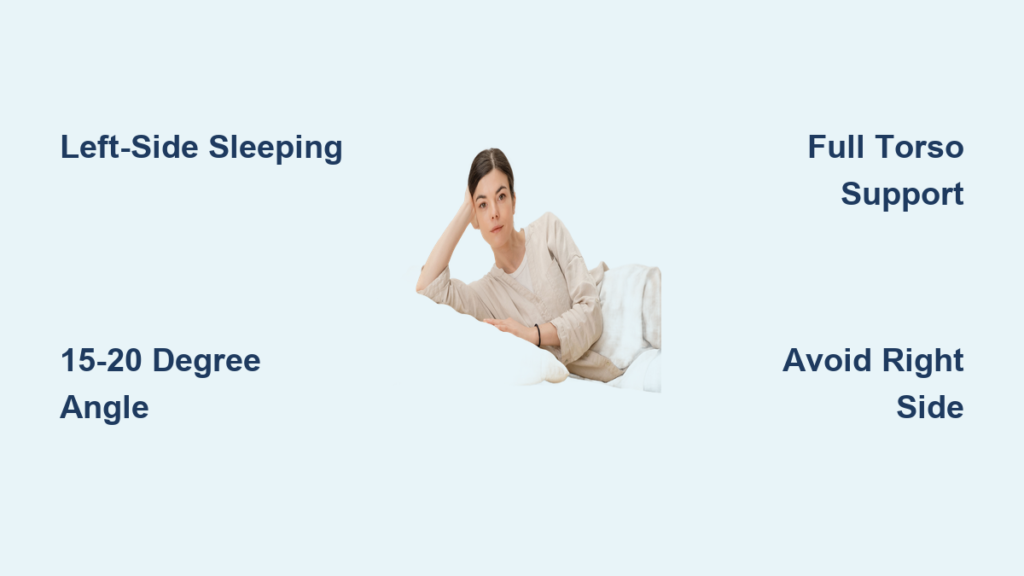
The most effective method isn’t just about elevation. It is about position, angle, and support. Research shows that sleeping on your left side at a 15 to 20 degree incline significantly reduces acid exposure compared to lying flat or on your back. Generic pillows that only lift your head can actually worsen symptoms by bending your torso and increasing abdominal pressure. A true wedge pillow supports your entire upper body, aligning your spine and leveraging gravity to prevent reflux. In this guide, you will learn the science backed way to use a wedge pillow, avoid common mistakes, and choose the best type for lasting relief.
Left-Side Inclined Sleeping: Best Position for Acid Reflux
Why Left Side Beats Back Sleeping
Contrary to popular belief, sleeping on your back while elevated is not the most effective way to combat acid reflux. The left side is the gold standard. When you lie on your left, your stomach sits below the esophagus, making it harder for acid to flow upward. The lower esophageal sphincter, the valve that keeps stomach contents in place, also stays above the acid pool, reducing the chance of leakage.
Back sleeping, even with elevation, does not offer the same anatomical advantage. Gravity helps less when the stomach is level with or above the esophagus. Clinical studies confirm that left-side inclined sleep reduces nighttime acid exposure by up to 87% compared to flat or supine positions. This is not just theory. It is measurable relief.
Optimal Incline Angle: 15 to 20 Degrees

The ideal angle for reflux relief is 15 to 20 degrees, not the steeper 30 to 45 degree angles found in many generic wedges. A moderate incline keeps your torso comfortably supported without causing strain or sliding. Angles above 30 degrees are often too steep for sleep and are better suited for lounging or post-surgery recovery.
A 15 to 20 degree angle typically corresponds to a 6 to 8 inch elevation at the head. This subtle lift is enough to activate gravity’s benefits without disrupting natural sleep posture. Pillows that exceed this range may feel dramatic but often lead to neck pain, shoulder compression, or unintentional rolling during the night.
Full Torso Support Prevents Bending

One of the biggest mistakes people make is using a wedge that is too short. If only your head and shoulders are elevated, your waist bends over the edge, increasing abdominal pressure and pushing acid upward. To prevent this, your entire upper body from head to mid-back must rest on the wedge.
Look for a wedge that extends at least to your hips when lying on your side. This ensures continuous support and maintains a straight, gravity-assisted alignment. Multi-component systems like the MedCline Reflux Relief System are designed specifically for this, combining a torso wedge with a body pillow to keep you stable all night.
How to Set Up Your Wedge Pillow
Position the Wedge Correctly
Start by placing the wedge with its thickest end against the headboard or wall. The flat surface should face up, aligned with your mattress. Make sure it does not tilt or slide. Some models come with non-slip bottoms or straps to secure them in place.
Avoid placing the wedge under your mattress. This reduces its effectiveness and can damage both the pillow and bed. The wedge should sit directly on the mattress, fully accessible and stable.
Align Your Body for Maximum Relief
Once the wedge is in place, follow these steps:
• Lie down on your left side, ensuring your head, neck, shoulders, and upper back are fully supported.
• The thinnest end of the wedge should reach between your hips and lower ribcage.
• Keep your spine straight. No twisting or hunching.
• If your head feels too high or your neck strained, you may need a different incline or additional neck support.
For side sleepers, consider a pillow with an arm pocket or integrated body support. This prevents shoulder compression and stops you from rolling onto your back during the night.
Adjust for Comfort and Stability
If you feel unstable or tend to slide down, try these fixes:
• Use a body pillow behind your back to prevent rolling.
• Choose a wider wedge, at least 24 inches, to support your shoulders.
• Opt for a contoured or multi-piece system that locks your position in place.
Some users find it helpful to set a smart alarm or use a sleep tracker to monitor position changes. Over time, your body will adapt to staying on the left side.
Choosing the Right Wedge Pillow
Side vs. Back Sleeper Compatibility
Not all wedge pillows work for every sleep position. Side sleepers need contoured support to maintain spinal alignment. Flat wedges often fail here, causing shoulder and hip misalignment. Look for designs with body pillows or arm pockets, features that stabilize your posture.
Back sleepers can use standard foam wedges, but must ensure the incline is no more than 20 degrees. Stomach sleeping is not recommended with wedge pillows, as it strains the spine and neck.
Ideal Height and Incline
The ideal elevation ranges from 6 to 8 inches, which provides the optimal 15 to 20 degree angle. Avoid wedges over 12 inches unless for daytime use. Adjustable or foldable wedges let you fine-tune the angle to your specific needs.
Check product specs for exact dimensions. Kolbs offers 7.5 inch and 12 inch models, while MedCline sizes are based on height:
• Small: 5’4″ and under
• Medium: 5’5″ to 5’11”
• Large: 6’0″ and taller
Material and Cooling Features
Choose a wedge with these features:
• Gel-infused memory foam top layer for pressure relief
• High-density polyfoam core for durability
• Breathable, removable cover, preferably machine-washable
Look for CERTIPUR-US or OEKO-TEX certifications to ensure low emissions and no harmful chemicals. Overheating is a common complaint with foam pillows. Gel infusion and ventilated cores help regulate temperature.
Common Mistakes to Avoid
Do Not Stack Regular Pillows
Stacking pillows might seem like a cheap fix, but it is ineffective. Regular pillows only lift your head, kinking the esophagus and increasing neck strain. They also shift during the night, losing support. A true wedge elevates your entire torso, maintaining a smooth, protective incline.
Avoid Too Steep an Angle
A 45 degree wedge might feel dramatic, but it is often too steep for sleep. You may slide down, feel abdominal pressure, or wake up with back pain. The 15 to 20 degree therapeutic range is clinically proven. Do not sacrifice comfort for height.
Never Sleep on Your Right Side
Sleeping on the right side increases reflux risk. The stomach rises above the esophagus, making it easier for acid to escape. Stick to the left side for maximum protection.
Prevent Poor Alignment
If your head hangs off the wedge or your waist bends over the edge, you are not getting full benefits. Ensure the wedge supports you from head to hips. Use a longer or wider model if needed.
MedCline vs. Generic Wedge Pillows

Why MedCline Outperforms Standard Wedges
The MedCline Reflux Relief System is the only wedge clinically proven to reduce esophageal acid exposure by 87%. Its patented design combines three key elements:
• A 15 to 20 degree incline wedge
• A body pillow to prevent rolling
• An arm pocket for shoulder support
Unlike generic wedges, MedCline is FDA-registered and HSA/FSA-eligible. It is designed specifically for left-side reflux relief. Available in three sizes and comes with a removable, washable cover.
Generic Wedges: What to Watch For
Many off-the-shelf wedges are too steep, ranging from 30 to 45 degrees, and are one-size-fits-all, leading to poor fit and discomfort. While brands like Kolbs offer quality materials like memory foam and jacquard covers, they lack position-specific design. If you are a side sleeper, a basic wedge may not provide enough stability.
| Feature | MedCline | Generic Wedge |
|---|---|---|
| Clinically Proven | Yes | No |
| Left-Side Support | Yes | No |
| Optimal 15-20 Degree Angle | Yes | No (often steeper) |
| Arm Pocket | Yes | No |
| Size Options | 3 (by height) | Usually one size |
Who Benefits Most from Wedge Pillows
Chronic GERD and Medication Non-Responders
Up to 40% of GERD patients do not get full relief from PPIs or H2 blockers. For them, positional therapy with a wedge pillow is a crucial non-drug solution. Nighttime symptoms often persist despite medication. Elevation provides added protection.
Pregnant Women and Hiatal Hernia Patients
Pregnancy increases abdominal pressure, pushing stomach contents upward. A wedge pillow offers safe, drug-free relief. Similarly, those with hiatal hernia, where part of the stomach pushes into the diaphragm, benefit from consistent elevation.
Other Beneficial Uses
Wedge pillows also help with these conditions:
• Sleep apnea and snoring. Keeps airways open.
• Post-nasal drip and congestion. Aids mucus drainage.
• Poor circulation and varicose veins. Elevating legs reduces swelling.
• Back and neck pain. Supports spinal alignment.
• Glaucoma. 20 degree elevation lowers eye pressure.
• Ear infections. Reduces pressure and promotes drainage.
Pro Tips for Maximum Relief
Wait 2 to 3 Hours After Eating
Lying down too soon after meals is a major reflux trigger. Wait 2 to 3 hours before bedtime to allow digestion. Avoid late-night snacks and alcohol, which relax the lower esophageal sphincter.
Elevate the Entire Bed If Needed
If a wedge is not enough, use bed risers to lift the head of your bed 6 to 8 inches. This provides whole-body elevation and prevents sliding. Avoid propping up with pillows under the mattress. They compress and lose height.
Combine With Medication and Lifestyle Changes
Use the wedge as part of a broader strategy:
• Take prescribed meds as directed
• Avoid trigger foods like spicy, fatty, or acidic items
• Maintain a healthy weight
• Sleep with your head elevated every night if you are a chronic sufferer
Maintain Your Pillow
• Wash the cover every 1 to 2 months
• Rotate the pillow occasionally to prevent uneven wear
• Replace every 2 to 3 years or when it loses firmness
Frequently Asked Questions About Sleeping on a Wedge Pillow for Acid Reflux
What is the best angle for a wedge pillow for acid reflux?
The best angle is 15 to 20 degrees, which corresponds to a 6 to 8 inch elevation at the head. This range is clinically proven to reduce acid exposure without causing discomfort or sliding during sleep.
Can I use a regular pillow instead of a wedge pillow?
No. Regular pillows only lift your head and create a bend at the waist, which increases abdominal pressure and can worsen reflux. A true wedge pillow elevates your entire torso for proper gravity-assisted relief.
Is left-side sleeping really better than back sleeping for acid reflux?
Yes. Left-side sleeping at an incline is the gold standard because the stomach sits below the esophagus, making it harder for acid to flow upward. Back sleeping does not provide the same anatomical advantage.
How high should a wedge pillow be for acid reflux?
A height of 6 to 8 inches provides the optimal 15 to 20 degree incline. Wedges higher than 12 inches are typically too steep for comfortable sleep and are better suited for daytime lounging.
Can side sleepers use a wedge pillow for acid reflux?
Yes, but they need a contoured design with body support or an arm pocket to maintain alignment. The MedCline system is specifically designed for side sleepers, with an arm pocket to prevent shoulder compression and rolling.
How long does it take to see results from using a wedge pillow?
Many users report reduced symptoms within the first few nights. Clinical data shows 93% of users experience reduced nighttime heartburn and 95% report improved sleep quality with consistent use.
Key Takeaways for Using a Wedge Pillow to Relieve Acid Reflux
The most effective approach combines three elements: sleeping on your left side, maintaining a 15 to 20 degree incline, and ensuring full torso support from head to hips. Generic wedges that only elevate the head or are too steep often fail to provide relief and can even worsen symptoms.
Choosing the right pillow matters significantly. The MedCline Reflux Relief System is clinically proven to reduce acid exposure by 87% and is designed specifically for left-side sleeping. Generic wedges may work for some back sleepers, but they often lack the stability and optimal angle needed for reflux relief.
For best results, use your wedge pillow every night, wait 2 to 3 hours after eating before lying down, and combine positional therapy with medication and lifestyle changes. With consistent use, you can expect significantly reduced heartburn, less regurgitation, and better overall sleep quality without relying solely on medication.