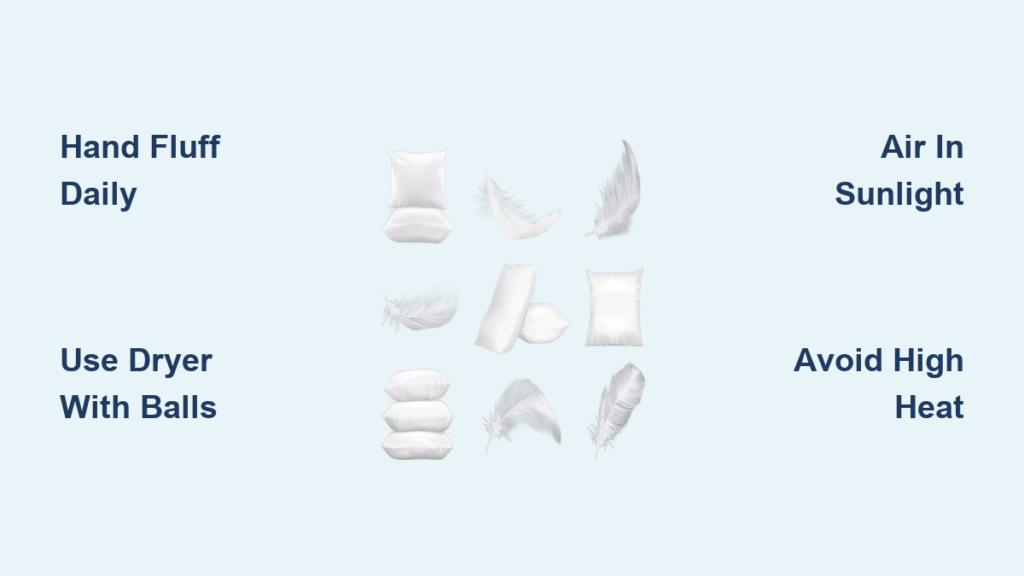
You sink into bed, ready for a good night’s sleep, only to find your feather pillow flat, lumpy, and lifeless. It offers no support, feels damp, and barely lifts your head. If this sounds familiar, you are not alone. Feather pillows naturally lose their fluff over time due to body weight, moisture, and daily compression. But the good news? Restoring that plush, hotel-style loft is simple, fast, and requires no special tools.
Fluffing a feather pillow is not just about looks. It is essential for comfort, spinal alignment, and hygiene. Regular fluffing redistributes fill, breaks up clumps, removes trapped moisture, and extends your pillow’s lifespan by years. Whether your pillow arrived vacuum-packed or has gone flat after months of use, the right techniques can bring it back to life.
Why Feather Pillows Lose Their Fluff
Feather pillows flatten because of repeated compression during sleep. Over time, feathers nest together in a “spooned” alignment. Curved sides fit tightly together, losing their 3D structure and air pockets. This reduces volume, support, and softness.
Key causes include body weight pressing down for hours, moisture from sweat or humidity weighing down feathers, accumulated dust and skin cells adding internal pressure, and infrequent fluffing allowing compaction to become permanent. Even high-quality pillows made with resilient Hungarian white goose feathers will flatten without care.
New pillows may seem flat right out of the box. This is normal. They are often compressed for shipping and need 24 to 72 hours of fluffing to regain full loft.
The Accordion Technique: Hand Fluffing in 30 Seconds

The quickest way to revive a flat feather pillow is by hand. This method uses mechanical motion to break up clumped feathers and reintroduce air.
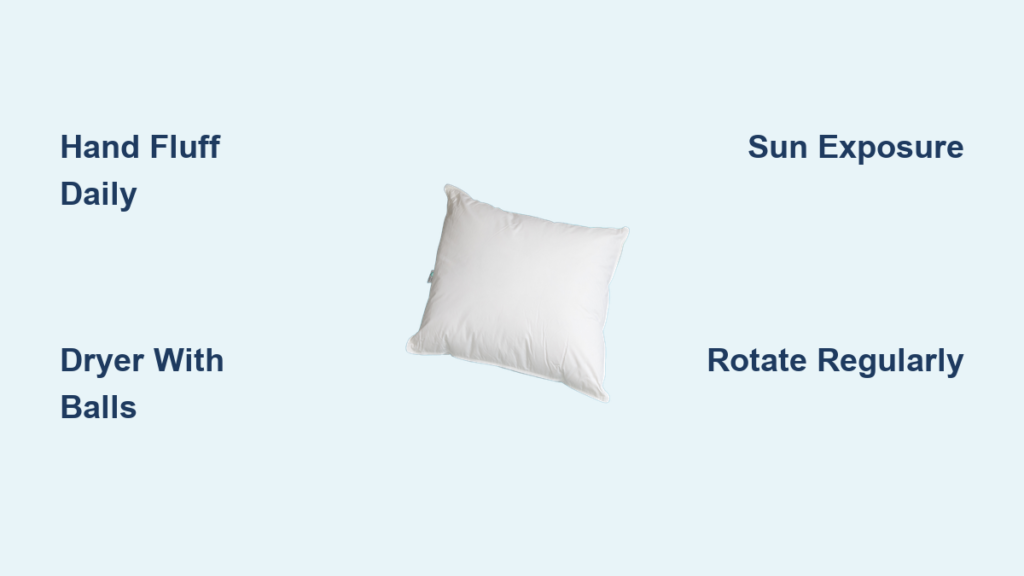
Grasp both ends of the pillow (short sides). Push and pull rapidly for 20 to 30 seconds, like playing an accordion. Rotate 90 degrees and repeat on the other two sides. Thump the pillow with your fists to loosen dense spots. Squeeze from end to end 4 to 5 times to redistribute fill. Shake vigorously, then slap the top with an open palm to finalize shape.
This technique works by disrupting the spooned feather alignment, allowing individual feathers to re-expand into their natural arc. It is ideal for daily use and takes less than a minute.
To fix lumps, lay the pillow flat and use your fingertips to knead and massage the lump in circular motions. Repeat the accordion method afterward to even out the fill.
Deep Refresh in the Dryer
When hand fluffing is not enough, the dryer delivers a powerful reset. This is especially effective after washing or long-term flattening.
Check the care label first. Not all pillows can be machine dried. Most down and feather pillows are dryer-safe, but avoid tumble drying pillows labeled dry clean only, smart pillows with electronics, or solid memory foam or latex (heat damages their structure).
Ensure the pillow is completely dry before starting. Place 1 to 2 pillows in the dryer with space to move. Add 1 to 3 clean tennis balls (in socks) or wool dryer balls. Set to low heat or air-fluff (no heat). Run for 15 to 20 minutes. Remove and shake immediately to lock in loft.
The balls act as agitators, pounding the pillow to separate clumped feathers. Low heat gently dries any residual moisture without damaging natural fibers.
If you have washed your pillow, use medium heat and run 3 to 4 drying cycles. Shake between cycles to prevent wet spots. Never use bleach or fabric softener, as they degrade feathers and leave residue.
Natural Revival with Sunlight and Air
:max_bytes(150000):strip_icc()/bhg-pillows-outside-8630258-d3e4f91967df4eec9e8274949b85585b.jpg)
Nature offers a reset button. Fresh air and sunlight restore freshness, kill allergens, and dry out damp fibers.
Choose a dry, sunny, breezy day. Lay the pillow on a clean towel or drying rack, or hang it. Expose to sunlight for 30 minutes to 4 hours. Flip halfway for even exposure. Bring in and shake vigorously to reactivate fill.
UV rays kill bacteria, mold, and dust mites. Heat and airflow evaporate trapped moisture, helping feathers regain resilience.
Air out your pillow every 3 to 6 months, after illness, if the pillow smells musty, or before storing seasonally. Short sun exposure (under 4 hours) does not damage feathers. The hygiene benefits far outweigh minimal UV risk.
Fluffing Tips by Pillow Type

Not all pillows respond the same. Use the right method for your fill type.
Down and feather pillows thrive with hand fluffing, dryer use, and sun airing. Regular care maintains loft for 5 to 10 years. High fill-power down bounces back fastest.
Hollow-fiber pillows are prone to clumping and need tennis balls in the dryer to break up compacted fibers. Avoid high heat to prevent melting.
Shredded memory foam responds to hand fluffing by squeezing and reshaping. Never use high heat, as it degrades foam over time.
Solid memory foam and latex cannot go in the dryer. Knead with hands, rotate weekly, and air out regularly. Latex is naturally resilient and rarely needs aggressive fluffing.
Maintain a Fluffy Pillow Daily
Prevent flatness before it starts with a simple care routine.
Daily, hand-fluff for 30 seconds using the accordion method. This takes seconds and prevents compaction.
Weekly, flip and rotate. Swap pillow ends and flip top to bottom to promote even wear.
Monthly, deep fluff or air out. Run through the dryer (if safe) or shake after airing to keep fill fresh and springy.
Every 3 to 6 months, give the pillow a full sunlight treatment to restore hygiene and loft.
Twice a year, wash the pillow if you sweat at night, allergies flare up, or the pillow smells musty. Always dry thoroughly with tennis balls to prevent clumping.
When to Wash Your Feather Pillow
Washing restores softness and removes contaminants, but only if done right.
Most feather pillows are machine washable. Use a front-loader or agitator-free top-loader. Wash on gentle cycle with warm water and mild detergent. Add extra rinse cycles to remove soap residue.
Tumble dry on low or medium heat. Use tennis balls or wool dryer balls. Run 3 to 4 cycles, shaking between each. Confirm inner clusters are fully dry. Dampness causes mildew.
Wash when you notice persistent flatness (could be moisture), stains or odors, or allergy symptoms at night.
Signs It Is Time to Replace
Even the best care cannot revive a dead pillow.
Replace when the pillow stays flat after fluffing and washing, has unbreakable lumps, feathers poke through the shell, yellow stains or foul smell develop, or you experience neck pain or poor sleep despite fluffing.
Feather and down pillows last 5 to 10 years with care. Synthetic fiber lasts 1 to 2 years. A general rule is to replace every 2 years for hygiene and support.
For maximum fluffiness, choose firm pillows or those with high fill power. Lightweight models simply do not have enough material to achieve a plump look.
Common Fluffing Mistakes to Avoid
Even small errors reduce effectiveness.
Never use high heat. High dryer settings can make feathers brittle, shrink or melt fabric, and damage natural proteins. Always use low heat or no heat.
Do not skip the pillow protector. A zippered hypoallergenic protector blocks sweat and oils, prevents dust mite buildup, reduces washing frequency, and stops feather leakage. It is the single best investment for longevity.
Do not iron feather pillows. Heat from irons can melt feathers or scorch fabric. Never iron directly. If the cover needs ironing, remove it first.
Best Tools for Fluffing Success

Equip yourself for easy maintenance.
Tennis balls in socks placed in the dryer provide mechanical agitation and prevent scuffing. Wool dryer balls are a reusable, eco-friendly alternative that softens fabric and reduces drying time. Clean sneakers (no laces) are surprising but effective for heavy-duty fluffing. A drying rack or towel keeps pillows off dirty surfaces during sun-drying. Use mild, fragrance-free, non-toxic detergent to avoid residue that stiffens feathers.
Frequently Asked Questions About Fluffing Feather Pillows
How often should I fluff my feather pillow?
Fluff your feather pillow daily using the accordion hand-fluffing technique. This takes 20 to 30 seconds and prevents permanent compaction. Monthly, perform a deeper fluff using the dryer method, and air it out in sunlight every 3 to 6 months.
Can I put a feather pillow in the dryer?
Yes, most feather pillows can go in the dryer. Use low heat or air-fluff (no heat) setting. Add 1 to 3 tennis balls in socks to act as agitators. Run for 15 to 20 minutes. Never use high heat, as it damages natural feather proteins and can shrink the fabric.
Why does my feather pillow stay flat after fluffing?
If your pillow stays flat after fluffing, it likely has advanced compaction or moisture retention. Try the dryer method with tennis balls. If it still does not recover, the feathers may be degraded and the pillow needs replacing. Persistent flatness can also indicate trapped moisture inside the fill.
Does sunlight damage feather pillows?
Short sun exposure (under 4 hours) does not damage feathers. UV rays actually kill bacteria, mold, and dust mites. The heat and airflow evaporate trapped moisture, helping feathers regain resilience. Just avoid leaving pillows in direct sunlight for extended periods.
How do I fix lumps in my feather pillow?
Lay the pillow flat and use your fingertips to knead and massage lumps in circular motions. This breaks up matted feathers. Follow with the accordion hand-fluffing technique or run through the dryer with tennis balls for stubborn lumps.
Key Takeaways for Keeping Your Feather Pillow Fluffy
Fluffing a feather pillow is more than a chore. It is a daily act of sleep hygiene that maintains comfort, health, and product life. By treating your pillow like an accordion, using the dryer wisely with tennis balls on low heat, and airing it out in sunlight regularly, you ensure cloud-like comfort every night.
High-quality feathers are resilient. With a little attention, they will bounce back for years. But ignore them, and you will face flatness, odors, and poor sleep. The key steps are daily hand fluffing for 30 seconds, monthly dryer refreshes with tennis balls, seasonal sunlight airing, and using a zippered pillow protector to extend lifespan.
Start today. Grab your pillow, give it a quick fluff, and feel the difference. Your neck and your sleep will thank you.