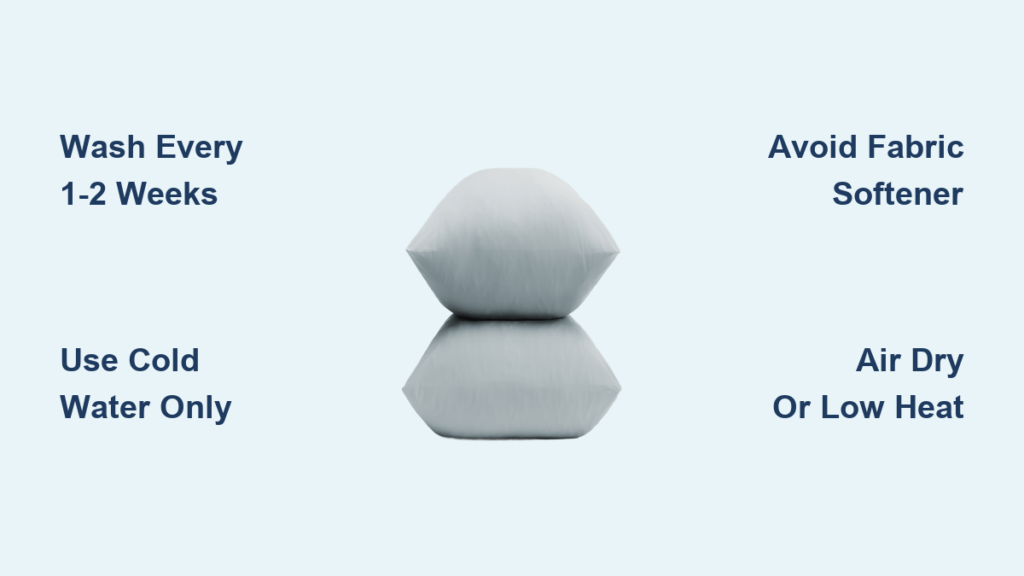
Keeping your Coop pillow clean starts with the pillowcase, which bears the brunt of oils, sweat, and allergens from nightly use. Learning how to wash a Coop pillow case properly not only extends the life of your pillow but also ensures a healthier sleep environment. The good news is that most Coop pillowcases are designed for easy machine washing, though certain fabrics require specific care to maintain their softness and performance features.
This guide covers everything you need to know about washing your Coop pillow case, from weekly maintenance to material-specific instructions, plus tips for cleaning the inner pillow core when necessary.
Weekly Pillowcase Washing Steps
Your Coop pillow case should be washed every one to two weeks to maintain hygiene and prevent the buildup of skin oils and allergens.
Remove and Inspect the Pillowcase
Start by unzipping and removing the pillowcase from the inner pillow. Check for stains, odors, or signs of wear before washing. If the zipper feels stuck, gently work it side to side rather than pulling straight up to avoid damage. Inspect the seams and elastic edges for any weakening that may have developed over time.
Machine Wash in Cold Water
Place the pillowcase in the washing machine alone or with similar lightweight bedding. Use cold water and select the gentle or delicate cycle. Add a mild, fragrance-free detergent, and avoid bleach and fabric softeners entirely. These chemicals can weaken fabric fibers, reduce breathability, and cause skin irritation, especially on moisture-wicking materials like TENCEL or Cool+.
Dry on Low Heat or Air Dry
Tumble dry on low heat or allow the pillowcase to air dry completely. High heat can shrink fabric, damage elastic bands, and degrade performance fibers. For TENCEL, linen-cotton blends, or percale pillowcases, air drying is strongly recommended to preserve softness and texture. Always ensure the pillowcase is fully dry before reapplying it to the inner pillow to prevent moisture transfer and mold growth.
Material-Specific Pillowcase Care

Coop offers several pillowcase fabric options, each requiring slightly different care to maintain their unique properties.
TENCEL and Cool+ Fabric Care
TENCEL and Cool+ pillowcases are engineered for temperature regulation and superior softness. Wash these materials in cold water only on the gentle cycle, and never use fabric softeners, which can clog the moisture-wicking pores. Air dry or tumble dry on the lowest heat setting. Never use chlorine bleach, as it can yellow fibers and reduce durability over time.
Linen-Cotton and Percale Care
Linen-cotton blends benefit from cold washing and air drying to preserve their natural texture and prevent shrinkage. Percale pillowcases, known for their crisp feel, should also be washed in cold water with mild detergent. Avoid bleach completely, as it weakens cotton fibers. Iron on low heat if needed, though most wrinkles release naturally when the fabric is damp.
Softspa and Hybrid Blends
Softspa pillowcases combine exceptional softness with durability. Wash in cold to lukewarm water on a gentle cycle, then tumble dry on low heat and remove promptly to minimize wrinkling. These fabrics resist pilling but can degrade if exposed to high heat or harsh chemicals.
Pro Tip: Always check the care label inside your Coop pillow case. While most are machine washable, slight variations in fabric blends may require specific handling.
Annual Inner Pillow Cleaning Guide
The inner pillow core requires much less frequent cleaning than the pillowcase. Washing the inner pillow too often can break down memory foam and reduce its supportive properties.
Confirm Machine Washability First
Before washing the inner Coop pillow, examine the care tag attached to the pillow. Most Coop models, including the Original, Eden, Cool+, Latex, and Body/Maternity pillows, are machine washable. However, some specialty versions may require spot cleaning only. If the tag indicates “Dry Clean Only,” do not attempt machine or hand washing.
Secure the Zipper Before Washing
Use a safety pin to lock the zipper closed before washing. This prevents the zipper from opening during the wash cycle and spilling memory foam beads or filler throughout the machine and your drainage system. A popped zipper mid-cycle can damage your washer and ruin the pillow’s adjustable loft.
Wash One Pillow at a Time
Place only one pillow in the machine at a time to avoid imbalance and excessive agitation. Use cold water and a gentle or delicate cycle with a small amount of mild detergent. Never use bleach or fabric softener, as these chemicals degrade foam cells and leave residues that attract dirt. Avoid overloading the washer; the pillow needs room to move freely for even cleaning.
Hand Washing for Non-Machine Models
If your Coop pillow is not machine washable or you prefer gentler cleaning, hand washing is an effective alternative.
Prepare a Cleaning Solution
Fill a bathtub or large sink with lukewarm water and add a capful of gentle laundry detergent. Submerge the pillow fully, then gently press it down to allow soapy water to penetrate the core. Do not scrub or twist the pillow, as this can damage the foam structure and void your warranty.
Rinse Until Water Runs Clear
Drain the soapy water and refill with clean water. Repeat the gentle squeezing process until the water runs completely clear. Residual detergent can break down foam over time and cause unpleasant odors. Expect to rinse three to five times depending on how much detergent was used.
Remove Excess Water Gently
After rinsing, press the pillow against the side of the tub to remove water without wringing, twisting, or folding. These actions can crush foam cells and permanently reduce support. Instead, lay the pillow flat on clean towels and roll it to absorb moisture. Replace towels as they become saturated.
Safe Drying Techniques for Memory Foam

Proper drying is critical to prevent mold, mildew, and foam degradation. Incomplete drying is the leading cause of pillow odors and microbial growth.
Tumble Dry on Low Heat Only
Place the inner pillow in the dryer on low heat only. Do not use dryer sheets or fabric softeners. Dry one pillow at a time to ensure even airflow. Depending on your dryer and pillow density, complete drying may require two to four cycles. Check the core by pressing into the center; if it feels cool or damp, continue drying.
Warning: High heat can melt or warp memory foam, creating permanent indentations and lingering odors. Never use medium or high heat settings.
Air Dry as a Safer Alternative
If you prefer air drying, place the pillow in a well-ventilated area away from direct sunlight. Prop it upright or on its side to improve airflow, and flip it every few hours. Air drying may take twenty-four to forty-eight hours but significantly reduces heat stress on the foam.
Prevent Mold and Mildew
To test for complete dryness, press the center of the pillow. If no moisture appears on your hand, it is ready. For extra assurance, run the pillow through an additional fifteen-minute no-heat dryer cycle to evaporate any trapped moisture before storage or use.
Spot Cleaning for Stains and Spills
For minor spills or stains, spot cleaning is the safest approach and avoids the hassle of deep washing the entire pillow.
Immediate Blotting Is Key
If you spill something on your Coop pillow, act quickly. Remove the pillowcase immediately and blot the affected area with a clean, dry towel. Do not rub the spill, as this pushes liquid deeper into the foam and spreads the stain.
Use Mild Soap Solution
Mix a few drops of liquid dish soap with water to create a frothy solution. Dip a clean sponge into the foam, not the liquid, and gently dab the stain in circular motions. Avoid soaking the core; only clean the surface area. Over-wetting can cause foam breakdown and prolong drying time.
Rinse and Dry Thoroughly
Dampen a clean cloth with plain water and dab to remove soap residue. Allow the area to air dry completely, which may take several hours. Use a hair dryer on the cool or low setting to speed drying if needed. Repeat the process if the stain persists.
Handle Tough Stains Carefully
For blood, wine, or hair dye stains, research the appropriate treatment before applying any solution. Test any stain remover on a small, hidden area first. Enzyme-based cleaners work well for organic stains, but avoid hydrogen peroxide or vinegar on memory foam, as they can discolor or degrade the material.
Monthly Maintenance Routine
Regular maintenance between washes keeps your Coop pillow fresh and extends its lifespan significantly.
Deodorize with Baking Soda
Once a month, freshen your Coop pillow by removing the pillowcase and placing the pillow in direct sunlight for UV sanitization. Sprinkle a thin, even layer of baking soda over the entire surface and let it sit for one to three hours. Vacuum thoroughly with an upholstery attachment to remove all baking soda, then repeat on the other side. Baking soda absorbs odors without damaging foam.
Fluff in Dryer Monthly
Even if not washed, run the inner pillow through a fifteen to thirty-minute low-heat dryer cycle monthly. This restores loft, removes moisture buildup, and prevents foam compaction. It is a quick, effective way to maintain comfort and extend pillow life.
Rotate and Flip for Even Wear
Rotate your Coop pillow head-to-foot weekly to distribute pressure and prevent permanent indentations. Combine this with daily fluffing for optimal support and longevity.
Pillow Protector Benefits
Using a pillow protector adds an essential layer of defense between your pillow and the elements of nightly use.
Add a Waterproof Layer
A hypoallergenic or waterproof pillow protector worn under the pillowcase creates a crucial barrier against sweat, spills, and dust mites. It reduces how often you need to wash the inner pillow and keeps the foam fresher for longer.
Easy to Wash and Replace
Most protectors are machine washable in cold water and dry on low heat. Wash them every two to four weeks, or more frequently if you sweat heavily at night. Replace protectors every one to two years, or sooner if the waterproof layer begins to fail.
Frequently Asked Questions About Washing Coop Pillow Cases
How often should I wash my Coop pillow case?
Wash your Coop pillow case every one to two weeks. This frequency prevents the buildup of oils, sweat, allergens, and bacteria that accumulate during nightly use.
Can I wash my Coop pillow in the washing machine?
Yes, most Coop pillow models are machine washable. Check the care tag first. Wash in cold water on a gentle cycle, secure the zipper with a safety pin, and wash only one pillow at a time.
What temperature water should I use to wash a Coop pillow case?
Always use cold water for Coop pillowcases. Hot water can damage fabric fibers, cause shrinkage, and degrade performance features like moisture-wicking and temperature regulation.
Can I use fabric softener on my Coop pillow case?
No, avoid fabric softeners entirely. They can leave a residue that reduces breathability, weakens fibers, and may irritate sensitive skin. This is especially important for TENCEL and Cool+ fabrics.
How do I dry my Coop pillow without damaging it?
Tumble dry on low heat only, or air dry away from direct sunlight. High heat can melt or warp memory foam. Ensure the pillow is completely dry before use to prevent mold and mildew.
Key Takeaways for Washing Your Coop Pillow Case
Washing your Coop pillow case every one to two weeks with cold water and mild detergent keeps it fresh and hygienic. Always avoid bleach, fabric softeners, and high heat, regardless of fabric type. The inner pillow requires much less frequent cleaning, typically once per year or after a spill, and must always be dried completely to prevent mold. Monthly maintenance, including baking soda deodorizing and low-heat fluffing, significantly extends your pillow’s lifespan. Using a pillow protector reduces the need for deep cleaning and keeps your Coop pillow performing at its best for years to come.