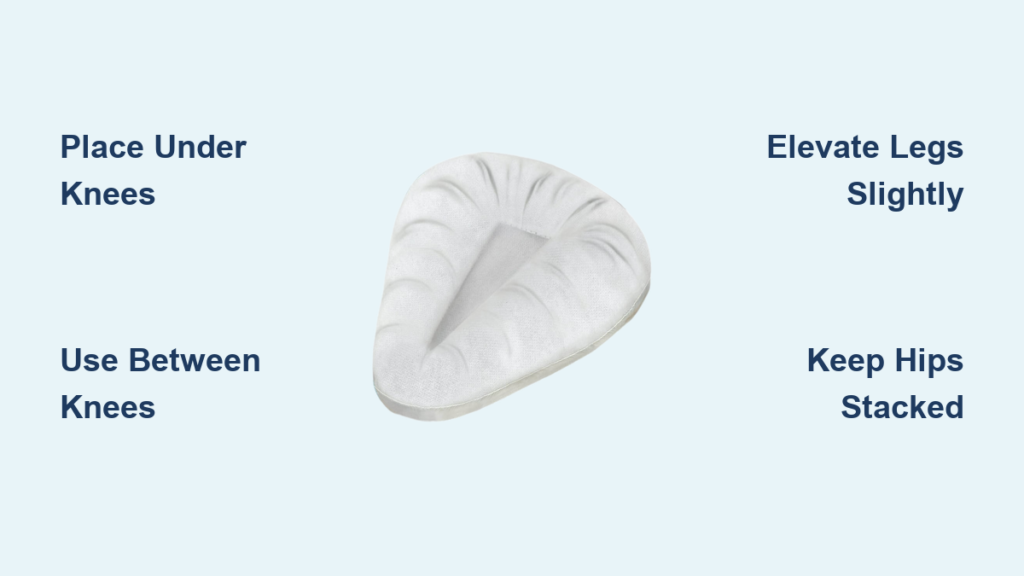
If you’re waking up with sharp leg pain, numbness, or tingling that shoots from your lower back down your leg, you may be dealing with sciatica. A sciatica pillow won’t cure the root cause, but when used correctly, it can dramatically reduce nerve pressure, improve spinal alignment, and help you sleep through the night without pain flare-ups. The key is knowing exactly where and how to place the pillow based on your sleep position.
This guide reveals the most effective ways to use a sciatica pillow, whether you’re a side, back, or even stomach sleeper. You’ll learn step-by-step placement techniques, discover the best pillow types for lasting relief, and avoid common mistakes that could worsen your symptoms. By the end, you’ll have a clear plan to turn your bed into a recovery zone.
Sleep Positions That Help Sciatica

Back Sleeping with Knee Support
Back sleeping works well for reducing lower back strain and nerve compression. When you lie flat, gravity pulls your spine into extension, which can narrow the spaces where nerve roots exit the spine. Elevating your knees slightly changes the pelvic tilt and relaxes tension on the sciatic nerve.
How to Position Your Pillow
Place one or two flat, firm pillows under your knees. Aim for a 90 to 100 degree bend in your hips and knees. Keep your feet relaxed without pointing or flexing your toes. Your thighs should slope gently downward from hips to knees. If your legs are too flat or too high, adjust the pillow thickness.
Adding Lumbar Support
Tuck a small rolled towel or firm cushion into the natural curve of your lower back. This maintains the spine’s S-shape and prevents sagging. To prevent nighttime rolling, place standard pillows on either side of your body to stop you from shifting onto your side or stomach during sleep.
Side Sleeping: Align Hips and Knees

Use a Contoured Pillow Between Knees
Most people with sciatica find side sleeping more comfortable, but only if their hips stay stacked. Without support, the top leg pulls the pelvis forward, twisting the spine and compressing the sciatic nerve.
Step-by-Step Placement
- Lie on your side with your spine straight and head aligned.
- Bend both knees slightly, about 30 degrees.
- Slide a contoured or wedge-shaped pillow between your knees and upper thighs.
- The thicker edge should support the upper thigh while the narrower edge fits near the knee.
- Adjust until your hips feel level with no swaying forward or backward.
The pillow should be thick enough that your top leg stays parallel to the bottom leg. If your knee drops, the pillow is too thin.
Adding Chest Support
Hug a long body pillow or large cushion against your chest. This reduces shoulder strain and keeps your torso from collapsing forward. Poor side-sleeping posture increases intradiscal pressure, and using a knee pillow helps cut this risk significantly.
Reclined Back Position: Mimic a Recliner

Elevate Torso and Legs with Wedges
Some people with sciatica feel more relief in a reclined posture. Elevating both your upper body and legs opens space between vertebrae, gently decompressing the sciatic nerve roots, similar to clinical traction therapy.
Setup Options
Use a two-piece wedge system with an upper wedge behind your shoulders and upper back at a 45 to 60 degree incline, and a lower wedge under your calves or knees. As a budget alternative, stack plump pillows behind your back and use flat pillows under your knees and calves.
Do not elevate your legs too high, as this can restrict circulation. Your feet should be supported, not dangling.
Stomach Sleeping: Minimize Spinal Arching
Place Pillow Under Hips
Stomach sleeping forces your lower back into hyperextension, increasing pressure on spinal discs and irritating the sciatic nerve. However, if you cannot change your habit, modify the position to reduce harm.
Place a firm, low-profile pillow under your lower abdomen and hips. This lifts the pelvis slightly and flattens the excessive arch in your lower back. Use no pillow or a very thin one under your head to avoid neck strain.
Even with modifications, stomach sleeping often worsens sciatica. Transition to side or back sleeping whenever possible.
Choose the Right Pillow Type
Contoured Memory Foam Wedge
The Contour Legacy Sleeping Pillow is a top choice for side sleepers needing consistent knee separation. Its triangular shark-tooth shape cradles the thighs without pressing into soft tissue.
High-density memory foam resists flattening while the ventilated design prevents overheating. The anatomical curve keeps the pillow in place all night. Users report significant reduction in nighttime leg pain within one week of use.
This pillow works best for side sleepers. It may not fit taller individuals, and it is not ideal for back or stomach sleepers alone.
Two-Piece Wedge Cushion System
This system mimics medical traction by elevating both upper body and legs. The upper wedge supports your back while the lower wedge elevates your legs to reduce lumbar pressure.
Key features include an anti-slip base that keeps wedges stable and high-resilience foam that maintains shape over time. This setup works especially well for back sleepers with lumbar radiculopathy or spinal stenosis.
Adjustable and Full-Body Pillows
Customize support for your head, neck, and torso with pillows that let you add or remove fill. These work well for side sleepers with shoulder or upper back pain.
Mold the pillow to support your chest and arms while side sleeping. Adjust the height under your head to keep your neck aligned. Tuck it under your arm to prevent shoulder collapse.
Look for washable covers and breathable materials to maintain hygiene.
Standard Pillows: Budget-Friendly Hacks
You do not need a specialty pillow to start. Use what you already own with the right technique.
For back sleepers, stack two flat pillows under knees for elevation and use plump pillows behind shoulders for reclining. For stomach sleepers, use a firm, thin pillow under hips and skip the head pillow entirely or use a folded towel. Place regular pillows beside your body to prevent rolling.
A simple memory foam pillow can offer real relief at a fraction of the cost of repeated doctor visits or pain medications.
Step-by-Step: How to Use Each Pillow
For Side Sleepers with Knee Pain
- Lie on your side with spine straight and knees slightly bent.
- Insert contoured pillow between knees and upper thighs.
- Ensure hips remain stacked with no forward or backward tilt.
- Hug a body pillow to stabilize your upper body.
- Support your head with a pillow that keeps your ear in line with your shoulder.
For Back Sleepers with Leg Tingling
- Lie flat with arms at your sides.
- Place one or two firm pillows under your knees.
- Add a lumbar roll if your lower back feels unsupported.
- Keep your head pillow low so your neck stays neutral.
- Place side pillows to prevent rolling.
For Reclined Sleeping Setup
- Sit upright near the headboard.
- Place a wedge or stacked pillows behind your upper back.
- Recline to 45 to 60 degrees.
- Elevate your legs with a lower wedge or flat pillows.
- Ensure your feet are fully supported.
Maintain and Replace Your Pillow
Clean Regularly to Prevent Odor and Breakdown
Even the best pillow fails if not cared for properly. Remove the cover and machine wash it in cold water on a gentle cycle, then tumble dry low. Spot clean the foam core with mild detergent and air dry completely. Never soak or machine wash the foam. Clean every four to six weeks, or more often if you sweat heavily.
Know When to Replace
Replace your pillow if the foam has permanent dents over one inch deep. If the pillow feels flat, lumpy, or smells musty, it is time for a new one. The average lifespan for quality memory foam is 24 to 36 months. A flattened pillow loses support and may worsen your alignment.
When a Pillow Is Not Enough
Combine With Other Therapies for Lasting Relief
A sciatica pillow is just one piece of the puzzle. For real improvement, pair it with proven strategies.
Add daily piriformis and hamstring stretches to reduce muscle tension around the nerve. Incorporate core strengthening exercises to stabilize your spine and prevent future flare-ups. Practice nerve glides to gently mobilize the sciatic nerve and reduce sensitivity.
Improve your daytime posture by using a lumbar roll in your office chair. Avoid slouching or sitting longer than 30 to 45 minutes at a time. Lift with your legs, not your back.
Apply heat to your lower back for 15 to 20 minutes before bed. This relaxes tight muscles and improves blood flow.
When to See a Doctor
Do Not Rely on Pillows Alone for Severe Symptoms
While pillows help manage pain, they do not treat underlying conditions like herniated discs or spinal stenosis.
Seek medical help if your pain lasts more than four to six weeks despite home care. You should also see a doctor if you experience numbness, weakness, or foot drop. Any bowel or bladder control changes occur, as this signals cauda equina, which is an emergency. Seek care immediately if pain spreads to both legs or moves higher up your back.
A pillow supports recovery, but only a doctor can diagnose and treat the cause.
Key Takeaways for Using Your Sciatica Pillow
Using a sciatica pillow effectively comes down to matching your sleep position with the right placement technique. Side sleepers benefit most from a contoured pillow between the knees to keep hips stacked and reduce pelvic tilt. Back sleepers should elevate their knees with flat pillows to decrease tension on the sciatic nerve. The reclined position using a wedge system mimics clinical traction and works especially well for those with spinal stenosis.
Whatever position you prefer, prevent nighttime rolling by using standard pillows around your body. Replace your pillow every two to three years, and always combine pillow use with stretching, core exercises, and proper daytime posture for lasting relief.
Frequently Asked Questions About Sciatica Pillows
What is the best pillow position for sciatica pain?
The best position depends on your sleeping style. Back sleepers should place pillows under their knees. Side sleepers need a contoured pillow between their knees and thighs. Reclined sleeping with a wedge system also works well for many people.
Can a sciatica pillow cure my pain?
No, a sciatica pillow cannot cure the underlying cause of your pain. It helps manage symptoms by reducing nerve pressure and improving spinal alignment during sleep. You still need medical treatment, exercises, and proper posture for lasting relief.
How long does it take to feel relief from using a sciatica pillow?
Many users report reduced nighttime pain within the first week of consistent use. Some notice improvement immediately, while others may need two to three weeks to adjust to the new sleeping position.
Can I use a regular pillow instead of a special sciatica pillow?
Yes, you can repurpose standard pillows. Stack flat pillows under your knees for back sleeping or place a firm pillow under your hips if you must sleep on your stomach. However, contoured pillows offer better support and durability.
How often should I replace my sciatica pillow?
Replace memory foam pillows every 24 to 36 months. Look for permanent dents over one inch deep, loss of support, or persistent odors. A flattened pillow can worsen your alignment and should be replaced promptly.