Waking up with a stiff, aching neck is frustrating, but the solution might be simpler than you think. Poor pillow positioning disrupts your spinal alignment throughout the night, straining neck muscles and compressing joints while you sleep. Learning how to position a pillow for neck pain correctly can dramatically reduce morning stiffness and help your body recover while you rest.
This guide gives you science-backed strategies to align your cervical spine, choose the right pillow for your sleep position, and build a nighttime routine that promotes healing. You’ll discover exactly how to set up your pillow, mattress, and sleep environment to wake up pain-free.
Choose the Best Sleep Position for Neck Pain
Your sleep position determines how your pillow should support your head and neck. Some positions protect your spine, while others silently cause damage all night long.
Back Sleeping: The Gold Standard
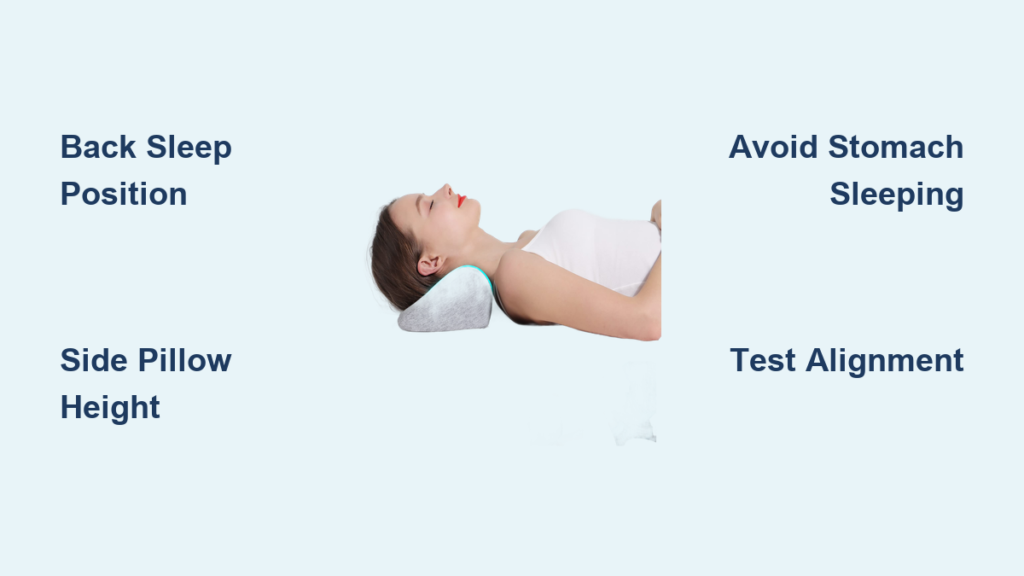
Sleeping on your back keeps your head, neck, and spine in a straight line, which minimizes pressure and reduces cervical strain. This position distributes your body weight evenly and preserves the natural curve of your neck.
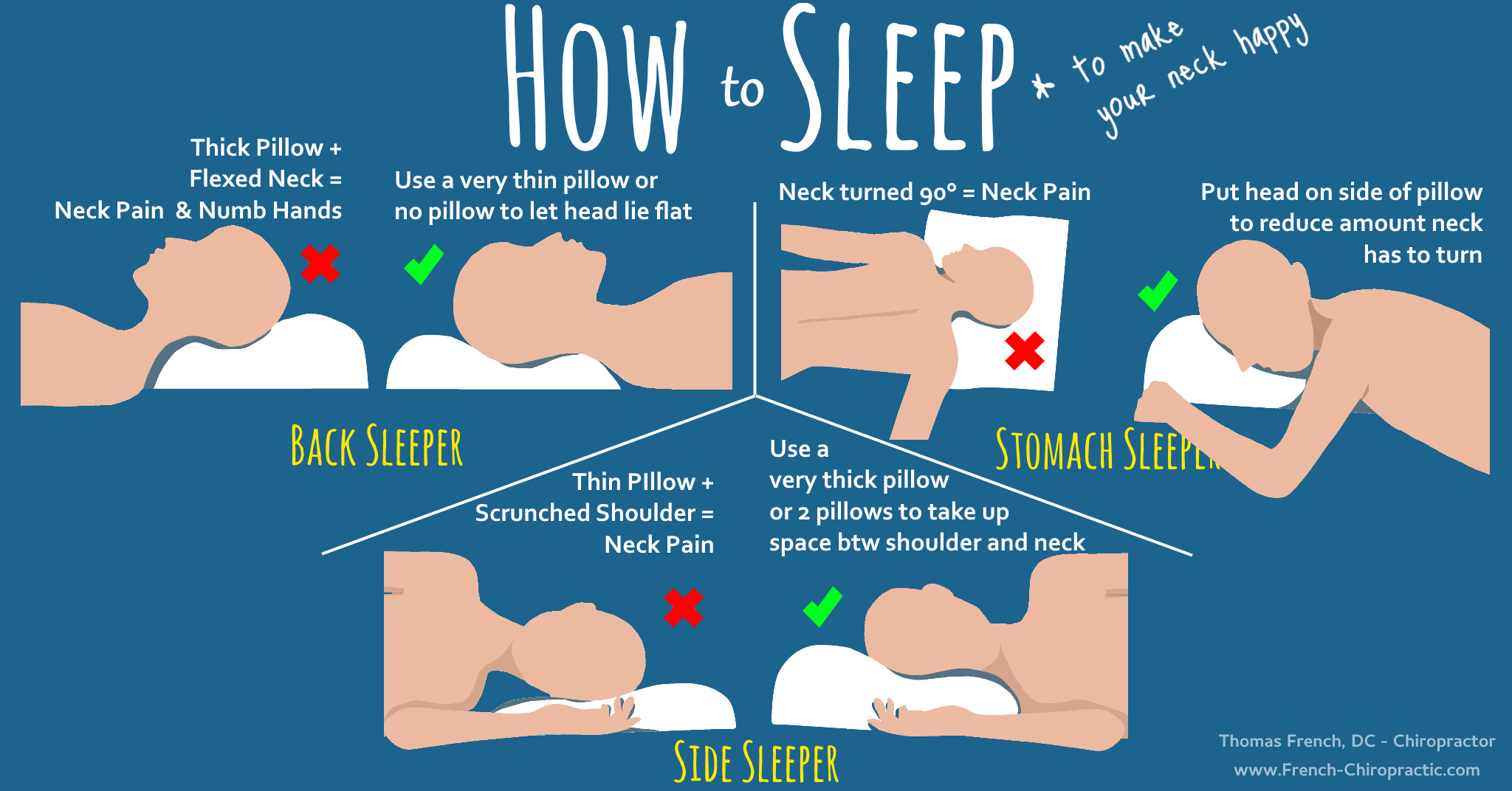
Use a low to medium-loft pillow that supports the natural dip under your neck, not just your head. Your ear should align vertically with your shoulder and hip when viewed from the side. Avoid thick pillows that push your chin down toward your chest, as this compresses discs and strains anterior neck muscles.
Place a small pillow or rolled towel under your knees to maintain the natural curve of your lower back. This reduces compensatory tension that travels up through your spine to your neck. Pregnant individuals in their third trimester and people with obstructive sleep apnea should consult their doctor about alternative positions.
Side Sleeping: Proper Height Is Essential
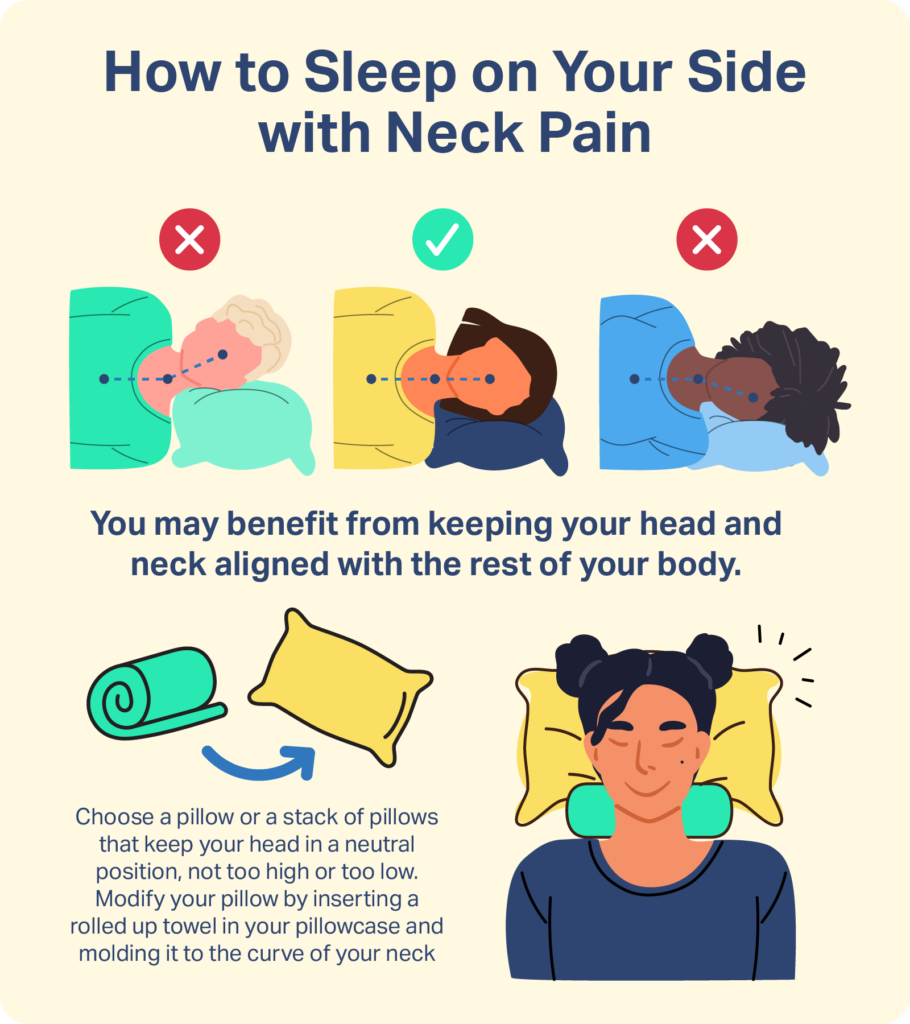
Side sleeping works well for neck support when your pillow fills the gap between your shoulder and head. This position is the most common and can be highly effective if your alignment stays neutral.
Your pillow height should match the distance from your ear to your shoulder, typically 4 to 6 inches. Use a firm, high-loft pillow that does not compress too much during the night. Your spine should form a straight vertical line from ear to hip.
Perform an alignment check by having someone take a side-view photo while you lie down. If your ear, shoulder, and hip are not in a straight line, adjust your pillow height. Place a firm pillow between your knees to keep your hips level and reduce twisting forces that strain the neck. Avoid tight fetal curling, which shortens muscles and increases spinal compression.
Stomach Sleeping: Why You Should Avoid It
Stomach sleeping forces your head to rotate 40 to 60 degrees for hours, creating sustained cervical strain that leads to chronic neck pain, disc issues, and nerve compression. This position is strongly discouraged by orthopedic specialists and physical therapists.
If you cannot stop stomach sleeping immediately, use no pillow or a very thin one to reduce neck extension. Place a flat pillow under your stomach or pelvis to prevent lower back hyperextension. Use a body pillow or positional trainer to block stomach rolling during the night. Try sleep position alarms that vibrate when you turn onto your stomach.
Gradually shift to back or side sleeping over 4 to 6 weeks using these transition strategies.
Match Your Pillow Type to Your Sleep Position

Your pillow is a spinal support device, not just a comfort accessory. Choosing the wrong type or height undermines all your efforts to sleep pain-free.
Best Pillows for Back Sleepers
Back sleepers need a pillow that cradles the cervical curve while keeping the head in neutral alignment. The best choice is a cervical contoured pillow with a dip for the head and a raised section for the neck. Alternatively, use a medium-loft memory foam or feather pillow with a rolled towel placed under the neck for added support.
Avoid flat pillows that let your head sink too deep, causing neck hyperextension. A good test: lie back and check whether your chin is level with your forehead, not tucked or lifted. Clinical studies show contoured memory foam pillows reduce neck pain by 40 to 60 percent compared to standard pillows.
Best Pillows for Side Sleepers
Side sleepers need a firm pillow with sufficient height to prevent the head from tilting down or up. The pillow must be 4 to 6 inches high and firm enough to resist flattening throughout the night.
Soft pillows bottom out quickly, leaving your neck unsupported by morning. Ideal materials include shredded memory foam, latex, or adjustable fill that lets you customize the loft. Avoid down pillows or low-loft options that compress too much. Use an adjustable pillow with removable filling to fine-tune height based on your shoulder width or mattress softness.
Test and Adjust Your Pillow Setup
Do not guess whether your setup works. Use simple verification methods to ensure proper alignment.
Take a Side-View Photo
Lie in bed in your usual sleep position and have someone take a photo from the side. Check whether your ear aligns with your shoulder and hip in a vertical line. If the line is broken, adjust your pillow height until alignment is achieved.
Perform the Fold Test
Fold your pillow in half. If it stays compressed without springing back, it is too old or too soft. A quality pillow springs back quickly, showing it still provides adequate support.
Watch for Warning Signs
Waking with stiffness or pain, needing to re-fluff your pillow multiple times nightly, or seeing visible lumps or flat spots all indicate it is time to replace your pillow.
Avoid These Common Pillow Mistakes
Even small errors cause significant pain. Here is what to watch for and correct immediately.
Using a pillow that is too high forces your neck into flexion, compresses discs, and strains front neck muscles. This is common among back sleepers using thick pillows.
Sleeping without a pillow or using one that is too flat causes hyperextension and overloads posterior neck muscles and ligaments. This especially harms back sleepers.
Turning your head all night during stomach sleeping creates sustained 40 to 60 degree rotation that increases joint stress and leads to chronic stiffness.
Using a soft, non-supportive pillow bottoms out during the night, resulting in mid-sleep misalignment and morning pain.
Ignoring daytime posture compounds nighttime strain. Text neck, slouching, and forward head posture all contribute to neck pain. Fix ergonomics by keeping your monitor at eye level and taking breaks every 30 minutes.
Sleeping with arms above your head or under your pillow alters shoulder position and activates neck muscles, potentially causing nerve compression and referred pain.
Optimize Your Mattress for Neck Support
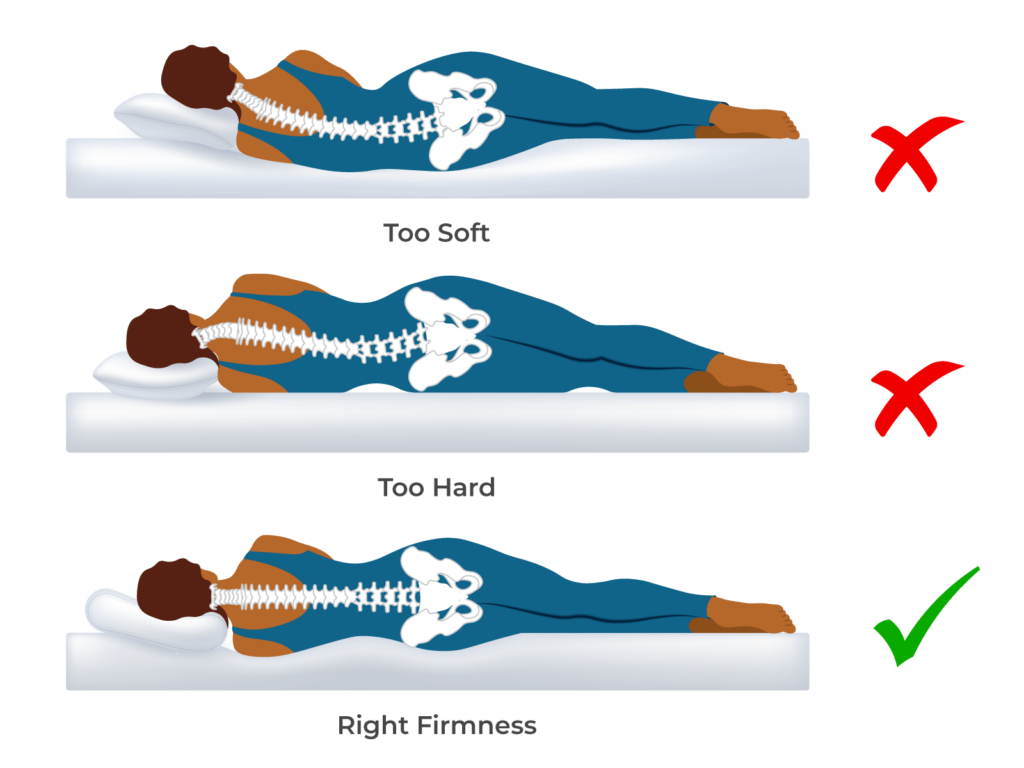
Even the best pillow fails on a poor mattress. Your bed must support your shoulders and hips to keep your spine neutral.
Choose a medium-firm mattress for best alignment. Too soft causes hips and shoulders to sink, misaligning the spine. Too firm creates pressure points and lumbar gaps. Medium-firm mattresses reduce spinal stress by 20 to 30 percent according to research.
Your body weight matters when selecting firmness. Individuals under 130 pounds typically benefit from softer medium support, while those over 180 pounds need firmer support to prevent sinking.
Replace your mattress every 7 to 10 years, or sooner if you notice sagging or loss of support.
Add Supportive Sleep Accessories
Small additions make a big difference in maintaining spinal alignment throughout the night.
Use a body pillow to help side sleepers maintain position and reduce tossing and turning. This also prevents stomach rolling.
Place a pillow under your knees if you sleep on your back. This supports the natural lumbar curve and reduces lower back strain that can refer to your neck.
Try a knee pillow if you are a side sleeper. This keeps your hips and pelvis aligned and prevents spinal twisting that indirectly strains your neck.
Use a neck roll or travel pillow when sleeping in a recliner. This prevents forward head drop and is ideal for short-term use during acute flare-ups.
Note that soft cervical collars can help during acute pain but should be used no more than 3 hours per day for up to 2 weeks to avoid muscle weakening.
Prepare Your Neck Before Bed
Nightly habits reduce tension and improve sleep comfort. Implement this routine to wake up feeling better.
Do 5 to 10 Minutes of Neck Stretches
Perform gentle stretches before bed to relax muscles. Chin tucks strengthen deep neck flexors. Neck rotations maintain mobility. Ear to shoulder stretches release upper trapezius tension. Shoulder rolls loosen upper back tightness. Research shows daily stretching reduces overnight tension by 25 to 40 percent.
Apply Heat or Cold Therapy
Use moist heat for 15 to 20 minutes to increase blood flow, relax tight muscles, and reduce chronic pain by 20 to 35 percent. Use cold therapy for 15 minutes with a cloth barrier during acute flare-ups to reduce inflammation.
Stop Screens 30 Minutes Before Bed
Avoid looking down at phones or tablets, which causes text neck. Prop devices at eye level if you must use them. Spend 5 to 10 minutes lying flat to decompress your spine before sleep.
Maintain a consistent sleep schedule to regulate your nervous system and reduce pain sensitivity.
When to See a Doctor
Most neck pain improves with proper pillow use and posture corrections. However, certain symptoms require professional evaluation.
Seek immediate help if you have fever, unexplained weight loss, trouble swallowing or breathing, balance problems, or a history of trauma such as whiplash.
See a healthcare provider if pain lasts more than 4 to 6 weeks, you feel numbness, tingling, or weakness in your arms or hands indicating possible nerve issues, or you have limited range of motion with sharp pain when moving your head.
Physical therapy can help through manual therapy to release tight muscles and joints, targeted exercises for neck stabilization and posture, and education on sleep setup and ergonomics. The American Physical Therapy Association recommends physical therapy for persistent neck pain.
Key Takeaways for Positioning Your Pillow
Proper pillow positioning is a biomechanical fix for neck pain, not just a comfort choice. The most effective approach combines optimal sleep position, anatomically appropriate pillow support, a supportive medium-firm mattress, pre-sleep habits like stretching and heat therapy, and daytime posture awareness.
Sleep on your back or side and avoid stomach sleeping entirely. Use a contoured cervical pillow if you sleep on your back, or a firm 4 to 6 inch pillow if you sleep on your side. Replace pillows every 1 to 2 years when they lose shape. Test your alignment with a side-view photo and make adjustments until your ear, shoulder, and hip form a straight vertical line.
Start tonight with these changes and wake up tomorrow with less stiffness and more mobility.
Frequently Asked Questions About Positioning a Pillow for Neck Pain
What is the best sleep position for neck pain?
Back sleeping is the best position for neck pain because it keeps your head, neck, and spine in a straight line. Side sleeping also works well if your pillow is the correct height to align your ear, shoulder, and hip vertically. Stomach sleeping should be avoided as it forces your neck into sustained rotation.
How do I know if my pillow is too high or too low?
If your pillow is too high, your chin tucks toward your chest and you may wake with stiffness in the front of your neck. If it is too low, your head tilts back and the back of your neck feels strained. Test by taking a side-view photo while lying down to check whether your ear aligns with your shoulder and hip.
What type of pillow is best for neck pain?
Contoured cervical pillows designed with a dip for the head and raised neck support provide the best relief for most people. Memory foam, latex, and adjustable fill pillows also work well. The right choice depends on your sleep position and body type.
How often should I replace my pillow?
Replace your pillow every 1 to 2 years. Signs of wear include flattening, lumps, loss of spring-back when folded, or waking with morning stiffness more often. A degraded pillow loses 30 to 50 percent of its support capacity.
Can neck pain be caused by the wrong mattress?
Yes. A mattress that is too soft causes your hips and shoulders to sink, misaligning your spine. A mattress that is too firm creates pressure points and lumbar gaps. A medium-firm mattress provides the best balance for spinal alignment and reduces spinal stress by 20 to 30 percent.