Your bedroom looks messy when the bedspread is too short or pools dangerously on the floor. Learning how to measure bedspread sizes correctly ensures your bedding hangs perfectly and covers your mattress completely.
This guide shows you exactly where to place your tape measure and how to calculate the ideal drop for your specific bed style. You will discover the math behind custom fits and how to avoid common sizing errors that ruin the look of your room.
Measure Your Mattress Width and Length Accurately
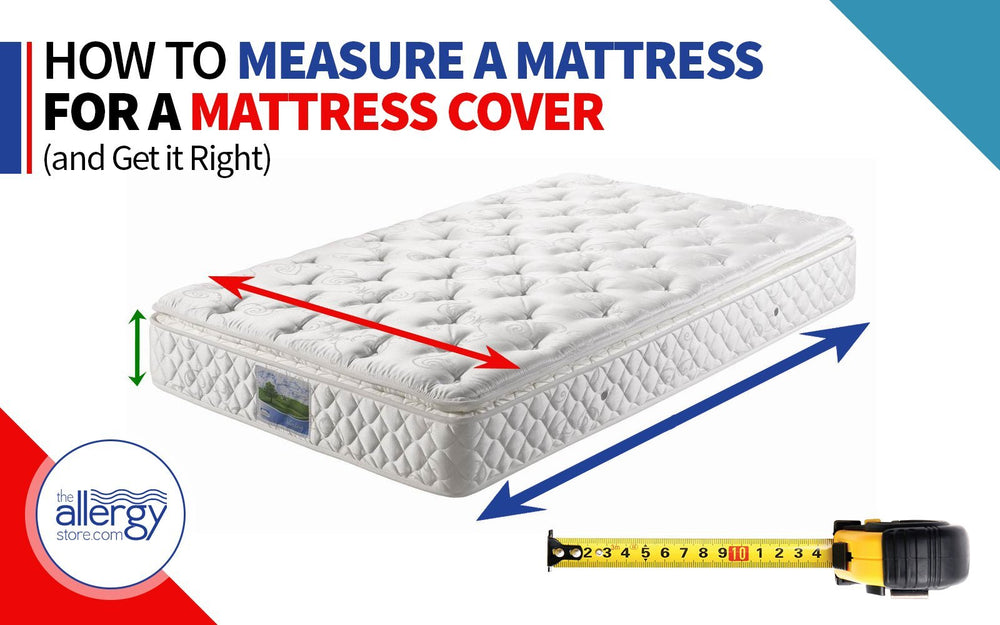
Start by grabbing a soft tape measure to record the exact top surface dimensions of your mattress. Never trust the label on your bed frame because mattress depths and toppers vary significantly between brands.
Record Top Surface Dimensions
Place your tape measure across the very top of the mattress from the far-left edge to the far-right edge. Then stretch the tape from the head of the bed down to the foot to get your length measurement. These two numbers form the essential base for all your future calculations.
Account for Mattress Depth and Bulk
Check if you have a thick mattress topper or a heated blanket underneath your sheets. These items add bulk that increases the vertical drop needed for your fabric to drape smoothly over the sides. Ignoring this extra height can result in a bedspread that pulls tight at the corners.
Determine the Correct Drop Length for Your Style
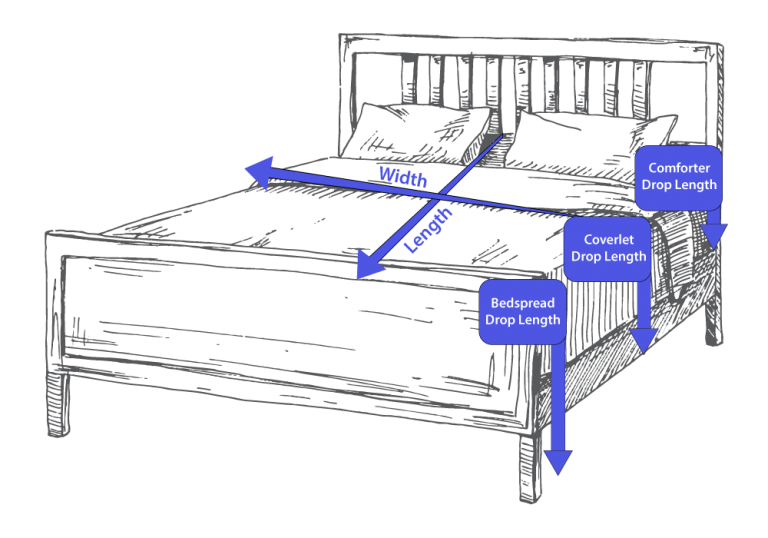
The drop is the vertical distance the fabric hangs from the top edge of your mattress down toward the floor. This single measurement defines whether your bed looks modern and floating or traditional and luxurious.
Use the Floor-to-Floor Measurement Method
Measure from the floor on one side of the bed up across the mattress width and down to the floor on the opposite side. This total number gives you the finished width required for full floor-length coverage without any gaps. Repeat this process at the foot of the bed to determine your total length needs.
Verify Drop at Multiple Points
Floors are rarely perfectly level so you must measure the drop at the head middle and foot of each side. Use the longest measurement you find to ensure your bedspread does not look too short in any specific area. A difference of even two inches can make your bedding look unfinished.
Adjust for a Floating Look
Subtract one to two inches from your total drop measurement if you want the fabric to hover slightly above the floor. This creates a clean modern silhouette that prevents tripping hazards and makes vacuuming around the bed much easier for you.
Calculate Exact Bedspread Dimensions Using Formulas

Apply simple math to your base measurements to determine the precise size you need for a custom or store-bought spread. Accurate calculations prevent the frustration of buying bedding that does not fit your specific setup.
Calculate Final Width with Double Drop
You must add the drop length to both sides of the mattress to achieve a symmetrical look. Use the formula Mattress Width + (2 × Drop) to find your target width. For example a 60-inch wide mattress with a 20-inch drop requires a total width of 100 inches.
Calculate Final Length Based on Pillow Style
Decide if you want the spread to tuck over your pillows or just drape at the foot of the bed. Add the drop once to the mattress length for a standard drape or add the drop plus 16 inches for a traditional pillow tuck style. That extra 16 inches allows for a neat fold over the pillows at the headboard.
Compare Your Measurements to Standard Bedspread Sizes

Match your calculated numbers to standard market offerings while remembering that brand labels often vary. Understanding these differences helps you choose the right product when how to measure bedspread sizes results in non-standard numbers.
Review US Standard Bedspread Dimensions
Standard US sizes range from 80 by 110 inches for a Twin up to 120 by 122 inches for a King. Note that King mattresses vary between 76 and 78 inches wide so always verify your specific width before buying. Traditional bedspreads offer more overhang than comforters which typically measure only 110 inches wide.
Check UK and European Size Variations
UK sizes differ significantly with a Double measuring 78 by 78 inches and a Super King reaching 102 inches wide. A UK King is much larger than a US King so cross-referencing inches is vital if you are shopping internationally. Always compare your inch measurements rather than relying on the size name alone.
Distinguish Between Bedspreads Comforters and Coverlets
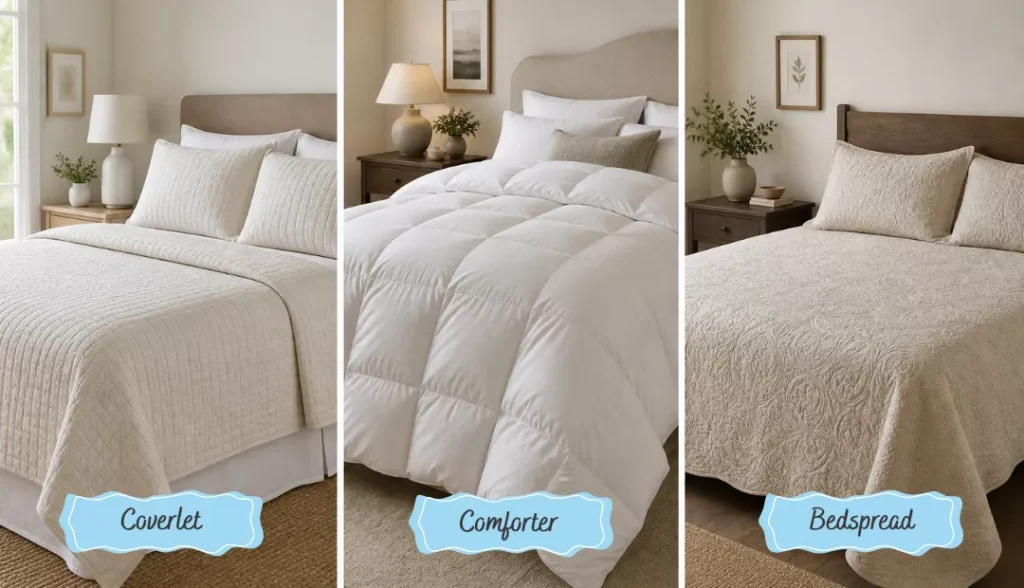
Choosing the right product requires knowing what each type of bedding is designed to cover. Confusing these terms often leads to purchasing items that are too small or too large for your needs.
Bedspreads Provide Full Coverage
Bedspreads are designed to cover the entire bed structure including folding over pillows and hanging to the floor. They are generally lighter weight than comforters and serve as the primary decorative layer in traditional bedrooms.
Comforters Cover Top and Sides Only
Comforters typically cover the mattress top and drop about 12 to 15 inches down the sides. They are fluffier and warmer due to thick batting and often require a separate dust ruffle to hide the box spring.
Coverlets Sit Lightly on the Mattress
Coverlets cover the top and tuck over pillows but only drop about 12 to 15 inches on the sides. They are ideal for lightweight layering over a duvet and create a minimalist style that does not touch the floor.
Estimate Fabric Yardage for Custom Bedspread Projects

Sewing your own bedding allows for a perfect fit but requires careful calculation of fabric needs. Pattern repeats and mattress size both influence how many yards you must purchase.
Quilted Bedspread Fabric Requirements
A Twin size requires 7.5 yards of fabric without a pattern repeat and 8 yards with a 27-inch repeat. Queen and King sizes both need 12 yards for no repeat and 13.5 yards if you are matching a large pattern.
Comforter and Coverlet Yardage Needs
Comforters with a 15-inch drop need between 7.5 and 10.5 yards depending on the bed size. Coverlets follow a similar range while duvet covers require approximately 6 yards per side to match the insert exactly. Always buy extra yardage if your chosen fabric has a large directional print.
Troubleshoot Common Bedspread Sizing Issues
Even with careful planning you might encounter fit issues that require immediate adjustment. Knowing how to fix these problems saves you from returning items or living with an eyesore.
Fix a Bedspread That Is Too Small
Size up to the next standard dimension if your current spread leaves gaps at the corners. A larger bedspread can be folded or tucked to fit but a small one cannot be stretched to cover the mattress properly.
Correct a Bedspread That Is Too Long
Fold the top edge under before placing it on the bed if the fabric pools excessively on the floor. You can also hem the edges if you are sewing custom or use bed risers to elevate the frame and reduce the drop.
Address High Bed Frames and Uneven Floors
Standard comforters often fail to reach the floor on high frames so you may need a traditional bedspread with extra length. Measure at three points per side on uneven floors and use the longest number to ensure full coverage everywhere.
Frequently Asked Questions About Measuring Bedspreads
How much extra length do I need to tuck over pillows?
You need to add exactly 16 inches to your total length calculation for a traditional pillow tuck style. This allowance ensures the fabric folds neatly over the pillows at the head of the bed without pulling tight.
What is the difference between a drop and a drape?
The drop is the specific vertical measurement from the mattress edge to your desired endpoint. Drape refers to how the fabric hangs or flows visually once the bedspread is placed on the bed.
Should I round up or down if my size is between standards?
Always round up to the next largest standard size when your measurements fall between two options. A larger spread provides better coverage and can be adjusted while a smaller one will look inadequate.
Do UK bedspread sizes match US dimensions?
No UK sizes are often larger and use different naming conventions like Super King. A UK King measures 90 inches wide which is significantly wider than the typical US King mattress.
How do I measure for a floating bedspread look?
Measure your drop to the floor and then subtract one to two inches from that total. This small adjustment creates a gap that prevents the fabric from touching the ground while maintaining a tailored appearance.
Key Takeaways for Measuring Bedspread Sizes Successfully
Mastering how to measure bedspread sizes starts with accurate mattress dimensions and a clear vision of your desired drop length. Remember to add double the drop for width and consider the 16-inch addition if you plan to tuck over pillows.
Always verify your measurements at multiple points to account for uneven floors and high bed frames. Take your tape measure to your bedroom today and record your numbers to ensure your next bedding purchase fits perfectly.