You are ready to read or watch a show, but your back keeps sliding down because you lack a headboard. Relying on soft pillows that collapse under your weight leads to neck strain and frustration. The solution lies in using specific techniques to create stable support without permanent furniture.
This guide explains exactly how to sit up in bed without a headboard using items you likely own. You will learn to stack pillows correctly, leverage your wall for stability, and choose hardware upgrades for long-term comfort. These methods ensure you stay upright and pain-free whether you rent or own your home.
Stack Firm Pillows for Immediate Back Support

Stacking pillows is the quickest fix, yet most people arrange them incorrectly. Standard fluffy pillows compress instantly, leaving you hunched over with poor posture. You need structure and density to mimic a real headboard effectively.
Choose High-Density Memory Foam Pillows
Standard fiberfill pillows lack the rigidity needed for upright sitting. You must select memory foam or high-density foam options to prevent sinking. These materials resist compression and maintain their shape under your body weight.
- Place the firmest pillow directly against the mattress or wall for a solid foundation.
- Layer a second pillow slightly higher to support your mid-back.
- Add a third pillow angled to cradle your neck and head comfortably.
Avoid using too many pillows as this can force your chin toward your chest. This stacking method creates a customizable barrier that acts like a temporary headboard. It is perfect for renters who cannot install permanent fixtures.
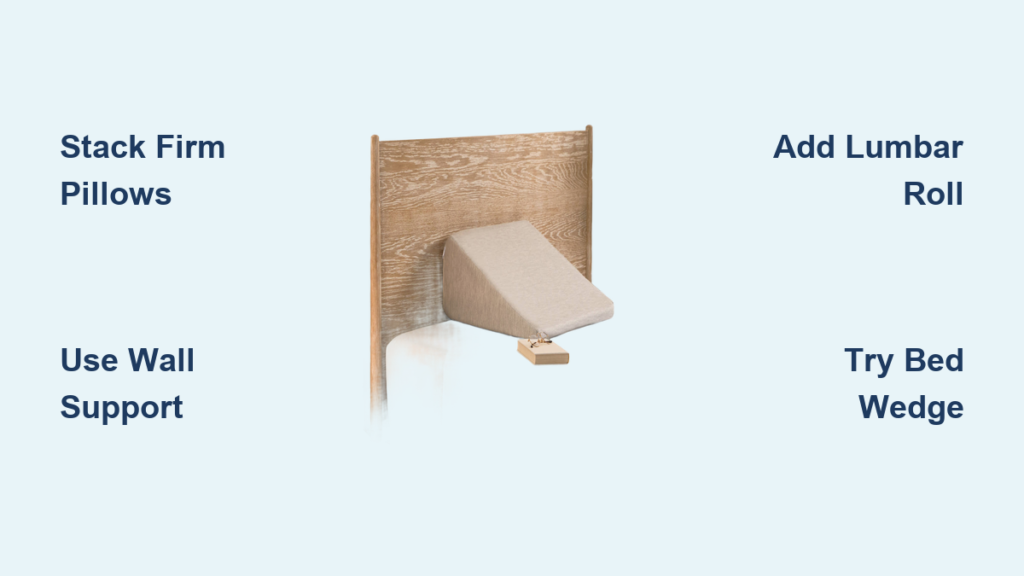
Utilize a Dedicated Bed Wedge Pillow

A bed wedge pillow offers a superior alternative to stacking loose cushions. These specialized pillows feature a fixed incline, usually between 30 and 45 degrees, designed specifically for sitting up.
Key advantages include:
* Consistent slope that prevents slipping downward
* Single-piece setup requiring no arrangement
* Improved breathing and reduced acid reflux due to elevation
Look for models with non-slip bottoms to keep the wedge in place on your sheets. You can use it alone or pair it with a small neck roll for extra head support. This tool is ideal for reading or recovering from surgery when stability is crucial.
Insert Lumbar Support for Spinal Alignment

Even with a good backrest, your lower back may arch uncomfortably without proper filling. Adding lumbar support closes the gap between your spine and the support surface.
Follow these steps for proper placement:
1. Sit at the edge of your bed with your back straight.
2. Place a lumbar roll, small cylindrical pillow, or rolled towel in the curve of your lower back.
3. Lean back gently so the support fills the void completely.
This technique maintains a neutral spine and prevents slouching during long sessions. It reduces fatigue and protects your lower back from strain.
Pro Tip: A portable office lumbar cushion often works perfectly in bed and provides excellent arch support.
Leverage Your Bedroom Walls for Stability
Your room architecture can provide the solid backing you need. If your bed sits near a vertical surface, you already have a built-in solution that requires no extra purchases.
Lean Directly Against the Wall
Positioning your bed against a wall allows you to use the structure as a headboard substitute. The wall provides unbeatable rigidity that soft furnishings cannot match.
To execute this safely:
* Push your mattress firmly against the wall to eliminate gaps.
* Place a thick folded blanket or cushion between your back and the wall surface.
* Keep your shoulders relaxed and spine straight while leaning back.
This buffer prevents discomfort from the hard surface while maintaining stability. It is an excellent zero-cost solution for dorm rooms or guest bedrooms.
Warning: Check the wall for electrical outlets, radiators, or rough textures before leaning back to avoid injury.
Position Your Bed in a Corner
Tucking your bed into a corner creates a cozy nook with support on two sides. This setup offers 270-degree protection and prevents you from sliding sideways or backward.
Maximize this layout by:
* Placing cushions at both wall junctions for comfort.
* Using the corner space to mount a small shelf or clip-on light.
* Arranging your mattress so the corner acts as a natural bookend.
This strategy is popular in studio apartments where space is limited. It transforms a lack of furniture into a functional and stylish reading area.
Upgrade With Permanent Hardware Solutions
If you sit up in bed daily, investing in hardware may save you from daily discomfort. These solutions eliminate the need for constant pillow rearrangement.
Install a Reclining Bed Frame
A reclining bed frame or adjustable base is the ultimate mechanical solution. These frames allow you to raise the head of the bed electronically to any desired angle.
Features often include:
* Smooth motorized adjustment via remote control
* Memory presets for your favorite sitting positions
* Zero-gravity modes to reduce pressure on the spine
These bases work with most standard mattresses and fit existing bed sizes. While the cost is higher than pillows, they provide unmatched comfort for those with mobility issues or chronic pain.
Bonus: Many modern frames include USB ports, under-bed lighting, and massage functions for added luxury.
Construct a DIY Fabric-Covered Headboard
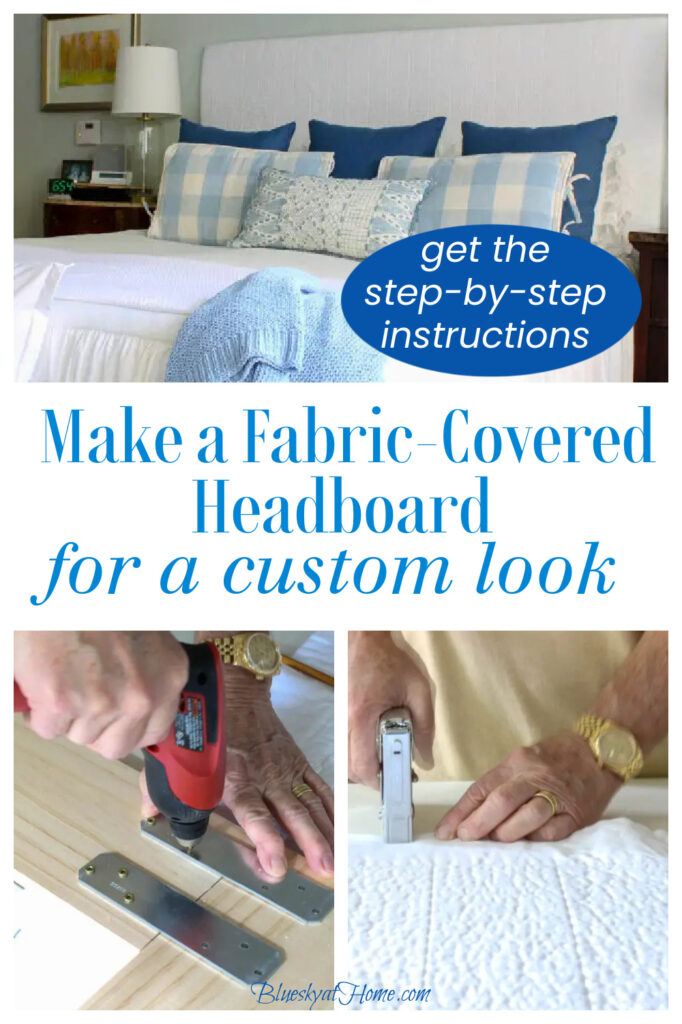
You can build a custom support board that functions exactly like a headboard. This project requires basic materials but delivers a permanent and stylish result.
Gather the following materials:
* Plywood or foam board cut to your bed width
* Batting or foam padding for comfort
* Durable fabric or upholstery material
* Staple gun and heavy-duty wall brackets
Assembly steps:
1. Cut the board to match the width of your mattress.
2. Wrap the board in padding and secure your chosen fabric tightly.
3. Mount the board to the wall using sturdy brackets at headboard height.
4. Push your bed against the new support structure.
This creates a solid surface you can lean against without shifting. Renters can use removable mounting strips if drilling is not an option.
Match Your Solution to Your Living Situation

Not every method fits every lifestyle. Your choice should depend on how often you sit up, your budget, and whether you own your home.
Options for Renters and Temporary Spaces
If you cannot drill holes or buy expensive furniture, stick to portable solutions. Stacked firm pillows and bed wedge pillows are ideal because they require no installation. You can move them easily when you relocate or store them away when not in use.
Best Choices for Frequent Readers
People who spend hours upright need durable support to prevent fatigue. A reclining bed frame or a DIY fabric headboard offers the consistency required for long reading or working sessions. These investments protect your posture over time.
Strategies for Back Pain Relief
Prioritize spinal alignment above all else if you suffer from back issues. Combine a wedge pillow with a dedicated lumbar roll to maintain natural curves. Avoid soft, flat pillows that encourage slouching and strain your vertebrae.
Setup for Small Studios
Maximize limited space by using your environment. Placing the bed in a corner with wall cushions saves floor space while providing necessary backing. Foldable supports allow you to clear the area quickly when guests arrive.
Final Tips for Comfort and Safety
- Test stability first: Always lean gently to ensure your support structure will not shift or collapse unexpectedly.
- Align your neck: Keep your head level with your shoulders to avoid strain during extended sitting.
- Adjust lighting: Position lamps to reduce glare on screens and prevent eye fatigue.
- Maintain cleanliness: Wash pillow covers and cushion cases weekly to remove dust and oils.
- Change positions: Shift your posture every 30 minutes to prevent stiffness and promote circulation.
Frequently Asked Questions About Sitting Up Without a Headboard
What is the best pillow type for sitting up in bed?
Memory foam or high-density pillows are best because they resist compression. Standard fiberfill pillows sink too quickly, failing to provide the firm support needed for upright posture.
Can I sit up comfortably if my bed is not against a wall?
Yes, you can use a bed wedge pillow or stack firm pillows to create your own support structure. These methods work independently of wall placement and provide stable backing anywhere in the room.
How do I prevent sliding down while sitting up?
Use a bed wedge with a non-slip bottom or place your bed against a wall. Adding a lumbar roll also helps lock your lower back in place, preventing the downward slide common with soft pillows.
Is a reclining bed frame worth the cost?
If you sit up in bed daily, a reclining bed frame is a worthwhile investment for long-term comfort and posture support. It eliminates the hassle of arranging pillows and offers precise angle adjustments.
How can I make a DIY headboard without drilling?
You can lean a large, fabric-covered foam board or a decorative room divider behind your bed. Ensure it is heavy enough or secured with removable adhesive strips to stay in place safely.
Why does my back hurt when I sit up in bed?
Pain often results from poor spinal alignment caused by soft, collapsing supports. Using lumbar support and firm pillows maintains the natural curve of your spine and reduces strain.
Key Takeaways for Sitting Up in Bed Without a Headboard
You do not need a traditional headboard to sit up comfortably and safely in bed. By using high-density pillows, leveraging wall structures, or investing in adjustable frames, you can create a supportive environment tailored to your needs. Prioritize spinal alignment with lumbar support to prevent pain during long reading or working sessions.
Start with the simplest solution like stacking firm pillows or using a wedge today. If you require more permanent support, consider building a DIY board or upgrading your bed frame. Your bed can be a versatile space for rest and activity with the right setup.