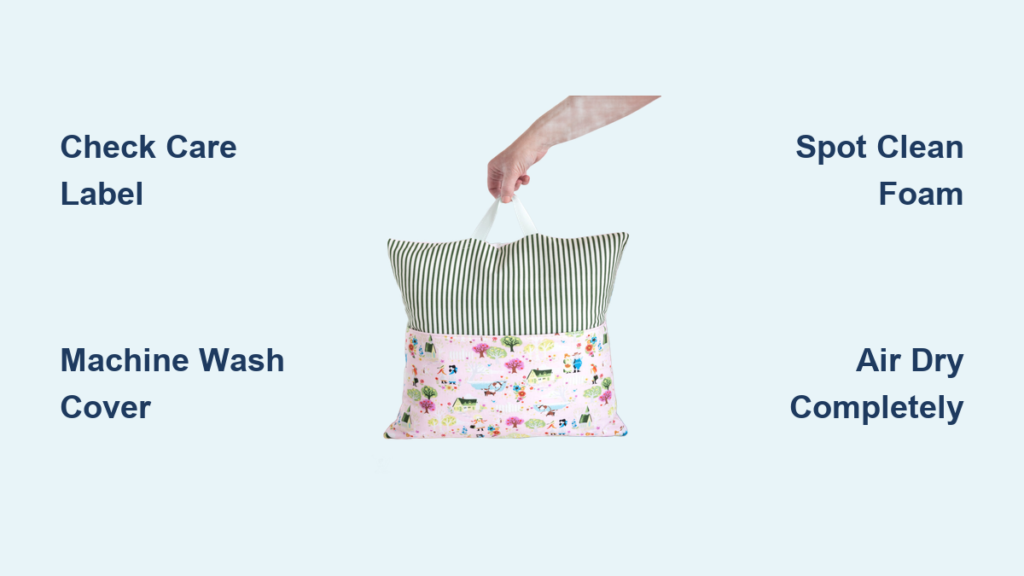
Nothing beats sinking into your favorite reading pillow after a long day with a good book. But over time, these cozy companions collect dust, oils, sweat, and odors, especially if you use them daily. Knowing how to wash a reading pillow properly is essential to maintaining hygiene, comfort, and longevity. This guide walks you through safe, effective cleaning methods based on material and construction.
With the right steps, you can keep your reading pillow fresh, allergen-free, and supportive for years. You will learn how to spot-clean memory foam, machine wash removable covers, hand wash non-removable types, and prevent damage during drying.
Check the Care Label First
Before doing anything, identify your pillow’s materials. The care label holds the key to safe cleaning and prevents costly mistakes.
What the Labels Mean
Care labels provide critical information about safe cleaning methods.
• Machine Washable: Covers or entire pillows safe for gentle cycle washing
• Hand Wash Only: Delicate fabrics like silk or wool blends that can shrink or fray
• Spot Clean Only: Typically memory foam or latex, never submerge in water
Ignoring label instructions can lead to shrinking, lumps, or mildew. When in doubt, opt for gentler methods.
Where to Find the Label
Look for a small fabric tag stitched into a seam or side of the pillow. If there is no label, inspect the build yourself.
• Zippered cover: Likely machine washable
• Solid foam block: Spot clean only
• Soft, plush exterior without zippers: Probably hand wash or spot clean
Knowing your pillow type prevents damaging its structure during cleaning.
Machine Wash a Removable Cover

Most modern reading pillows come with zip-off covers, making cleaning simple and efficient. Follow these steps for best results.
Remove and Prep the Cover
Unzip the cover completely and turn it inside out. Shake it outdoors to dislodge dust, hair, and crumbs. This reduces strain on your washer and improves cleaning results.
Pre-Treat Stains
Apply a small amount of mild stain remover directly to stains, especially around the neck or arm areas. Let it sit for 5 to 10 minutes. Avoid bleach, which weakens fibers and fades colors.
Wash on Gentle Cycle
Load the cover into the washer with cold water and a mild detergent. Use the gentle or delicate cycle to protect seams and fabric. Never use fabric softener, as it coats fibers and reduces breathability while attracting more dirt over time.
Dry Safely
After washing, air dry by laying flat or hanging to prevent shrinkage and maintain shape. If using a dryer, select low heat and remove while slightly damp to avoid over-drying. High heat can melt synthetic fibers or damage elastic edges. Always ensure the cover is fully dry before reattaching to prevent mold.
Hand Wash a Non-Removable Pillow
Pillows without removable covers require careful hand cleaning to avoid waterlogging or distortion.
Prepare a Mild Soapy Solution
Fill a basin with lukewarm water and add a small amount of gentle detergent like Woolite or baby shampoo. Stir well to dissolve soap completely, as residue can attract dirt later.
Spot Clean Before Full Wipe
Dampen a soft cloth and gently dab at visible stains. Use circular motions, not rubbing, to avoid spreading the stain. For ink or oil spots, apply a drop of dish soap directly, then blot with a clean towel.
Wipe Down Entire Surface
Soak a sponge or microfiber cloth in the soapy water, wring it until barely damp, and wipe the entire pillow surface in sections. Focus on high-contact zones like head and arm rests. Never soak the pillow, as excess moisture can seep into the filling and cause mildew.
Rinse Without Drenching
Use a second clean, damp cloth with no soap to wipe away suds. Repeat until no slippery residue remains. Residual detergent attracts grime and may irritate skin.
Dry Thoroughly
Place the pillow in a well-ventilated area away from direct sunlight, which can fade and weaken fabric. Use a fan to speed drying and flip every few hours for even airflow. Never put a hand-washed reading pillow in the dryer unless the label explicitly allows it.
Clean a Memory Foam Reading Pillow
Memory foam is supportive but highly sensitive to water. Submerging it can ruin its structure and promote mold growth.
Vacuum First
Use a handheld vacuum with a brush attachment to remove surface debris. Run it over all sides, crevices, and seams. This step removes dust mites, pet hair, and dead skin, which are common allergy triggers.
Spot Clean Stains Gently
Mix a few drops of mild detergent with water. Dip a cloth in the solution, wring it until almost dry, then dab the stained area. For yellowed or odorous spots, use a 50/50 mix of white vinegar and water, as it disinfects and breaks down organic residue. Avoid soaking, and blot with a dry towel afterward to pull out moisture.
Deodorize Naturally
Sprinkle baking soda evenly over the pillow. For a spa-like scent, add 2 to 3 drops of lavender or eucalyptus essential oil to the baking soda before applying. Let it sit for 1 to 4 hours to absorb odors, then vacuum thoroughly. This method eliminates sweat, food, or pet-related smells without chemicals.
Air Dry Completely
Place the pillow upright or on its side in a breezy room. A fan helps, but avoid direct heat sources. Drying can take 12 to 24 hours depending on thickness. Always confirm it is bone-dry before use, as trapped moisture leads to mildew and musty odors.
Prevent Damage During Drying

Improper drying is the number one cause of ruined reading pillows. Follow these guidelines to protect your investment.
Avoid These Drying Mistakes
• High heat in dryer: Melts foam, shrinks fabric, damages elasticity
• Direct sunlight: Fades colors and weakens fibers over time
• Folding while damp: Traps moisture inside, encouraging mold
• Skipping the air-dry test: Press your palm to the surface, if it feels cool, it is still wet
Speed Up Drying Safely
Use a fan to circulate air and place the pillow near an open window if humidity is low. Flip every 4 to 6 hours for even evaporation. Insert a dry towel inside zippered openings to absorb internal moisture. Patience pays off, as rushing drying risks long-term damage.
Maintain Freshness Between Washes
Regular care reduces deep cleaning frequency and extends pillow life significantly.
Use a Pillow Protector
Slip a removable, washable protector under the cover. It blocks sweat, spills, and allergens, which is especially helpful if you eat or drink while reading.
Fluff and Rotate Weekly
Give your pillow a good shake and fluff by hand. This redistributes filling and prevents flat spots. Flip it weekly to even out wear.
Store Properly
Keep your reading pillow in a cool, dry place when not in use. Avoid damp basements or humid bathrooms. Use a breathable cotton storage bag, never plastic, which traps moisture.
Air Out Monthly
Take the pillow outside for 1 to 2 hours every few months. Sunlight kills bacteria and neutralizes odors naturally. Just do not leave it too long, as UV rays can degrade fabric over time.
Wash Covers Every Month
Even if they do not look dirty, pillow covers collect oils and dead skin. Wash them every 4 weeks for hygiene, and more often if you have pets or allergies.
Troubleshoot Common Cleaning Issues
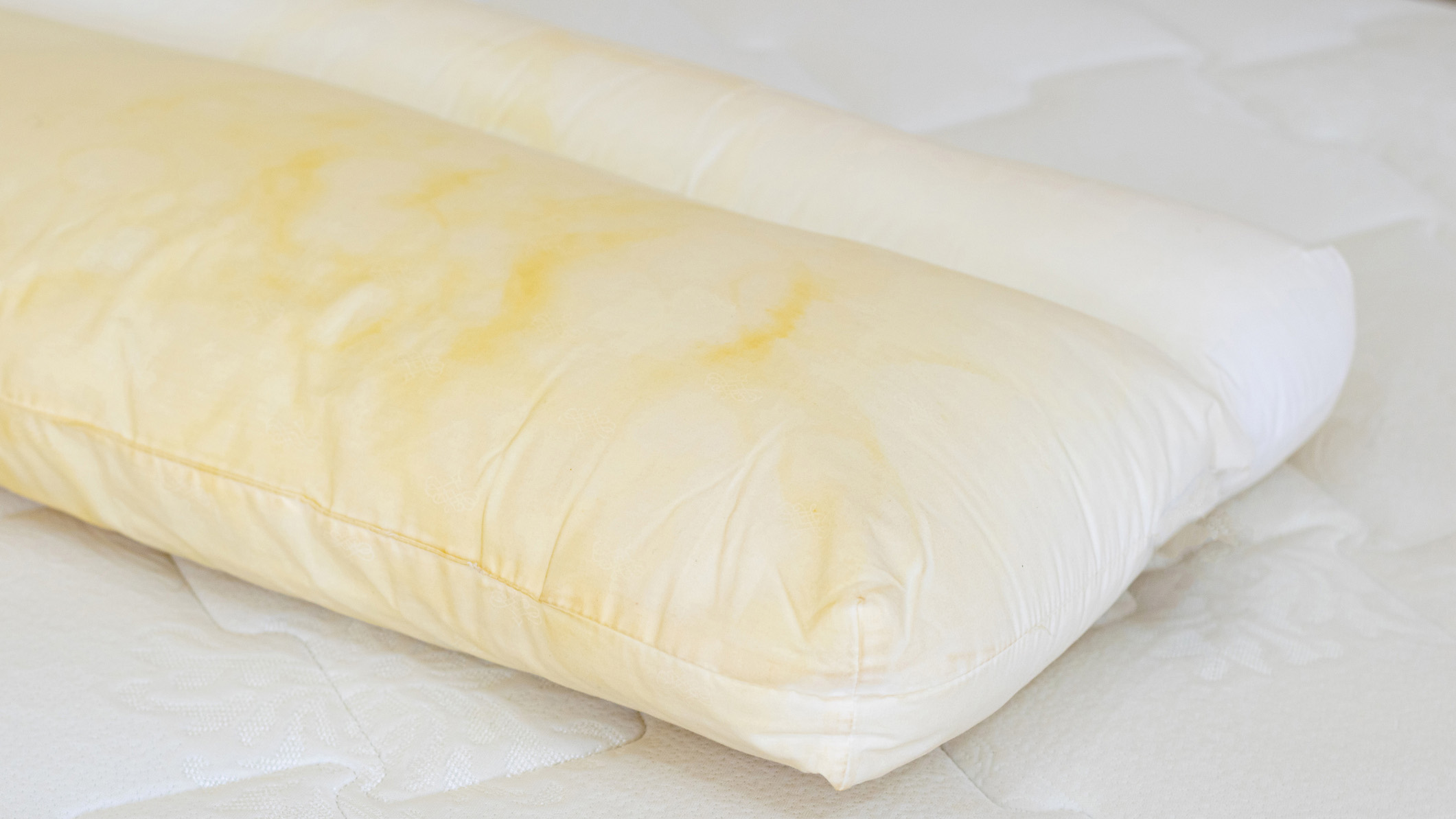
Even careful cleaning can go wrong. Here is how to fix common problems.
Smell Persists After Washing
If your pillow still smells musty, sprinkle baking soda, wait 2 hours, and vacuum. Place it outside in fresh air for a few hours. For memory foam, avoid over-wetting, as lingering moisture causes odor.
Cover Shrank in the Dryer
Heat is the usual culprit. To prevent this, always air dry or use low heat, and remove while slightly damp to finish air drying. If already shrunk, stretch gently while damp, but results vary.
Stains Will Not Come Out
Try a paste of baking soda and water. Apply to the stain, let sit 15 minutes, blot with a damp cloth, and repeat as needed. For old stains, multiple treatments may be required.
Pillow Feels Lumpy After Washing
This happens with fiber-filled or down-blend pillows. To fix, tumble dry on low with 2 to 3 clean tennis balls or dryer balls. Pause and fluff by hand every 10 minutes, and continue until fully dry and smooth.
How Often Should You Clean
Frequency depends on use and environment. Follow this schedule for optimal cleanliness.
| Pillow Type | Cover Cleaning | Full Pillow Cleaning |
|---|---|---|
| With removable cover | Every 4 weeks | Every 3 to 6 months |
| Non-removable cover | N/A | Every 3 months |
| Memory foam | Spot clean monthly | Deep clean every 6 months |
More frequent cleaning is recommended if you have pets or allergies, eat or drink near the pillow, or use it daily.
Frequently Asked Questions About Washing a Reading Pillow
Can I Put My Reading Pillow in the Dryer?
It depends on the materials. Always check the care label first. Air drying is generally the safest option. If tumble drying is allowed, use the lowest heat setting to prevent shrinkage or damage to the filling.
How Often Should I Wash My Reading Pillow Cover?
Pillow covers should be washed once a month to remove sweat, oils, and allergens. Wash them more frequently if you have pets, suffer from allergies, or frequently eat or drink while using the pillow.
What If My Reading Pillow Still Smells After Washing?
Try sprinkling baking soda over the pillow, let it sit for a few hours, then vacuum it off. If the smell persists, placing the pillow outside in fresh air for a few hours can help eliminate lingering odors naturally.
Can I Submerge a Memory Foam Reading Pillow in Water?
No, memory foam should never be fully submerged in water. It absorbs liquid easily and takes a long time to dry, which can lead to mold or mildew. Always spot clean with a damp cloth and mild detergent instead.
How Do I Remove Old Stains From a Reading Pillow?
Make a paste of baking soda and water, apply it to the stain, and let sit for 15 minutes. Blot with a damp cloth and repeat as needed. For stubborn stains, a 50/50 mixture of white vinegar and water can help break down discoloration.
Key Takeaways for Washing Your Reading Pillow
A clean reading pillow enhances comfort and supports better posture. By matching the cleaning method to the material, you keep it fresh, safe, and comfortable. Machine wash removable covers on gentle cycles with cold water, hand wipe non-removable types with mild soapy solution, and spot clean memory foam with vinegar water or baking soda. Always air dry thoroughly to prevent mold and mildew.
Use a pillow protector, wash covers monthly, and fluff regularly to extend your pillow’s life. When buying a new reading pillow, prioritize models with zippered, machine-washable covers and hypoallergenic fillings. Act fast on spills, and replace your pillow when it shows signs of wear like permanent stains, loss of support, or broken zippers. With proper care, your reading pillow remains a clean, cozy retreat for countless relaxing moments.