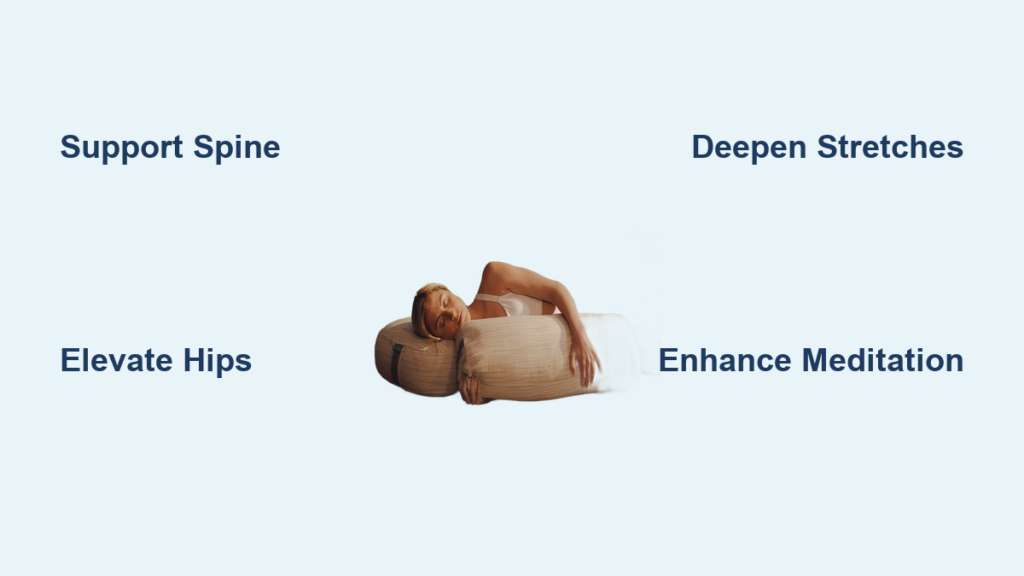
If you have ever felt strain during seated poses, tension in your lower back during relaxation, or tightness in your hips during forward folds, a yoga bolster pillow can completely transform your practice. Designed to support the body and enhance alignment, a yoga bolster pillow makes poses more accessible, comfortable, and sustainable. Whether you are a beginner, recovering from injury, or an experienced practitioner looking to deepen your breathwork, the bolster is a versatile tool that bridges the gap between effort and ease. This guide reveals exactly how to use a yoga bolster pillow across restorative poses, meditation, breathwork, and even active balance drills so you can unlock its full potential.
Choose the Right Bolster
Selecting the correct bolster is the foundation of a supportive practice. The right shape, firmness, and material will determine how well it serves your body in various poses.
Rectangular vs Round Shapes
Rectangular bolsters offer superior stability and full-body support, making them ideal for restorative backbends, seated meditation, and spinal alignment. Their flat surfaces prevent rolling and allow even weight distribution. Round cylindrical bolsters are softer and conform slightly to body curves, best for targeted support under knees, ankles, or hips. However, they may shift during use and are less effective for full spinal support unless stabilized.
A standard rectangular bolster measuring approximately 24 inches long by 12 inches wide by 6 inches high is the best all-around choice for most users.
Firmness and Fill Type
A good bolster should be firm enough to support your body but yielding enough for comfort, similar to a sofa cushion. Avoid overly stiff foam-filled bolsters, which many users find uncomfortable.
The following fill types offer distinct benefits:
- Cotton batting (organic): Soft, breathable, moldable, ideal for restorative yoga and prenatal use
- Buckwheat hulls: Firm, supportive, excellent for posture correction and therapeutic alignment
- Polyester fiber: Affordable and widely available, medium firmness for home practice
- Foam: Rarely recommended, too rigid and unyielding for most applications
Cotton and buckwheat fills consistently rank highest for comfort and longevity.
Removable, Washable Covers
Always choose a bolster with a zippered, removable cover. Cotton covers are soft and quiet, great for home use. For studios or shared spaces, opt for nylon or wipeable synthetic fabric that resists wear and can be cleaned easily. Inner lining made of muslin fabric helps contain the filling and extends the life of your bolster.
Support Your Spine in Backbends

Supported backbends open the chest, shoulders, and abdomen while counteracting the slouching that comes from daily sitting. This application is often called Supported Fish Pose or Matsyasana.
Open Your Heart Safely
Place a rectangular bolster vertically along your spine, starting at the sacrum. Slowly lie back so your spine is fully supported from lower back to upper shoulders. Let your head rest comfortably. If it does not reach the floor, add a folded blanket or yoga block.
Your arms should extend out in a T shape with palms up. Your legs can stay straight or drop into reclined butterfly (Supta Baddha Konasana). Hold this position for 3 to 10 minutes.
Your chest should feel gently lifted, not strained. If your shoulders pinch, lower the bolster slightly. This supported heart opener counteracts slouching, improves breathing, and calms the nervous system. It is perfect after long periods of sitting.
Enhance Savasana Comfort
Savasana, the final resting pose, is when many practitioners experience lingering tension. A simple bolster placement can dramatically improve your ability to fully relax.
Relieve Lower Back Tension
In Savasana, place the bolster horizontally under your knees. This simple adjustment decompresses the lumbar spine and allows deeper relaxation.
Lie flat on your back with legs extended or bent with feet on the floor. Position the bolster just above the knee creases. Let gravity gently release tension in your lower back.
Many users report reduced back pain and improved ability to fully relax, especially helpful after surgery or intense physical activity. For prone (face-down) Savasana, place a small bolster or rolled blanket under the ankles to reduce joint pressure.
Deepen Forward Folds with Support
Forward folds can be challenging for those with tight hamstrings or lower back sensitivity. The bolster transforms these poses into sustainable, passive stretches.
Make Paschimottanasana Accessible
Sit with legs extended. Lay the bolster lengthwise or horizontally in front of you. Hinge at your hips and drape your torso over the bolster, resting your forehead gently on top.
Keep your neck relaxed and avoid crunching. If the bolster is out of reach, stack a second one or add a folded blanket. Breathe deeply, allowing your spine to lengthen with each exhale.
Common mistake: forcing the head toward the legs. Let the bolster do the work. Your goal is release, not depth.
Elevate Your Meditation Posture

Seated meditation requires sustained posture that many practitioners struggle to maintain. The bolster provides the elevation needed to align your spine properly.
Align Hips and Spine
Sit on the front edge of the bolster, allowing your sit bones to rest securely. Cross your legs comfortably with knees naturally dropping toward the floor.
Your pelvis tilts forward, eliminating slouching. Your spine lengthens upward while your shoulders roll back. Hands can rest on your knees or in your lap.
This small lift makes seated meditation sustainable, especially for those with desk-related stiffness or limited hip mobility. Pair your bolster with a zabuton or thick yoga mat to cushion knees and ankles during long sessions.
Open Hips in Reclined Bound Angle Pose
Supta Baddha Konasana is a deeply restorative hip opener that calms the nervous system and supports reproductive health.
Release Tight Groins and Hips
Place the bolster vertically along your spine. Lie back so your entire back is supported. Bring the soles of your feet together, letting knees fall outward.
Add folded blankets or smaller bolsters under each thigh for extra support. Place a small pillow under your head if your neck feels strained. Hold for 5 to 10 minutes.
Teachers observe students relax more deeply when fully supported in this pose.
Support Your Sacrum in Bridge Pose
Supported Bridge Pose (Setu Bandhasana) relieves chronic back tension and is ideal for injury recovery or fatigue.
Ease Back Strain
Lie on your back, bend your knees, and lift your hips slightly. Slide the bolster under your sacrum, the triangular base of your spine, then lower your hips onto it.
Your feet stay flat on the floor with knees aligned over ankles. Arms can rest at your sides or on your belly. Breathe deeply for several minutes.
If you feel any pinching in the lower back, reduce the height or exit the pose.
Deepen Child’s Pose with Full Support
Child’s Pose (Balasana) is a resting pose that becomes even more restorative with proper support.
Soothe the Lower Back
Kneel on your mat with big toes touching and knees wide. Place the bolster vertically between your thighs. Rest your torso and forehead fully on the bolster.
Arms can extend forward or rest alongside your body. Let gravity draw your hips toward your heels.
This supported Balasana reduces pressure on the lower back and encourages full relaxation, perfect for stress relief or as a resting pose between flows. Place a folded blanket under your knees or shins for extra comfort if needed.
Use Bolsters in Hip Openers

Deep hip openers like Pigeon Pose and Fire Log Pose become sustainable when the body is properly supported.
Make Pigeon Pose Sustainable
In Pigeon (Eka Pada Kapotasana) or Fire Log (Agnistambhasana), place the bolster under the hip of the front leg if it does not reach the floor.
This reduces strain and allows longer holds. Over time, increased comfort may lead to deeper opening.
The bolster prevents the body from guarding against discomfort, helping you stay in the pose with ease. Long holds in supported hip openers enhance flexibility and emotional release.
Build Confidence in Inversions
Inversions can be intimidating. The bolster serves as both physical support and psychological safety net.
Create a Safe Practice Zone
Place the bolster in front of, behind, or beside you during Crow Pose, Headstand prep, or Handstand drills.
It acts as a soft landing surface. Even if unused, its presence reduces fear and encourages exploration.
This psychological safety net is especially helpful for beginners or those returning from injury. Use a round bolster for portability during active practice.
Enhance Pranayama and Breathwork
Pranayama practice benefits from proper spinal positioning that allows the ribcage to expand fully.
Expand Your Ribcage
Use a narrow bolster lengthwise under your spine while reclining. This supports the natural curve of the spine and allows the ribcage to expand freely.
This setup is ideal for diaphragmatic breathing and Pranayama. It can substitute for a rolled blanket in shoulder-supported poses.
Opening the chest removes compression on the lungs, letting you breathe deeper with less effort.
Elevate Legs for Recovery
Legs-Up-the-Wall (Viparita Karani) is a therapeutic inversion that reduces leg swelling and supports lymphatic drainage.
Try Legs-Up-the-Wall with Support
Sit close to a wall and swing your legs up so they are vertical. Place the bolster horizontally under your sacrum or pelvis to elevate your hips.
Arms rest at your sides with eyes closed. Hold for 5 to 15 minutes.
This pose reduces leg swelling, supports lymphatic drainage, and relieves lower back strain, ideal for athletes, pregnant individuals, or anyone on their feet all day. Add an eye pillow to deepen relaxation.
Release Spinal Tension with Twists
Spinal twists improve thoracic mobility and release built-up tension, especially after long sitting.
Try a Supported Prone Twist
Place the bolster lengthwise down the center of your mat. Lie face-down along it with torso fully supported. Twist your pelvis to one side, lowering both knees to the floor.
Keep hips stacked with forearms on the mat at 90 degrees. Hold for 2 to 3 minutes per side.
Your spine should feel long, not compressed.
Use Bolsters for Active Core Training
Bolsters are not just for passive relaxation. They can add challenge and feedback to active strengthening exercises.
Challenge Stability and Strength
Supine Tabletop with Limb Extensions involves lying on your back with bolster under your spine from sacrum to head. Engage your core and lift legs to tabletop. Extend one leg and the opposite arm halfway down, then inhale back to center. Alternate sides for 10 rounds per side. This builds coordination, core endurance, and breath-body connection.
Balance on a Bolster in Lord of the Dance requires standing barefoot on the soft surface of a round bolster. Fix your gaze, lift one foot, catch your inner arch, and hinge forward. Hold for 8 or more breaths. This challenges ankle stabilizers and improves proprioception.
Refine Warrior III with Spinal Feedback by holding a bolster along your spine from upper back to sacrum as you shift into Warrior III. If it rolls sideways, your hips are tilting. If it rolls front or back, you have lost your balance. Release the bolster once aligned to build body awareness.
Increase Difficulty in Bird-Dog by kneeling on a bolster in tabletop position. Turn hands slightly outward for grip. Extend one leg back and opposite arm forward. Hold for 5 or more breaths per side to strengthen deep core muscles and improve spinal control.
Know Which Yoga Styles Use Bolsters
Bolsters appear throughout various yoga traditions, each serving specific purposes.
Restorative and Yin Yoga
Bolsters are essential in restorative yoga, used in nearly every pose to induce passive stretching and deep relaxation. In yin yoga, they support joints during long holds of 3 to 5 or more minutes, allowing safe, sustained stretches.
Prenatal and Therapeutic Practice
Bolsters are highly recommended for pregnant individuals. They support changing body mechanics and reduce strain on the abdomen. They are also widely used in therapeutic yoga for injury recovery, chronic pain, or limited mobility.
Hatha and Vinyasa
Bolsters are optional but beneficial in hatha and vinyasa yoga. Use them in forward folds, hip openers, or inversions for modifications that honor your body needs.
Who Should Use a Yoga Bolster?
Beginners and Seniors
Bolsters help beginners and seniors build confidence and comfort in foundational poses like Childs Pose or meditation. They reduce joint pressure and increase accessibility.
Injured or Recovering Practitioners
Bolsters provide safe modifications post-surgery or with back and hip issues. They allow continued practice without strain.
Athletes and Meditators
Athletes benefit from support for recovery, myofascial release, and deep stretching. For meditators, bolsters align the spine and enable longer sessions.
Yoga Instructors
Instructors use bolsters to demonstrate alignment, offer modifications, and guide restorative classes.
Maximize Benefits with Proper Use
Reduce Joint and Spinal Pressure
By supporting the body, bolsters reduce compression on the spine, hips, and knees, especially in seated and reclined poses.
Extend Pose Hold Times
Passive support allows you to stay in poses longer, enhancing flexibility and mindfulness.
Activate the Parasympathetic Nervous System
Supported poses signal safety to the brain, triggering the rest-and-digest response, ideal for stress reduction and sleep preparation.
Improve Circulation and Lymphatic Flow
Elevating legs or hips with a bolster enhances blood return and reduces swelling.
Combine Bolsters with Other Props
Layer for Custom Support
Layer bolsters with blocks to prop up the bolster for higher shoulder or hip elevation. Use straps to aid reach in forward folds when using a bolster. Add blankets to fill gaps or add padding under knees, neck, or head. Stack bolsters to create taller support for deeper backbends or seated poses.
Place a folded blanket under your head whenever it is unsupported to prevent neck strain.
Stay Safe and Mindful
Honor Your Body Limits
Never force a pose. Use the bolster to gently ease into stretches, not to push deeper. If you feel pain, numbness, or restricted breathing, adjust or exit the pose.
Use Non-Slip Surfaces
Practice on a grippy mat or use a bolster with a textured cover to prevent shifting.
Modify for Your Needs
Tailor support based on flexibility, injury history, or pregnancy. There is no perfect form, only what serves your body today.
Care for Your Bolster
Clean and Maintain Regularly
Cotton covers should be removed and machine-washed, then air dried to preserve shape. Synthetic covers can be wiped with disinfectant and spot cleaned as needed. Inner lining should be spot-cleaned only, avoiding soaking. Fluff the filling regularly and refill when needed.
Store Properly
Keep your bolster in a dry, cool, ventilated area. Avoid stacking heavy items on top to prevent flattening.
A high-quality bolster lasts years with proper care. Rotate between multiple bolsters if available.
Final Thoughts on Using Your Yoga Bolster
A yoga bolster pillow is more than a prop. It is an invitation to let your body be held so your mind can be free. From calming restorative poses to active balance drills, its uses are endless. Whether you are healing, stretching, breathing, or simply resting, the bolster meets you where you are.
Choose the right shape and fill, place it with intention, and let it deepen your practice in ways effort never could. Experiment, explore, and discover how this simple tool can transform your yoga journey.
Frequently Asked Questions About Yoga Bolster Pillows
What is the best shape of yoga bolster for beginners?
A rectangular bolster is best for beginners. It offers superior stability and full-body support, making it ideal for restorative poses, meditation, and learning proper alignment. Round bolsters are better suited for targeted support under specific body parts like knees or ankles.
How do I clean my yoga bolster cover?
Remove the cover and machine wash it on a gentle cycle using mild detergent. Air dry completely before putting it back on to preserve the shape. For synthetic covers, wipe with disinfectant and spot clean as needed rather than machine washing.
Can I use a yoga bolster for meditation?
Yes, sitting on the front edge of a bolster elevates your hips and promotes anterior pelvic tilt. This alignment helps your spine lengthen naturally, making seated meditation more comfortable, especially for those with tight hips or desk-related stiffness.
How long should I hold poses with a yoga bolster?
In restorative poses, hold for 3 to 10 minutes to allow your body to fully relax and benefit from passive stretching. For hip openers and deeper stretches, 5 to 10 minutes is ideal. Active balance exercises typically require 5 to 10 breaths per side.
Are yoga bolsters worth the investment?
Yes, high-quality bolsters last for years and dramatically improve your practice. They make poses more accessible, reduce strain, enhance relaxation, and support deeper stretching. The investment pays off whether you practice restorative yoga, meditation, or general wellness.