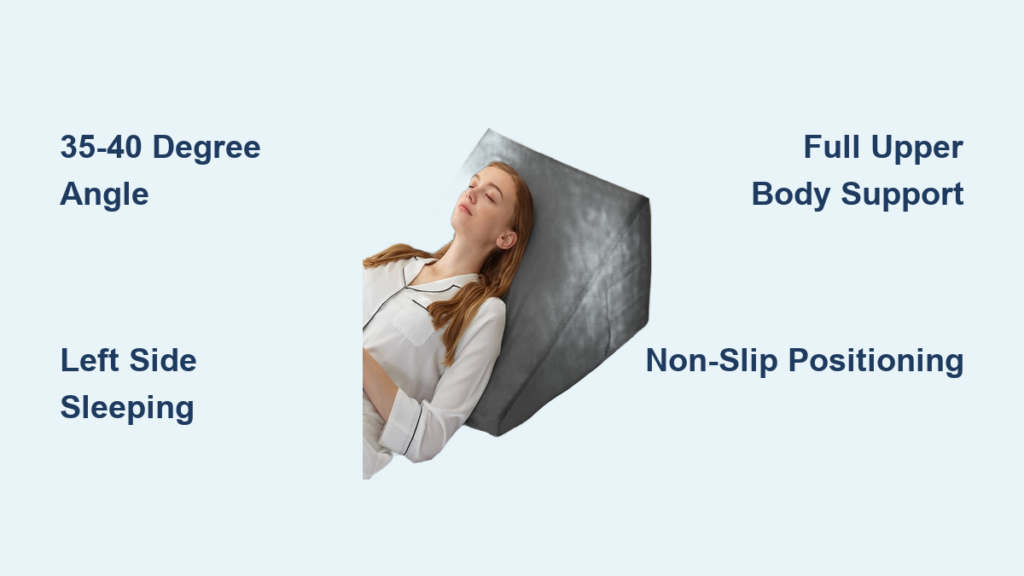
If you wake up with a sour taste in your mouth, a burning sensation in your chest, or a chronic cough especially at night, you may be one of the 20% of U.S. adults struggling with gastroesophageal reflux disease (GERD). While medications can help, a non-drug solution that works while you sleep is gaining popularity: the wedge pillow. Unlike regular pillows that only lift your head, a wedge pillow elevates your entire upper body, using gravity to keep stomach acid where it belongs down. When used correctly, this simple tool can dramatically reduce nighttime acid reflux, improve sleep quality, and support long-term digestive health.
But simply placing a wedge under your head is not enough. To get real results, you need to know how to position it, which angle works best, and how to combine it with the right sleeping posture. This guide walks you through every step from choosing the right pillow to avoiding common mistakes so you can finally sleep through the night without heartburn.
Choose the Right Wedge Pillow for GERD Relief
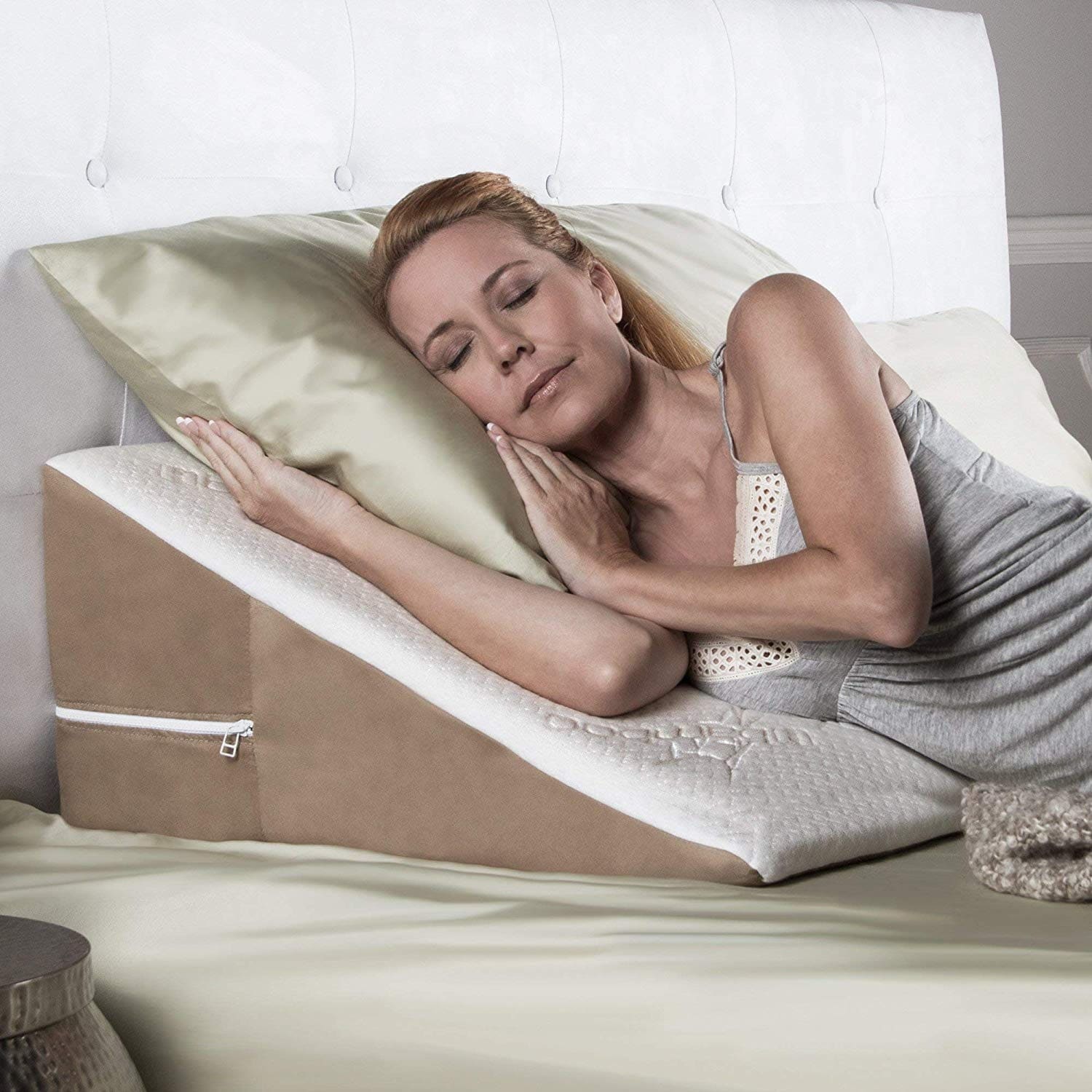
Pick the Optimal 30 to 45 Degree Incline
The ideal wedge for GERD should tilt your upper body at a 30 to 45 degree angle. This range is clinically proven to reduce esophageal acid exposure and improve acid clearance. A 35 to 40 degree incline offers the best balance between effectiveness and comfort.
Angles below 30 degrees may not provide enough elevation to prevent reflux. Angles above 45 degrees can cause neck strain or sliding during sleep. Look for wedges labeled with specific angles or height between 6 and 12 inches at the top. Avoid flat or low angle pillows marketed for leg support because they will not help with acid reflux.
Match Size to Your Bed and Body
A wedge that is too narrow or short can make you feel unstable or cause you to roll off during the night.
For twin or full beds, choose a wedge at least 20 to 24 inches wide. For queen or king beds, opt for 28 to 32 inches wide to stay centered. The minimum length should be 24 to 32 inches to support from hips to head. Taller individuals or those with longer torsos should choose longer models to ensure full upper body support.
Select the Best Material for Your Sleep Style
Different foam types offer different levels of support and comfort.
Memory foam conforms to your body and is ideal for side sleepers. Choose gel-infused versions if you sleep hot. Polyurethane foam is firmer and more supportive, better for back sleepers who need spinal alignment. Plant-based BioFoam is eco-friendly, durable, and less likely to off-gas. Avoid latex if you have allergies. Always check for a hypoallergenic, breathable cover with bamboo, rayon, or polyester blends being common and washable options.
Prioritize Features That Improve Comfort
Look for these key design elements to enhance usability.
A removable, machine-washable cover is essential for hygiene and odor control. A non-slip bottom keeps the pillow from sliding down during the night. Ventilation channels or cooling gel prevents overheating, especially with memory foam. Some wedges feature adjustable layers that let you add or remove foam to customize the incline.
Heavier wedges between 8 and 12 pounds stay in place better but are harder to move. Lightweight models between 2 and 4 pounds are portable but may shift during the night.
Set Up the Wedge Pillow Correctly

Position the Pillow Against the Headboard
Place the wedge flat on your mattress with the thick end at the head of the bed and the thin end pointing toward the foot. Press the base firmly against the wall or headboard to prevent it from slipping backward.
Never flip the wedge because this creates a dangerous downward slope. Ensure the entire surface is flat and stable before lying down.
Align Your Body from Hips to Head
Lie on the wedge so it supports your mid-back, shoulders, and head, not just your neck. The goal is to elevate your entire upper torso, not just your head.
Your spine should remain straight and neutral. Avoid bending at the waist, which increases abdominal pressure and can worsen reflux. Keep your head fully on the pillow with 2 to 3 inches of space between the top of your head and the edge to prevent neck strain.
Sleep in the Best Position for GERD
Sleep on Your Left Side
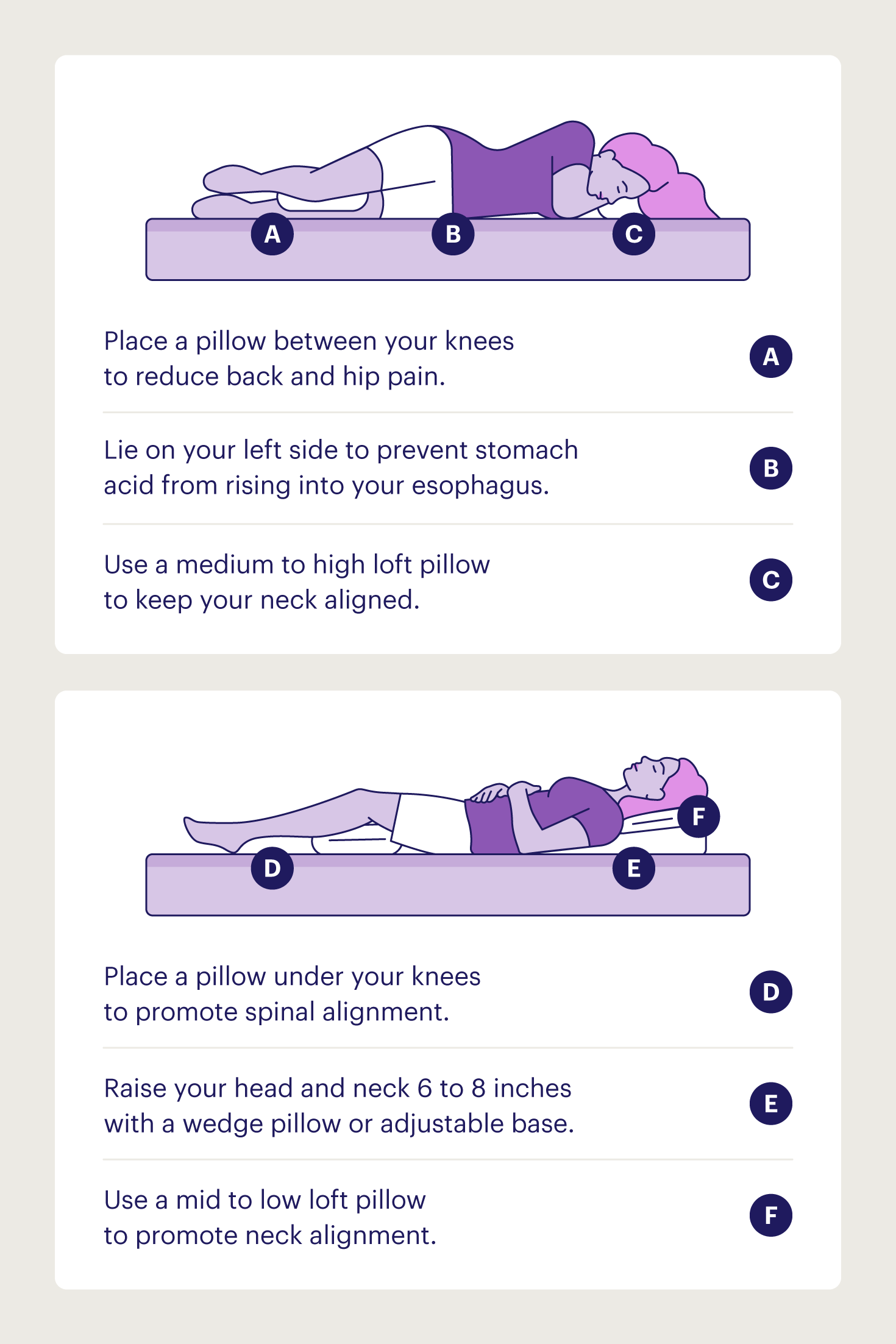
The left side sleeping position is the gold standard for reducing nighttime acid reflux. When you lie on your left, your stomach sits below your esophagus, helping gravity keep acid down.
Right side sleeping raises the stomach above the esophagus, making reflux more likely. Back sleeping can work with a wedge but may not be as effective unless combined with left side positioning.
Use a contoured wedge or place a regular body pillow behind your back to help maintain left side alignment all night.
Support Back Sleepers with Proper Alignment
If you prefer sleeping on your back, use a flat, firm wedge to maintain spinal alignment. Place a small knee pillow 6 to 8 inches high under your knees to reduce lower back strain. Avoid stacking regular pillows under your head because this bends the torso and increases abdominal pressure.
Avoid Stomach Sleeping
Sleeping on your stomach with a wedge is not recommended. It forces your neck into a twisted position, increasing strain. The incline can compress your abdomen, worsening reflux. You are more likely to slide down or feel uncomfortable.
If you must sleep on your stomach, use a thin pillow under your pelvis instead. Never use a wedge in this position.
Prevent Sliding and Discomfort
Stop from Sliding Down the Wedge
Many users wake up at the bottom of the bed because the smooth foam surface offers little grip.
Place a non-slip mat or rubber shelf liner under the wedge. Use a fitted sheet to reduce movement. Choose a memory foam wedge, which naturally conforms to your body and resists sliding. Opt for a lower incline between 30 and 35 degrees if higher angles cause instability.
Avoid Neck and Back Pain
Improper use can lead to discomfort. Neck strain is caused by too much elevation or poor head support. Use a thin pillow on top of the wedge if needed. Lower back pressure occurs when the wedge is too high or does not support the hips. Add a small roll or pillow under your lower back.
Waist bending occurs if your torso dips at the angle. If this happens, the wedge may be too short and you should upgrade to a longer model.
Combine with Lifestyle Changes for Best Results
Wait 2 to 3 Hours After Eating
Lying down too soon after meals is a major trigger for nighttime reflux. Give your stomach time to digest by waiting at least 2 to 3 hours after eating before lying down or going to bed.
Avoid late-night snacks and heavy dinners. Stop drinking alcohol at least 3 hours before bed.
Avoid GERD Trigger Foods
Certain foods relax the lower esophageal sphincter, allowing acid to escape.
Keep a food diary to identify your personal triggers and eliminate them from evening meals. Common triggers include spicy foods, fatty or fried foods, chocolate, citrus and tomatoes, caffeine, and carbonated drinks.
Maintain a Healthy Weight
Excess abdominal fat increases pressure on the stomach, pushing acid upward. Even a 5 to 10% reduction in body weight can significantly improve GERD symptoms.
Combine wedge use with a balanced diet and regular exercise. Focus on portion control and whole, unprocessed foods.
Quit Smoking
Smoking weakens the LES and reduces saliva production, which helps neutralize acid. Quitting can lead to noticeable improvement in reflux symptoms within weeks.
Know When to See a Doctor
Recognize Red Flag Symptoms
A wedge pillow can help manage mild to moderate GERD, but it is not a cure. See a doctor if you experience heartburn more than twice a week, difficulty swallowing, unintended weight loss, chest pain to rule out heart issues, or persistent cough or hoarseness.
These could indicate complications like esophagitis, Barrett esophagus, or hiatal hernia.
Explore Medical Treatments
If lifestyle changes and wedge use are not enough, your doctor may recommend antacids like Tums for quick relief, H2 blockers like famotidine to reduce acid production, proton pump inhibitors like omeprazole for long-term management, or surgery like LINX or fundoplication in severe cases.
Never stop prescribed medications without consulting your provider.
Maximize Long-Term Benefits
Allow Time to Adjust
It can take a few days to several weeks to get used to sleeping on an incline. Be patient.
Start by using the wedge for naps or part of the night. Gradually increase usage as your body adapts. Stick with it because even slight improvements in sleep quality add up.
Clean and Maintain Your Pillow
To extend its life and keep it hygienic, wash the removable cover every 1 to 2 weeks. Spot-clean the foam with mild soap and water if needed. Air out the pillow monthly to prevent odor buildup. Replace the wedge if it loses shape, sags, or develops permanent indentations.
Use for Other Health Benefits
Wedge pillows are not just for GERD. They can also help with snoring and sleep apnea by keeping airways open, neck and back pain by supporting natural spinal alignment, leg swelling by elevating feet to improve circulation, congestion by helping drain mucus during colds, and pregnancy by supporting side-sleeping and reducing heartburn.
One pillow can serve multiple purposes, making it a smart investment for overall health.
Frequently Asked Questions About Using a Wedge Pillow for GERD
What is the best angle for a wedge pillow for GERD?
The optimal angle is between 35 and 40 degrees. This range provides enough elevation to keep stomach acid down while remaining comfortable enough for sleep. Angles below 30 degrees may not prevent reflux, while angles above 45 degrees can cause neck strain and sliding.
Can I use a wedge pillow if I sleep on my back?
Yes, back sleeping works with a wedge pillow. Use a flat, firm wedge to maintain spinal alignment and consider placing a small pillow under your knees to reduce lower back strain. However, left side sleeping is generally more effective for GERD relief.
How long does it take to adjust to sleeping on a wedge pillow?
Adjustment time varies by individual. Some people adapt within a few days, while others need several weeks. Start by using the wedge for naps or part of the night and gradually increase usage as your body becomes accustomed to the incline.
Can a wedge pillow cure GERD?
No, a wedge pillow manages symptoms but does not cure GERD. It is a non-drug tool that reduces nighttime acid reflux by using gravity. Combine it with lifestyle changes like dietary modifications, weight management, and waiting 2 to 3 hours after eating for best results.
What should I do if I slide down the wedge during sleep?
Use a non-slip mat or rubber shelf liner under the wedge. Choose a memory foam wedge that conforms to your body and provides better grip. Opt for a lower incline between 30 and 35 degrees if higher angles cause instability.
Key Takeaways for Managing GERD with a Wedge Pillow
A wedge pillow is a safe, drug-free way to reduce nighttime GERD symptoms when used correctly. Choose a 35 to 40 degree incline, position it properly so your entire upper torso is elevated, and sleep on your left side to maximize gravitational benefits. Combine wedge use with healthy habits including waiting 2 to 3 hours after eating, avoiding trigger foods, maintaining a healthy weight, and quitting smoking.
With consistency, you can enjoy better sleep, less heartburn, and improved quality of life. If symptoms persist or worsen, consult a healthcare provider to explore additional treatment options.