You’ve noticed a strange smell or maybe even spotted tiny bugs when opening your buckwheat pillow. Panic sets in. Can this natural, supportive pillow really be infested? The good news is that true bug infestations in properly processed buckwheat pillows are rare. Buckwheat hulls themselves don’t attract pests because they lack nutritional value and resist moisture. But under certain conditions, bugs such as grain beetles or dust mites can appear. The key is knowing how to respond quickly and correctly.
This guide gives you a complete, science-backed plan to detect, eliminate, and prevent bugs in your buckwheat pillow. You’ll learn what types of pests are actually involved, which methods work, and how to maintain your pillow for years of clean, allergen-reduced sleep. Whether you’re dealing with a confirmed infestation or just want to stay ahead of problems, these steps will keep your pillow fresh, firm, and bug-free.
Identify the Real Culprit: Bugs vs. Mites

The first step in fixing the problem is understanding what you’re dealing with. Most bug concerns fall into two categories: actual insects and microscopic allergens.
Grain Beetles Are Real Pests
If you see tiny brown beetles, weevils, or larvae inside your pillow, you likely have grain beetles such as weevils, flour beetles, or rice bugs. These insects cannot survive on pure buckwheat hulls because they need food like residual flour, groat particles, or organic debris. Their presence means the hulls were not fully cleaned or dehulled, the pillow was stored in warm humid conditions, or there was cross-contamination from other grain products.
Good news: Grain beetles are harmless to humans but indicate a quality or storage issue.
Dust Mites Cause Allergies, Not Infestations
You won’t see them, but dust mites are the most common concern with any pillow. They feed on dead skin cells, not the hulls, and thrive in humidity above 50%, warm environments, and pillowcases where sweat and skin flakes accumulate. Their fecal matter contains allergens linked to asthma, sneezing, and itchy eyes. While the hulls themselves resist mite growth due to airflow and low moisture, the fabric layers do not.
Key takeaway: If you’re sneezing or have allergies, it’s likely dust mites in the cover, not bugs in the hulls.
Detect Early: Signs of Contamination
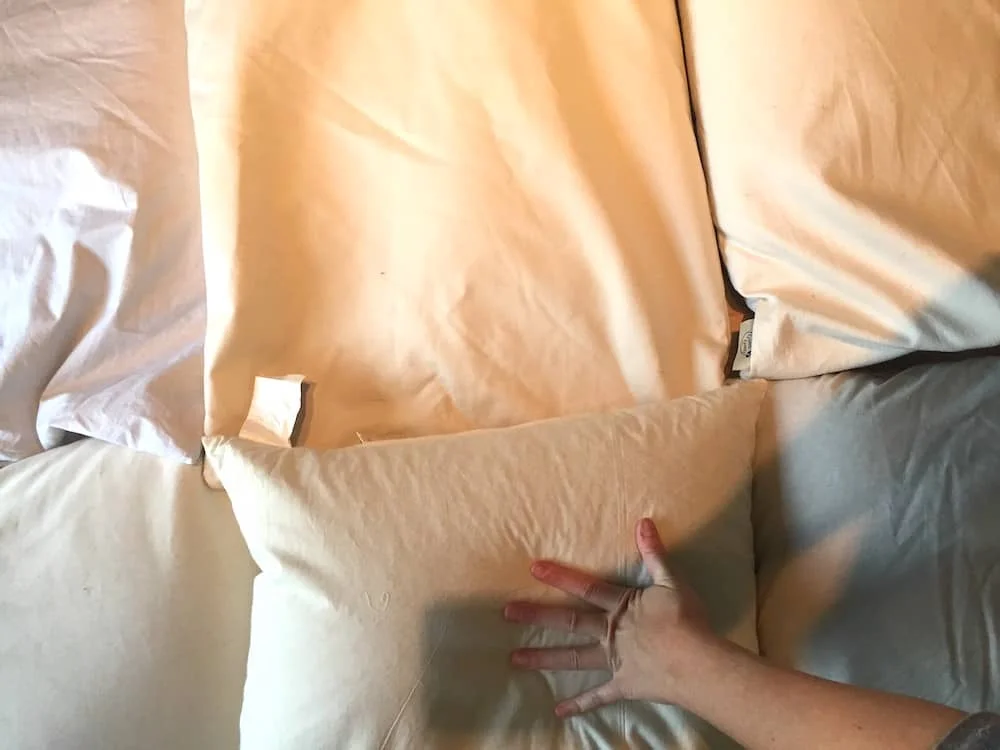
Catching issues early prevents full infestations and saves your pillow. Watch for these red flags.
Visible and Sensory Warning Signs
Watch for these indicators:
• Tiny moving insects when you unzip the pillow
• Fine powder (frass), which is insect droppings, in the hulls
• Musty or sour smell from the filling
• Clumping or softness in hulls
• Increased allergy symptoms at night
How to Inspect Your Pillow
Follow these steps to inspect your pillow properly:
- Empty the hulls into a white tray or shallow container
- Spread them in a thin layer under bright light
- Look for live bugs or shed skins, movement among the hulls, and discoloration or debris
- Shake the hulls. Healthy ones should rustle crisply, not crumble
If you find insects or frass, proceed immediately to elimination steps.
Eliminate Bugs: Proven Treatment Methods
Once you’ve confirmed contamination, act fast. These three methods are safe, effective, and based on scientific principles.
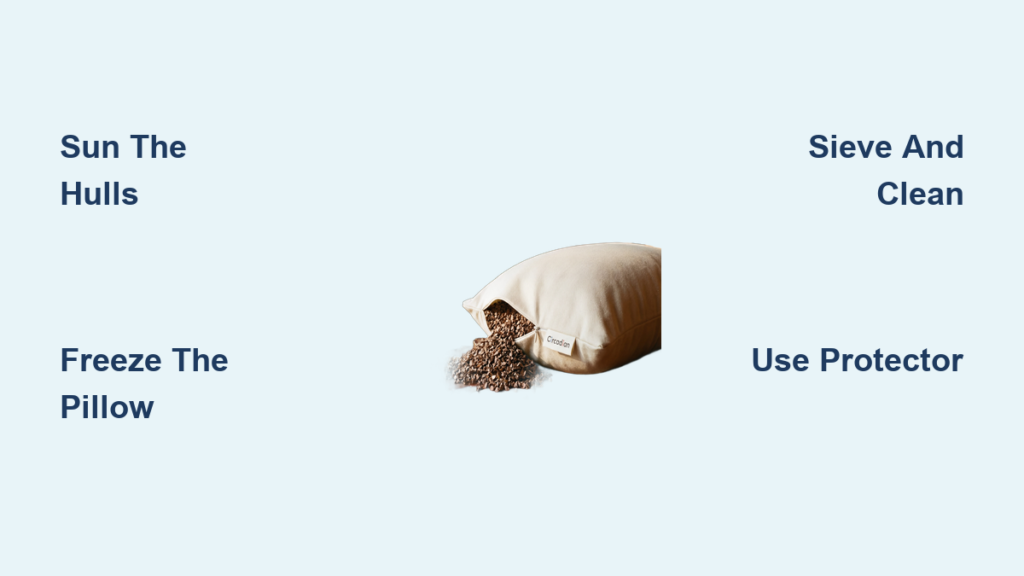
Sun the Hulls: UV and Heat Kill Pests
This method works best for prevention, mild infestations, and odor removal.
How to Do It
Follow these steps for successful sun treatment:
- Pour hulls into a clean, dry container like a baking sheet or tote
- Spread in a thin, even layer
- Place in direct sunlight for 3 to 4 hours
- Stir halfway through to expose all surfaces
- Bring indoors before evening dew
Why it works: UV radiation kills bacteria, mites, and insect eggs. Surface temperatures can exceed 120°F (49°C), which is lethal to pests. Drying reduces moisture, making the environment inhospitable.
Frequency: 1 to 2 times per year, or quarterly in humid climates.
Freeze the Pillow: Kill All Life Stages
This method works best for confirmed infestations, especially grain beetles.
How to Do It
Follow these steps for effective freezing:
- Place the entire pillow (zipped closed) in a sealed plastic freezer bag
- Freeze at 0°F (-18°C) for 24 to 48 hours
- Remove and let return to room temperature before use
Why it works: Freezing destroys cells in all insect stages, including eggs, larvae, and adults. Buckwheat hulls are structurally stable and won’t absorb moisture during freezing.
This method is safe and highly effective with no risk to fabric or filling when done correctly.
Sieve and Clean Hulls: Salvage What’s Usable
This method works best for severe contamination or cost-saving on high-end pillows.
How to Do It
Follow these steps to clean contaminated hulls:
- Empty hulls into a large bowl
- Use a fine mesh sieve to separate insects, frass, and broken hulls
- Discard any soft, crumbly, or discolored hulls
- After freezing or sunning, return clean hulls to the pillow
Pro tip: Combine with freezing first. This kills pests, then sieving removes debris.
Prevent Future Infestations: Smart Habits
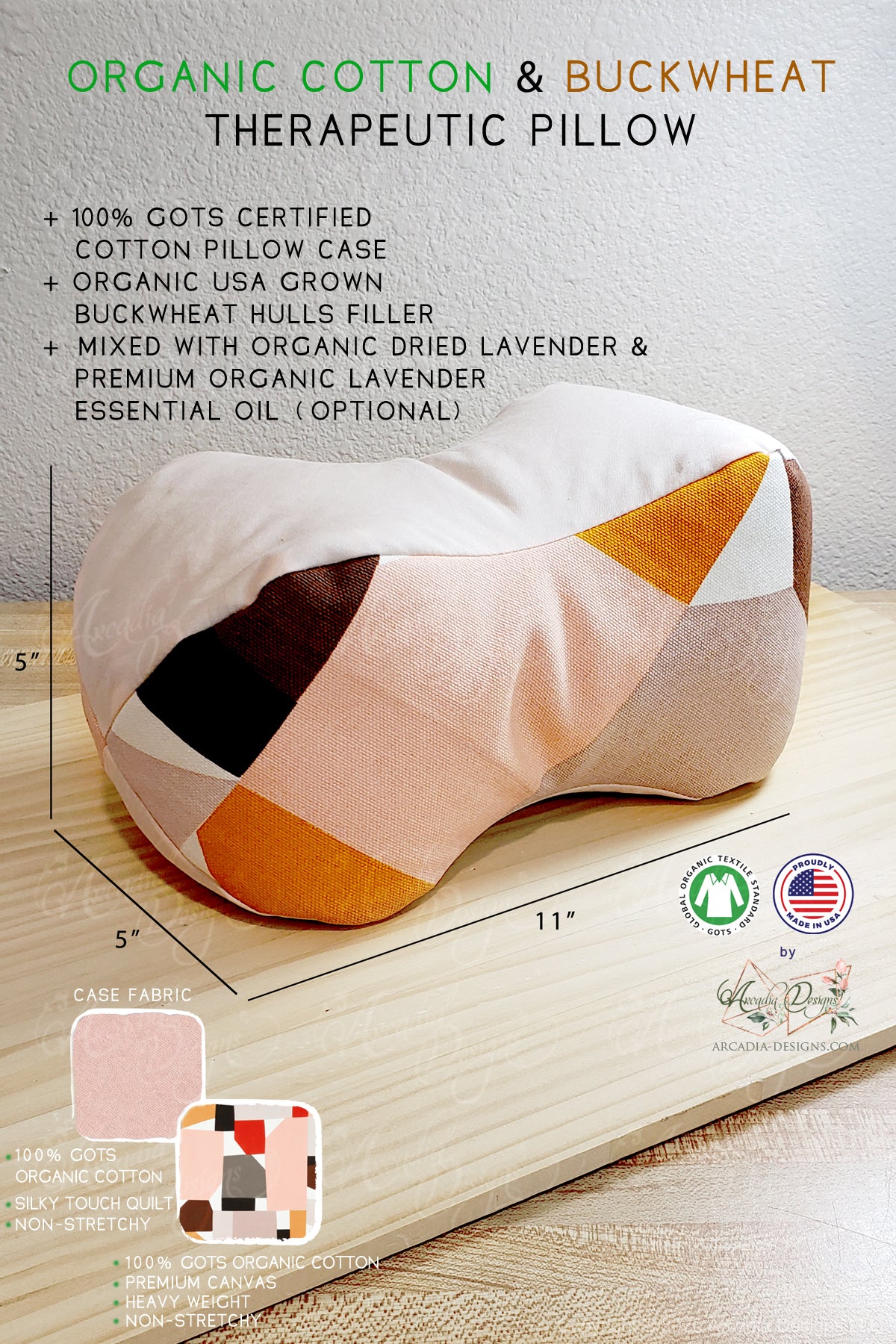
Prevention is easier than treatment. Follow these habits to keep your pillow bug-free for years.
Choose High-Quality Pillows
Not all buckwheat pillows are equal. Avoid cheap, unbranded options. Look for these quality indicators:
• Full dehulling and industrial cleaning
• Heat or solar treatment of hulls
• Low moisture content (under 10%)
• GOTS or OEKO-TEX certification for covers
Brands like Circadian, Sobakawa, or Greenfibres follow strict processing standards.
Control Bedroom Humidity
Dust mites and mold love moisture. Keep humidity between 30% and 50%.
What to do: Use a dehumidifier in humid climates like Southeast Asia or the Southern U.S. Ensure good bedroom ventilation. Avoid placing the pillow near condensation-prone windows.
Tip: A $20 hygrometer helps you monitor humidity levels accurately.
Use a Waterproof Pillow Protector
This is your first line of defense against moisture and allergens.
Why it matters: A waterproof protector blocks sweat, oils, and skin flakes from reaching the inner cover. It prevents moisture buildup and is easier to wash than the pillow itself.
Care: Machine wash in cold water on gentle cycle, tumble dry low.
Maintain a Cleaning Schedule
Regular maintenance prevents problems before they start.
Weekly: Wash the Outer Pillowcase
Follow these steps for weekly cleaning:
• Use fragrance-free detergent
• Wash in cold water
• Avoid bleach and fabric softeners
• Line dry or tumble dry low
Goal: Remove skin cells before dust mites can feed.
Monthly: Wash the Inner Cover
Same washing instructions apply. Ensure the cover is completely dry before refilling. Air-dry an extra 30 to 60 minutes post-dryer to prevent condensation.
Semi-Annually: Sun the Hulls
Sun the hulls 1 to 2 times per year for most users. Increase to 3 to 4 times if you live in a humid area or sweat heavily. Always check texture and smell after treatment.
What NOT to Do: Dangerous Mistakes
Avoid these common errors. They can ruin your pillow or create hazards.
Never Microwave the Pillow
Fire hazard warning: Many buckwheat pillows have metal zippers or threads that can spark. Even without metal, overheating can scorch hulls, creating smoke or fire. Never attempt this, no matter what life hack videos claim.
Never Wash the Hulls with Water
Buckwheat hulls absorb moisture and will become soft and mushy. They can develop mold within 24 to 48 hours. This actually attracts more pests. Rule: Only clean hulls via sun, freezing, or sieving. Never use water.
Avoid Sealed Plastic Storage
Storing your pillow in a plastic bag traps humidity and promotes mustiness. Use a breathable cotton storage bag instead, or leave it uncovered in a dry closet.
Handle Spills Immediately
Moisture is the number one enemy of buckwheat pillows.
Spill Response (Act Within 1 Hour)
Follow this protocol when spills occur:
- Remove hulls immediately
- Spread in a wide, shallow container
- Air-dry in sunlight or with a fan
- Wash and dry the inner cover completely
- Discard hulls if they were submerged, exposed to milk, juice, or coffee, or smell musty or feel soft after drying
EPA and CDC guideline: Organic materials must be dried within 24 to 48 hours to prevent mold.
Know When to Replace the Hulls
Even with perfect care, hulls degrade over time.
Replace If You Notice
Watch for these signs of degradation:
• Volume loss (pillow feels flat)
• Excessive dust in the cover
• Soft or crumbly hulls
• Persistent musty odor after two sun treatments
• Neck pain returns due to poor support
Replacement Frequency
Standard hulls last about 3 years. High-quality, pre-polished hulls last 4 to 5 years.
Cost-saving tip: Buy 5 lbs of organic hulls (about $49) and refill instead of replacing the whole pillow.
Claim Warranty for New Infested Pillows
If bugs appear in a new or recently purchased pillow, it’s not your fault.
What to Do
Contact the manufacturer immediately. Send photos of the insects and packaging. Most reputable brands will offer a free replacement, accept returns, or investigate the batch.
Infestation in a new pillow points to poor manufacturing or contamination during packaging, not user error.
Optimize for High-Risk Situations
Some environments and habits increase risk. Adjust your care accordingly.
High-Humidity Climates
Risk: Mold, mustiness, and mite growth. Solution: Sun hulls 3 to 4 times per year, use a dehumidifier, and install a waterproof protector.
Hot or Heavy Sweaters
Risk: Sweat penetrates fabric, increasing moisture. Solution: Wash pillowcase every 2 to 3 days, use a protector, and sun hulls more often.
Pets on the Bed
Risk: Dander, oils, and accidents. Solution: Wash case frequently, use a protector, and treat spills immediately.
Older Pillows (5+ Years)
Risk: Hulls lose structural integrity. Solution: Increase sunning frequency, or replace the hulls (not the entire pillow).
Store Correctly for Longevity
How you store your pillow matters for long-term freshness.
Do:
• Store in a breathable cotton bag
• Keep in a dry, low-humidity room
• Allow airflow (don’t bury under blankets)
Don’t:
• Use plastic bags
• Store in basements or bathrooms
• Seal in airtight containers
Check annually for odor, dust, flatness, or moisture.
Final Thoughts on Keeping Your Buckwheat Pillow Bug-Free
Buckwheat pillows are among the most pest-resistant options available. Bugs don’t live in clean, dry hulls. They need food and moisture to survive. The main threats are poor manufacturing, residual food sources, and moisture exposure, not the hulls themselves. By choosing quality products, controlling humidity, using a protector, and sunning or freezing when needed, you can enjoy a clean, supportive, and allergen-minimized sleep surface for over a decade. Don’t throw out your pillow at the first sign of trouble. Fix it the right way.
Frequently Asked Questions About Bugs in Buckwheat Pillows
Can buckwheat pillows actually get bugs?
Yes, but it’s rare. Properly processed buckwheat hulls lack nutritional value and resist moisture, making them naturally pest-resistant. Bugs typically appear only due to poor manufacturing (incomplete dehulling), cross-contamination, or improper storage in humid conditions.
How do I know if my pillow has bugs or just dust mites?
You’ll see tiny brown beetles or weevils if it’s a true insect infestation. Dust mites are microscopic and won’t be visible. If you have sneezing, itchy eyes, or allergies at night, it’s likely dust mites in the cover, not bugs in the hulls. Inspect by emptying hulls onto a white tray under bright light.
Can I wash my buckwheat pillow to get rid of bugs?
No. Never wash the hulls with water. They absorb moisture, become mushy, and will develop mold within 24 to 48 hours. Instead, use sun exposure (3 to 4 hours in direct sunlight) or freezing (24 to 48 hours at 0°F). These methods kill insects at all life stages without damaging the hulls.
How often should I sun my buckwheat pillow?
Sun the hulls 1 to 2 times per year for most users. Increase to 3 to 4 times per year if you live in a humid climate, sweat heavily at night, or have pets on the bed. Always stir the hulls halfway through to ensure even exposure.
Will freezing damage my buckwheat pillow?
No. Freezing at 0°F (-18°C) for 24 to 48 hours is safe and highly effective. It kills all insect life stages (eggs, larvae, adults) without damaging hull integrity or the fabric cover. Just ensure the pillow is sealed in a plastic bag and allow it to return to room temperature before use.