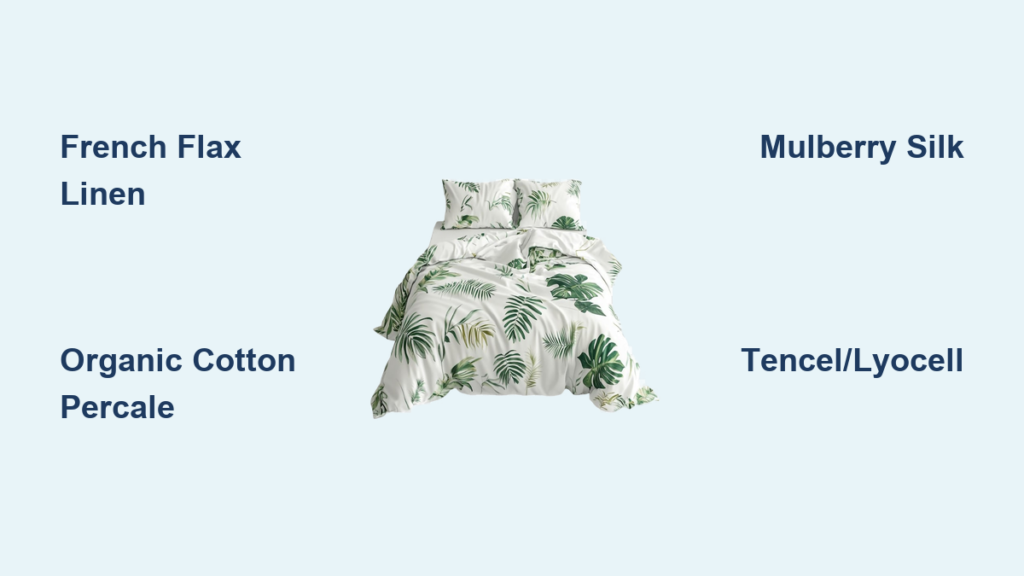
Choosing the right bedspread fabric types is not just about aesthetics since it directly impacts how cool you sleep and how long your bedding lasts. Testing reveals that French flax linen, organic cotton percale, and organic cotton sateen consistently outperform other materials for breathability and durability.
This guide cuts through marketing hype to help you select the best fabric for your specific needs based on data from 90 nights of testing. You will learn exactly which fibers offer real value and which ones are simply greenwashed traps costing you money.
Why French Flax Linen Wins for Longevity
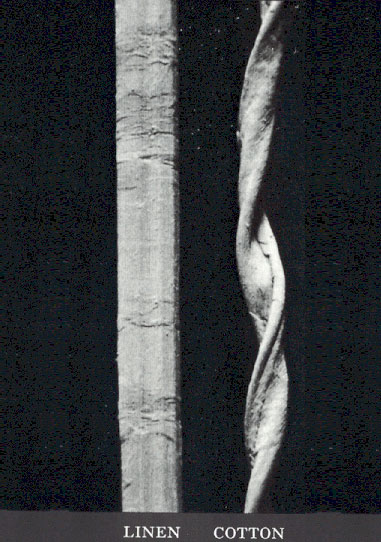
French flax linen stands as the top performer for anyone seeking maximum breathability and an extended lifespan. This fabric scores a near-perfect 9.7 in overall performance due to its hollow fiber structure and open weave that regulates temperature naturally.
How Hollow Fibers Regulate Temperature
The unique hollow structure of flax fibers allows air to circulate freely while wicking moisture away from your body.
* Stays cool during hot summer nights
* Provides insulation during winter months
* Achieves a perfect 10/10 breathability rating
Evolution of Texture Over Time
You might find the texture slightly crisp during the first year of ownership. By year three, the fabric softens dramatically with every wash cycle. Many users report that year five marks the peak of softness for this material.
Care Requirements and Costs
Proper maintenance ensures your linens last between eight and ten years. Machine washing is safe, and you should embrace the wrinkles as part of the relaxed aesthetic. The upfront cost is higher than synthetics, but the cost per year remains low due to the long lifespan.
Organic Cotton Percale as the Year-Round Choice
Organic cotton percale delivers that crisp, hotel-fresh feel that many sleepers desire for year-round comfort. Woven with a 1-over-1 plain weave, this fabric offers excellent airflow and withstands hundreds of industrial washes without losing strength.
Benefits of the Plain Weave Structure
The tight 1-over-1 weave creates a matte finish that feels cool to the touch immediately. This structure prevents the fabric from trapping heat while maintaining durability through countless wash cycles.
Ideal Thread Count Range
You should look for a thread count between 300 and 400 for optimal performance. Counts exceeding 500 often indicate multi-ply threads that reduce breathability and durability.
Who Should Choose Percale
This fabric is perfect for those who want a balance of coolness and softness. It suits warm sleepers, cool sleepers, and anyone with sensitive skin who needs a chemical-free option.
Organic Cotton Sateen for a Silky Finish
Organic cotton sateen provides a luxurious, lustrous appearance without relying on synthetic polyester fibers. The 4-over-1 weave structure creates long floats on the surface that reflect light and feel incredibly smooth against your skin.
Understanding the Sateen Weave
The specific weaving technique creates a drapey fabric that feels silky while remaining breathable. This option is ideal for sleepers who love a glossy aesthetic but want natural fibers.
Hair Health and Friction Reduction
The smooth surface reduces friction significantly compared to rougher weaves. This benefit helps minimize hair breakage and frizz while you move during sleep.
Handling and Maintenance Tips
You must handle this fabric with care since long floats can snag on sharp nails or jewelry. Wash in cold water to preserve the sheen and expect a lifespan of five to eight years with proper care.
Mulberry Silk as a Luxury Option
True mulberry silk offers a genuine cooling sensation and a fluid feel that no synthetic can replicate. This protein fiber is the only material that feels cool to the touch immediately upon contact.
The Reality of Silk Pricing
Authentic mulberry silk starts around $200 per sheet, with full sets ranging much higher. Any product labeled “silk” under $100 is almost certainly polyester satin designed to mimic the look.
Delicate Care Instructions
Silk requires hand washing or dry cleaning to maintain its integrity for four to seven years. Tumble drying or using harsh detergents can destroy the fibers within a single year.
Best Use Cases for Silk
This fabric is best for luxury seekers and those with eczema or sensitive skin. It is also an excellent choice for individuals prioritizing hair and skin health above all else.
Tencel and Lyocell Environmental Impact
Tencel and lyocell fibers come from eucalyptus or beech wood pulp processed in a closed-loop system. This method recycles solvents and makes it one of the most environmentally responsible choices available.
Softness Versus Durability Trade-offs
These fibers feel smooth and lightly silky, often softer than cotton in the first year. However, wash resilience drops noticeably by year three, especially at high-stress points like corners.
Ideal User Profile for Lyocell
Environmentally focused buyers who prioritize initial softness will appreciate this fabric. It is also a strong choice for sleepers with eczema who need a gentle surface.
Expected Lifespan Limits
You can expect a lifespan of three to five years before significant wear appears. The annual cost is moderate, but frequent replacement reduces long-term value compared to linen.
Why Bamboo Sheets Are Often Rayon
Most products marketed as “bamboo” sheets are actually rayon created by chemically dissolving bamboo pulp. The Federal Trade Commission has fined major retailers for falsely labeling these chemically processed fibers as natural bamboo.
The Chemical Processing Reality
The manufacturing process uses toxic solvents like carbon disulfide to break down the plant. This process destroys the natural properties of the bamboo, resulting in a fiber identical to wood-based rayon.
Performance Decline Over Time
These sheets degrade quickly and often pill by the second year of use. They also retain odors more than natural fibers and lose their initial softness rapidly.
Better Sustainable Alternatives
If sustainability matters to you, choose Tencel or GOTS-certified linen instead. These options offer verified environmental benefits without the misleading marketing claims.
Microfibre and Polyester Heat Traps
Microfibre consists of polyester threads finer than silk, yet it retains all the negative qualities of petroleum-based fabrics. It feels soft initially but becomes plasticky and rough within months of regular use.
Heat Retention Issues
This material scores a dismal 3/10 for breathability because it traps heat effectively. Hot sleepers will find themselves waking up uncomfortable and sweaty throughout the night.
Microplastic Shedding Concerns
Washing microfibre releases microplastics into water systems, contributing to environmental pollution. The fabric also sheds fibers and pills heavily after just 30 washes.
Appropriate Use Cases Only
Use this fabric only for guest beds or vacation rentals where low cost and disposability matter more than comfort. It is not suitable for primary bedding due to poor sleep quality.
Fabric Performance Metrics Comparison

Comparing key metrics side by side helps you visualize the stark differences between fabric types. The following data highlights why natural fibers outperform synthetics in almost every category.
| Fabric Type | Breathability | Softness Year 5 | Pilling Resistance | Odor Resistance | Lifespan | Cost Per Year |
|---|---|---|---|---|---|---|
| French Flax Linen | 10 | 10 | 10 | 9 | 8–10 yrs | $22–32 |
| Organic Cotton Percale | 9 | 8 | 9 | 9 | 5–10 yrs | $18–28 |
| Organic Cotton Sateen | 7 | 8 | 9 | 8 | 5–8 yrs | $22–32 |
| Mulberry Silk | 6 | 9 | 9 | 9 | 4–7 yrs | $60–130 |
| Tencel/Lyocell | 7 | 6 | 7 | 7 | 3–5 yrs | $28–40 |
| “Bamboo” Rayon | 6 | 4 | 5 | 5 | <4 yrs | $25–40 |
| Microfibre | 3 | 3 | 2 | 3 | 1–2 yrs | $10–18 |
| Polyester | 2 | 3 | 2 | 2 | 1–3 yrs | $10–15 |
Higher scores indicate better performance across all metrics. Odor resistance scores reflect how well the fabric resists holding smells.
Identifying Genuine Fiber Origins

Knowing where your fiber comes from is more important than thread count when selecting bedspread fabric types. Labels can be misleading without proper certification to back up the claims.
Cotton Certification Standards
GIZA-certified cotton from Egypt guarantees extra-long staple fibers grown in the Nile Delta. Supima represents US-grown long-staple cotton with strict traceability standards. Generic “Egyptian” labels often lack regulation and may contain shorter fibers.
Linen Origin Markers
European Flax certification traces the fiber back to France or Belgium for the highest quality. The Belgian Linen Quality Mark ensures both origin and processing standards are met. Generic “100% linen” may use shorter fibers from other regions that pill faster.
Trusting Organic Certifications
GOTS certification covers the entire supply chain from field to finishing. This ensures no formaldehyde finishes or optical brighteners are used in the process. Labels stating “made with organic cotton” only certify the raw fiber, not the finishing chemicals.
Thread Count Myths Debunked
Thread count above 400 is often a marketing trick using multi-ply threads to inflate numbers. A 1000-thread-count sheet may actually be less breathable than a 300-thread-count single-ply fabric.
The Multi-Ply Deception
Manufacturers twist multiple thin strands together to increase the thread count artificially. This results in a denser fabric that breathes poorly and wears out faster than lower count options.
Optimal Range for Breathability
Stick to a thread count between 300 and 400 for the best balance of softness and airflow. Long-staple cotton at 300 TC outperforms short-staple cotton at 800 TC in every measurable way.
Why Higher Is Not Better
Tighter weaves reduce airflow and create a warmer sleeping surface. Hot sleepers should avoid high thread counts entirely to prevent overheating during the night.
Matching Bedspread Fabric Types to Needs

Selecting the right fabric depends entirely on your personal sleeping habits and priorities. Use this guide to match your specific needs with the correct material.
Solutions for Hot Sleepers
French flax linen is the undisputed champion for cooling due to its open weave. No other fabric scores a perfect 10 for breathability and moisture wicking.
Options for Sensitive Skin
Untreated natural fibers like GOTS linen or percale resist chemical finishes. Both can be washed at high temperatures to kill dust mites and bacteria effectively.
Choices for Hair Health
Mulberry silk and cotton sateen reduce friction to minimize hair breakage. Silk is the best option, but sateen offers a practical and affordable alternative.
Picks for Eco-Conscious Buyers
Linen requires minimal water and pesticides to grow. Tencel uses a closed-loop process that recycles solvents, making both excellent choices for the environment.
Common Buying Mistakes to Avoid
Avoiding these frequent errors will save you money and ensure you get the best bedspread fabric types for your home. Many consumers fall for marketing hype that compromises sleep quality.
Falling for High Thread Count
Sheets over 500 TC likely use multi-ply yarns that reduce durability. Fix this by looking for 300–400 TC with long-staple cotton certification.
Buying Unverified Bamboo
Most bamboo is rayon processed with harsh chemicals. Choose Tencel for similar softness with better sustainability credentials.
Purchasing Cheap Silk
Real mulberry silk wholesale starts at $200 per sheet. Check for a cool touch and soft sheen to avoid plastic imitations.
Ignoring Wrinkle Characteristics
Stonewashed linen is designed to look relaxed with wrinkles. Do not avoid linen simply because it wrinkles, as this is part of the intended aesthetic.
Frequently Asked Questions About Bedspread Fabric Types
Which bedspread fabric types are best for hot sleepers?
French flax linen is the top choice with a 10/10 breathability score. Organic cotton percale is the second best option for those needing cool, crisp comfort year-round.
How long do high-quality bedspreads last compared to synthetics?
Natural fibers like linen last 8–10 years while synthetics like polyester last only 1–3 years. Investing in natural fibers reduces replacement frequency and long-term costs.
Are bamboo sheets actually made from bamboo?
Most are rayon created by chemically dissolving bamboo pulp. The process destroys natural properties, making them identical to wood-based rayon with similar performance issues.
What thread count should I look for in cotton sheets?
Aim for 300–400 thread count using long-staple cotton. Higher counts often use multi-ply tricks that reduce breathability and overall fabric quality.
Can I machine wash silk bedspreads?
No, genuine mulberry silk requires hand washing or dry cleaning. Machine washing or tumble drying can destroy the fibers within a year of purchase.
Why do my synthetic sheets retain odors more than cotton?
Polyester and microfibre trap odors permanently due to their petroleum-based structure. Natural fibers like linen and cotton resist odor retention much more effectively.
Key Takeaways for Choosing Bedspread Fabric Types
Selecting the right bedspread fabric types transforms your sleep experience and saves money over time. French flax linen, organic cotton percale, and organic cotton sateen offer the best combination of breathability, durability, and comfort for most sleepers.
Avoid greenwashed options like bamboo rayon and misleading labels on cheap silk products. Focus on certifications like GOTS and CELC, verify fiber origins, and ignore inflated thread count claims to make the best investment.
Prioritize natural fibers to improve your sleep quality and reduce environmental impact. Start by assessing your specific needs for cooling, luxury, or sustainability to choose the perfect fabric for your bedroom today.